IN Brief:
- Italian packaging machinery turnover increased by 2.3% during the first half of 2026.
- New orders fell by 2.5%, with international demand weaker than domestic investment.
- Energy, plastics, components, tariffs, and geopolitical uncertainty are placing pressure on manufacturer margins.
Italy’s packaging machinery manufacturers recorded modest turnover growth during the first half of 2026, although weaker international orders and rising production costs have reduced confidence in the months ahead.
Turnover increased by 2.3% across the six-month period and by 2.8% during the second quarter. Domestic sales supplied most of the growth, rising 12.5%, while international turnover increased by only 0.9%.
The figures were published by UCIMA, which represents Italian manufacturers of automatic packing and packaging machinery supplying food, beverage, pharmaceutical, cosmetic, chemical, tobacco, and industrial markets.
New orders moved in the opposite direction, declining by 2.5% during the first half. International orders fell by 3%, while Italian orders increased by 3.3% with support from domestic capital-investment incentives.
Although second-quarter order intake recovered by 1.1%, June ended 0.8% below the corresponding month a year earlier. Domestic orders fell by 7.4% during June and overseas orders declined by 0.6%.
Average order backlog stood at 7.7 months, providing manufacturers with a sizeable production pipeline while leaving less certainty over the work that will replace it. Existing projects can sustain output for several months even as more recent customer commitments begin to weaken.
Maurizio Bertocco, president of UCIMA, said: “The slowdown in order intake clearly reflects reduced investment by our international customers, driven by uncertainty around tariff policies and unresolved conflicts. At the same time, rising production costs are placing further pressure on companies’ margins.”
Italian packaging machinery entered 2026 from a position of considerable scale. Sector revenue reached approximately €10.46bn in 2025, with exports of about €8.19bn accounting for more than three quarters of turnover, while food and beverage applications together represented over half of industry sales.
That dependence on exports exposes equipment builders to delayed capital decisions across several markets at once. A complete food packaging line may take months to specify, engineer, manufacture, test, ship, install, and validate, leaving customers to assess current demand against the conditions likely to exist when production finally begins.
Long lead times meet shorter planning cycles
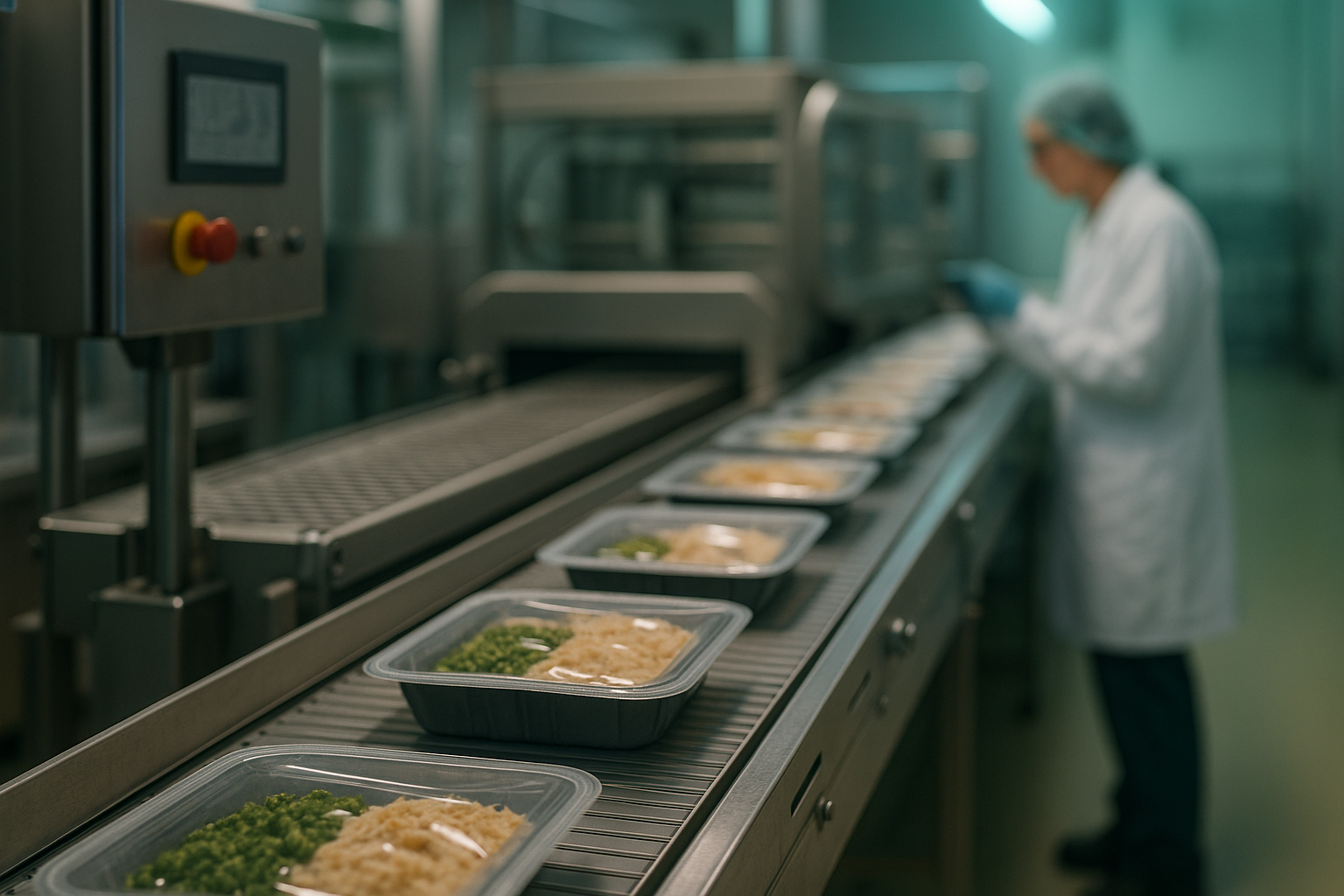
Packaging investment extends well beyond the purchase of an individual machine. Forming, filling, dosing, sealing, coding, inspection, conveying, case packing, palletising, controls, and production data must operate as one line, so a postponed customer decision affects machinery builders, component suppliers, software developers, and engineering contractors.
Order backlog and current market demand can therefore tell different stories. Seven months of committed work may maintain factory utilisation while weaker order intake develops underneath, with the full effect appearing only after existing machines have been completed and shipped.
Input costs add pressure because quotes often remain open while project scope and delivery dates are negotiated. Stainless steel, plastics, motors, drives, controls, electronic components, energy, freight, and labour can all move between the initial proposal and final production.
Customers are conducting similarly difficult calculations. Automation can reduce labour dependence, product giveaway, packaging variation, and line stoppages, but the return depends on throughput, utilisation, and the commercial life of the products being packed.
Shorter retail agreements and broader product ranges make narrowly configured equipment more difficult to justify. A line designed around one pack size or material may become restrictive when artwork, recycling requirements, portion formats, or retailer specifications change before the asset has reached the middle of its expected life.
Machinery builders have responded with modular platforms, recipe-controlled adjustments, faster changeovers, remote diagnostics, and equipment that can be upgraded without complete replacement. More suppliers are also combining processing and packaging technologies to reduce the number of interfaces within a project.
That consolidation was visible when Sveba Dahlen joined Midera Food Processing, adding industrial bakery equipment to a group whose portfolio already covered mixing, forming, cooking, frying, and other production stages.
Integration can simplify responsibility, although it increases the importance of open controls, spare-parts availability, and service coverage. A factory buying several connected systems from one group gains a clearer route for support but becomes more dependent on the supplier’s long-term software, component, and engineering strategy.
Domestic incentives have protected Italian demand during the current slowdown, yet they cannot replace the international investment required by such an export-oriented sector. Equipment manufacturers will be watching whether overseas customers release deferred projects once tariff and financing conditions become clearer.
Food producers are unlikely to abandon automation programmes while labour, consistency, traceability, and energy remain persistent constraints. They may, however, divide larger projects into phases, demand greater format flexibility, or delay orders until the commercial case can survive a wider range of operating assumptions.
UCIMA’s first-half figures show a sector still delivering growth from established work while its next production cycle becomes less secure. The order backlog provides breathing space, but machinery factories will need renewed export demand before that cushion is worked through.