IN Brief:
- Grupo La Plana has installed a BOBST FFG 924 NT RS flexo folder gluer to improve the quality and flexibility of its corrugated packaging operations.
- The machine integrates printing, die-cutting, folding, and gluing, with the model rated at up to 20,000 boxes per hour.
- The investment supports La Plana's 2026–2028 strategy, covering corrugated board, folding cartons, and point-of-sale displays.
Grupo La Plana has installed a BOBST FFG 924 NT RS flexo folder gluer to expand its corrugated packaging production capabilities, with the investment concentrating on consistent finishing, production flexibility, and improved handling of complex die-cut boxes.
The Spanish packaging manufacturer selected the equipment to strengthen its case-making operations, particularly where products require accurate die-cutting and reliable folding. The installation forms part of a wider investment programme covering manufacturing capacity, automation, and packaging development.
La Plana produces corrugated and solid board packaging for agriculture, food and beverages, ceramics, e-commerce, and consumer goods. Its product range includes transport cases, trays, shelf-ready packaging, printed cartons, protective packaging, and point-of-sale displays.
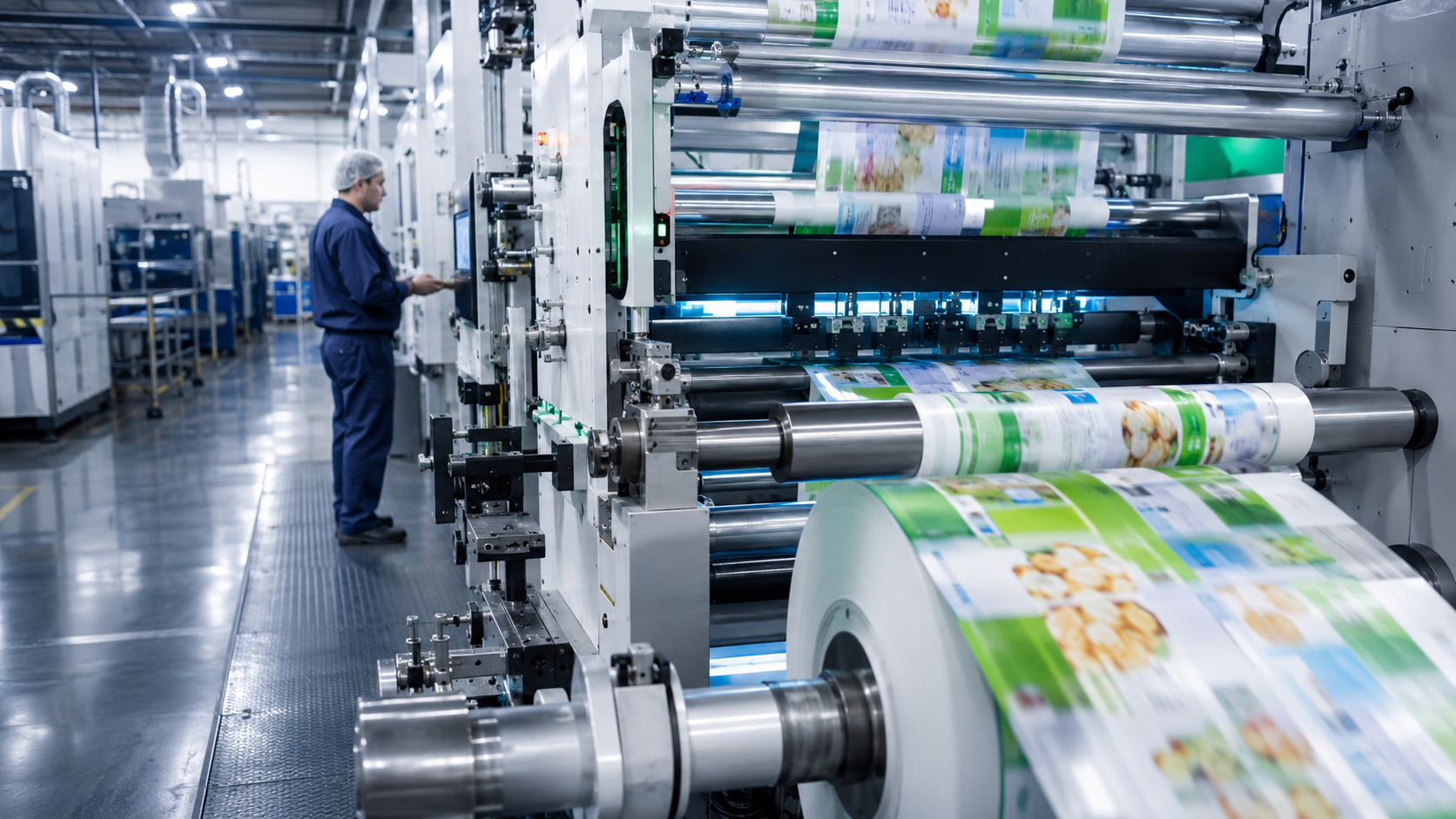
The FFG 924 NT RS is designed to combine flexographic printing, die-cutting, folding, and gluing within a single converting process. Corrugated sheets pass through the machine to receive the required printed design, structural cuts, folds, and glued joints before the finished cases are delivered for subsequent handling.
Integrating these operations reduces the number of separate production stages required for compatible packaging formats. It also creates a more closely connected process in which sheet feeding, printing, cutting, and folding must remain synchronised to achieve consistent finished products.
The installation is intended to accommodate regular slotted containers, commonly referred to as RSC boxes, alongside more complex die-cut products. These packaging formats impose different demands on converting machinery because their slotting, scoring, and cutting arrangements vary according to the required geometry.
A regular slotted container generally uses relatively straightforward cuts and fold lines to form a transport case. More complex packaging can incorporate additional openings, shaped panels, locking features, or other structural details that require greater control over the die-cutting operation.
La Plana identified finish consistency as a decisive consideration when selecting the machine. The company reports that the installation has strengthened its ability to produce fully die-cut boxes while maintaining the required quality of cut edges and finished case construction.
Rotary die-cutting uses a rotating cutting tool to form the required geometry as corrugated material travels through the machine. The interaction between tooling, anvil surfaces, board properties, and sheet registration determines how accurately individual features are produced.
Waste removal is particularly important when a design requires substantial material to be cut away. Detached board sections must be separated from the product before subsequent converting stages, reducing the likelihood of waste material interfering with folding or affecting the condition of finished cases.
BOBST’s equipment documentation identifies high-performance die-cutting and stripping systems within the FFG 924 NT RS range. La Plana specifically reports improved removal of die-cut waste before the folding stage, which the company associates with more consistent finished products.
The model is rated at up to 20,000 boxes per hour, depending on the configuration and material being processed. This is a manufacturer specification rather than a measured production rate at La Plana. The company has not disclosed the throughput achieved by its installation or a quantified productivity improvement against its previous equipment.
The manufacturer’s specifications also cover corrugated materials with thicknesses of approximately 1.2mm to 10mm, subject to their properties and the machine configuration. The range includes several single-wall and double-wall board constructions, allowing different packaging strength and presentation requirements to be addressed.
Material properties can influence the performance of converting machinery. Changes in flute construction, board thickness, moisture, and surface condition affect how a sheet behaves during feeding, printing, cutting, and folding. Maintaining registration between these operations becomes especially important where the printed design must align precisely with the finished box geometry.
Flexographic printing involves transferring ink from a printing plate onto the moving substrate. Consistency depends on controlled ink transfer, sheet movement, printing pressure, and registration. A box with demanding graphics and structural cuts must satisfy both its visual specification and the dimensional requirements associated with downstream use.
BOBST offers several automation and quality control options across the model range, including systems for print registration and inspection. The published La Plana case does not establish that every optional feature is installed, so the machine’s full catalogue of available technology should not be treated as a description of the purchased configuration.
Folding and gluing provide another point at which manufacturing variation can influence the finished product. Incorrect fold alignment or inconsistent joint formation can affect case dimensions and subsequent performance during erection, packing, or stacking. The installed line is intended to improve process stability across these interconnected operations.
Food packaging applications place particular emphasis on dimensional repeatability. Cases used to transport beverage containers, packaged bakery products, or other finished foods may need to run through automated case erectors, packing equipment, and palletising systems, each operating within defined tolerances.
Structural performance is also important during storage and distribution. Corrugated board grades, flute orientation, scoring, and box design influence how packaging withstands handling and stacking loads. Consistent conversion helps ensure that individual cases meet the specifications established during packaging development.
La Plana reports that BOBST provided installation, commissioning, and operator training support. These activities are important when introducing new converting machinery because equipment settings, tooling changes, maintenance procedures, and production practices need to be established for the site’s actual range of products.
The company operates six production centres and 16 assembly centres, with a commercial presence across Spain, Portugal, southern France, and North Africa. It recorded turnover of €175 million in 2025 and employs more than 700 people.
Its 2026–2028 strategic plan focuses on corrugated board, folding cartons, and point-of-sale displays. The BOBST installation extends an established relationship between the companies and supports La Plana’s continuing investment in its manufacturing base.
La Plana has not disclosed the machine’s purchase price, the payback period, or a specific reduction in waste or operating costs. Its confirmed operational gains concern production flexibility, process stability, and the quality of complex die-cut packaging, with the wider financial effect dependent on production mix, utilisation, and customer requirements.