IN Brief:
- Ball is investing in a multi-line beverage can factory in Baruth, Germany, supported by long-term commitments from an energy drinks customer.
- Global aluminium packaging shipments increased 4.7% in the third quarter of 2026, while comparable operating earnings reached $451 million.
- The German facility is expected to begin ramping up in late 2028, with its eventual capacity and capital expenditure still undisclosed.
Ball Corporation is investing in a new aluminium beverage can manufacturing facility in Baruth, Germany, to expand its European production network and support long-term demand from a strategic energy drinks customer.
The planned multi-line factory is backed by contractual customer commitments, with production expected to begin ramping up in late 2028. Ball has not disclosed the number of lines, their individual capacities, the value of the investment, or the identity of the customer.
The project was confirmed alongside Ball’s third-quarter 2026 financial results, which showed global aluminium packaging shipments increasing by 4.7% compared with the corresponding period last year. Comparable operating earnings rose 2.5% to $451 million, while comparable diluted earnings per share increased 6.8% to $1.10.
Ball also reported net sales of $4.19 billion, up from $3.38 billion a year earlier, although the company recorded a US GAAP net loss attributable to the corporation of $94 million. The comparison between statutory and adjusted results is important because Ball’s investment programme is being undertaken alongside broader changes to its manufacturing operations and financial performance.
European energy drinks demand is a principal reason for selecting the German location. During the quarterly earnings discussion, Ball’s management identified an established customer relationship and contractual commitments as the basis for the Baruth project, indicating that the additional capacity is being developed around anticipated supply requirements.
Long-term packaging contracts can provide greater visibility over production volumes, container specifications, and delivery requirements. They allow a manufacturer to plan equipment investment against an agreed customer relationship, although actual utilisation will still depend on commissioning progress and the quantities ordered.
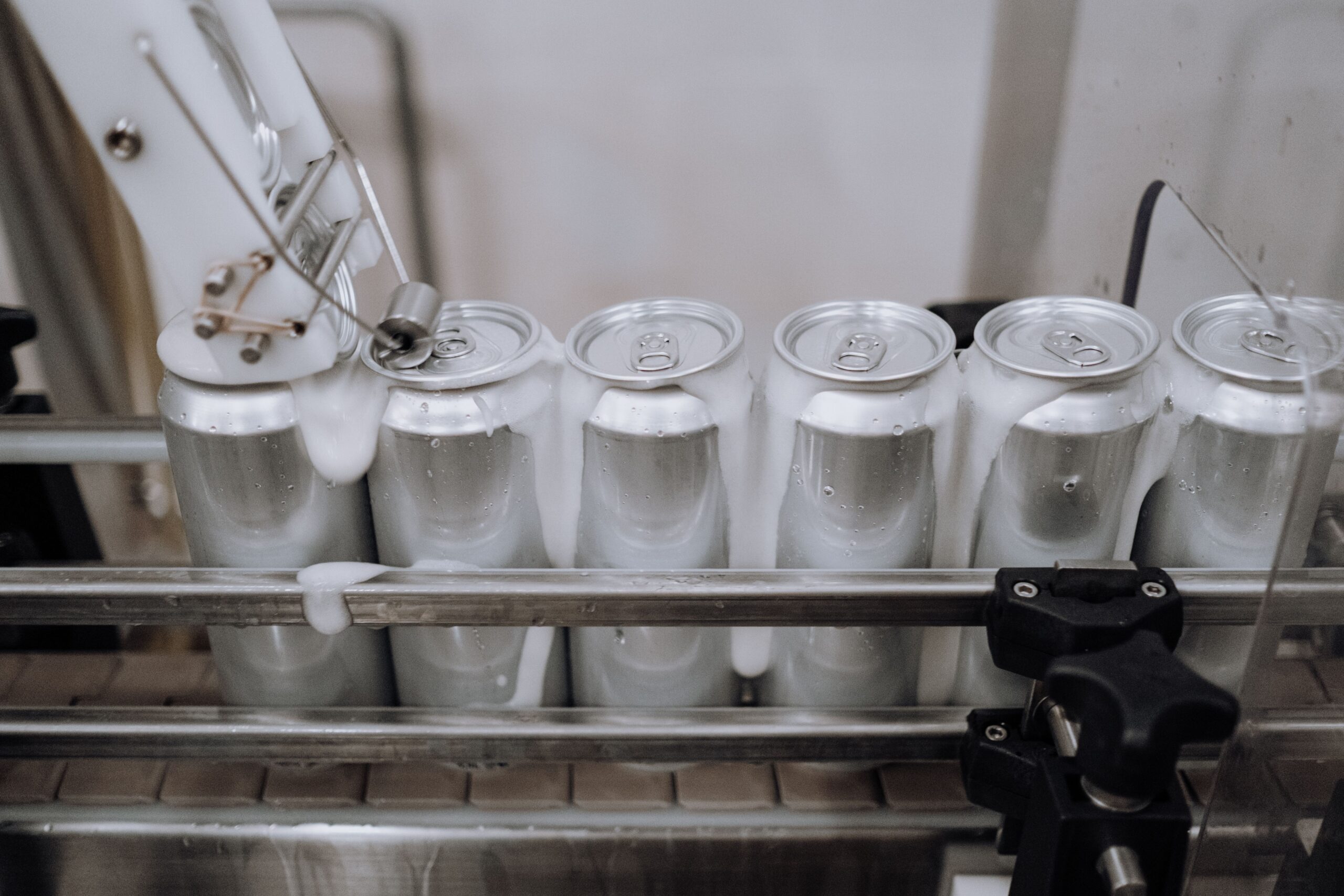
Industrial beverage canmaking requires several closely controlled processes. Aluminium sheet is formed into cups before drawing and ironing operations produce thin-walled container bodies. These are trimmed, washed, surface treated, coated, printed, and shaped into the required neck geometry before inspection and delivery to filling customers.
The performance of a high-speed canmaking line depends on maintaining consistency throughout that sequence. Variation in incoming coil properties, lubrication, forming tools, or dimensional settings can affect wall thickness and finished container geometry, with defects potentially increasing material losses and interrupting production.
Container coating and curing are similarly important because the internal surface must meet the relevant food-contact requirements and remain compatible with the beverage being packaged. External decoration, meanwhile, must be applied without compromising subsequent forming operations or the dimensional tolerances required during filling.
Quality inspection provides another critical control point. Can bodies need to meet agreed specifications for dimensions, surface integrity, and other characteristics before being supplied to a beverage producer. The customer must then be able to convey, fill, and close the containers at the operating speeds required by its packaging lines.
A factory supplying high-volume beverage customers must coordinate these processes with incoming aluminium deliveries, tooling maintenance, finished goods storage, and transportation. Ball has not identified the individual technologies being selected for Baruth, so the published project cannot yet be associated with a particular forming line specification or inspection system.
The planned ramp-up in late 2028 also distinguishes the start of production from full factory utilisation. Commissioning a new line involves establishing operating parameters, confirming dimensional and coating specifications, validating output quality, and integrating equipment into the wider manufacturing and supply system.
Multiple lines can provide flexibility across production volumes and container requirements, but the practical capabilities of the new factory will depend on their final configuration. Ball has not stated whether Baruth will manufacture a particular can size, range of diameters, or mixture of standard and speciality formats.
The German investment follows an expansion of Ball’s European production footprint through acquisition. Earlier in 2026, the company acquired an 80% interest in Benepack’s European beverage can manufacturing business from ORG Technology, adding operations in Belgium and Hungary to its EMEA network.
The combination of acquired manufacturing capacity and a new factory in Germany provides different routes to expansion. Existing plants can contribute production assets and established operations, while construction of a new facility allows equipment and infrastructure to be planned around future customer demand. Neither approach removes the need to maintain sufficient utilisation across the wider network.
Ball is also investing in a beverage can manufacturing facility in Uttar Pradesh, India. The two projects respond to regional customer requirements, although the company has not presented them as identical investments or disclosed comparable capacity figures.
European beverage packaging manufacturers are continuing to add production capability in response to customer demand. Ardagh Metal Packaging has separately outlined plans for additional can lines in Britain and Spain, involving expansion at existing facilities rather than the construction of a new factory.
Manufacturing economics remain dependent on aluminium input costs, energy consumption, production efficiency, and the ability to operate equipment at commercially sustainable volumes. Packaging contracts may incorporate arrangements for changes in raw material prices, but the operational cost of producing and delivering containers remains sensitive to plant performance.
Ball expects comparable diluted earnings per share to grow by at least 10% in 2026 and has maintained full-year free cash flow guidance of approximately $900 million. Its financial outlook sits alongside investment in additional regional capacity and ongoing measures to improve operating efficiency.
The company has not published an employment forecast, planning timetable, or construction milestones for Baruth. The confirmed production milestone remains the expected late-2028 ramp-up, with further technical details required to establish the factory’s eventual contribution to European beverage can supply.