IN Brief:
- Barry Callebaut's FY2025/26 sales volume declined 0.7% to 2.11 million tonnes, despite growth of 5.7% in the fourth quarter.
- Recurring operating profit fell 14.1% in constant currency, while free cash flow reached CHF2.01 billion and net debt declined 42.5%.
- The group has approved new capacity investments in Canada and Indonesia alongside proposed factory closures in the US and UK.
Barry Callebaut returned to sales volume growth in the second half of its 2025/26 financial year, reporting a 5.7% fourth-quarter increase while advancing plans to invest in selected manufacturing facilities and consolidate other parts of its production network.
The Swiss chocolate and cocoa ingredients supplier recorded full-year sales volume of 2,109,866 tonnes, down 0.7% against the previous financial year. The recovery during the final two quarters followed weaker demand earlier in the period, against a wider chocolate confectionery market that contracted by 4.3% according to the Nielsen figures cited by the company.
Revenue declined 15.2% in constant currency to CHF12.19 billion, reflecting lower cocoa bean-linked selling prices. The reduction was 17.6% when measured in Swiss francs, while recurring operating profit fell 14.1% in constant currency to an equivalent CHF604.5 million.
At reported exchange rates, recurring operating profit was CHF594 million, down 15.6% from the previous year. The distinction between the reported and constant-currency comparisons is necessary because the company uses both figures when explaining performance across its international operations.
Revenue movements in industrial cocoa and chocolate supply do not necessarily correspond to changes in physical output. Raw cocoa bean prices influence the prices charged for many cocoa and chocolate products, particularly where commercial arrangements incorporate a mechanism for passing through changes in the underlying commodity cost.
Consequently, falling cocoa prices can reduce the value of sales even when the tonnage supplied remains relatively stable. They can also affect the value of inventories, customer pricing arrangements, and the financing costs associated with purchasing and holding cocoa materials.
Barry Callebaut attributed the reduction in recurring operating profit to several factors, including lower recovery of financing costs, supply disruption expenses, and the effect of temporary long positions in its Gourmet business during a declining cocoa market. Stronger profitability within Global Cocoa did not fully offset those pressures.
The company recorded a 0.5% annual volume decline in Global Chocolate. Within that business, sales to food manufacturers fell 0.7%, with weaker Global Accounts performance partly offset by improved momentum among regional food manufacturing customers.
Gourmet volumes increased 0.8% across the year and rose 13.6% in the fourth quarter as the business entered a new pricing cycle. Global Cocoa volumes declined 1.8% annually, although second-half volumes increased 12.2%, supported partly by customer restocking following the correction in cocoa prices.
Regional performance also varied. Asia Pacific, the Middle East, and Africa recorded 9.8% annual volume growth, supported by activity in India, China, and Australia. Western Europe achieved a modest 0.2% increase, while North American volumes declined.
Despite the deterioration in earnings, Barry Callebaut generated CHF2.01 billion in free cash flow and reduced net debt by 42.5% to CHF2.47 billion. The company attributed the improvement partly to lower working capital requirements and measures intended to reduce its exposure to cocoa price volatility.
Working capital is a significant consideration in cocoa processing because substantial quantities of raw materials and intermediate products can be held across purchasing, manufacturing, and distribution operations. Changes in commodity prices affect the cash committed to those inventories, while customer contracts and financing arrangements influence when that investment is recovered.
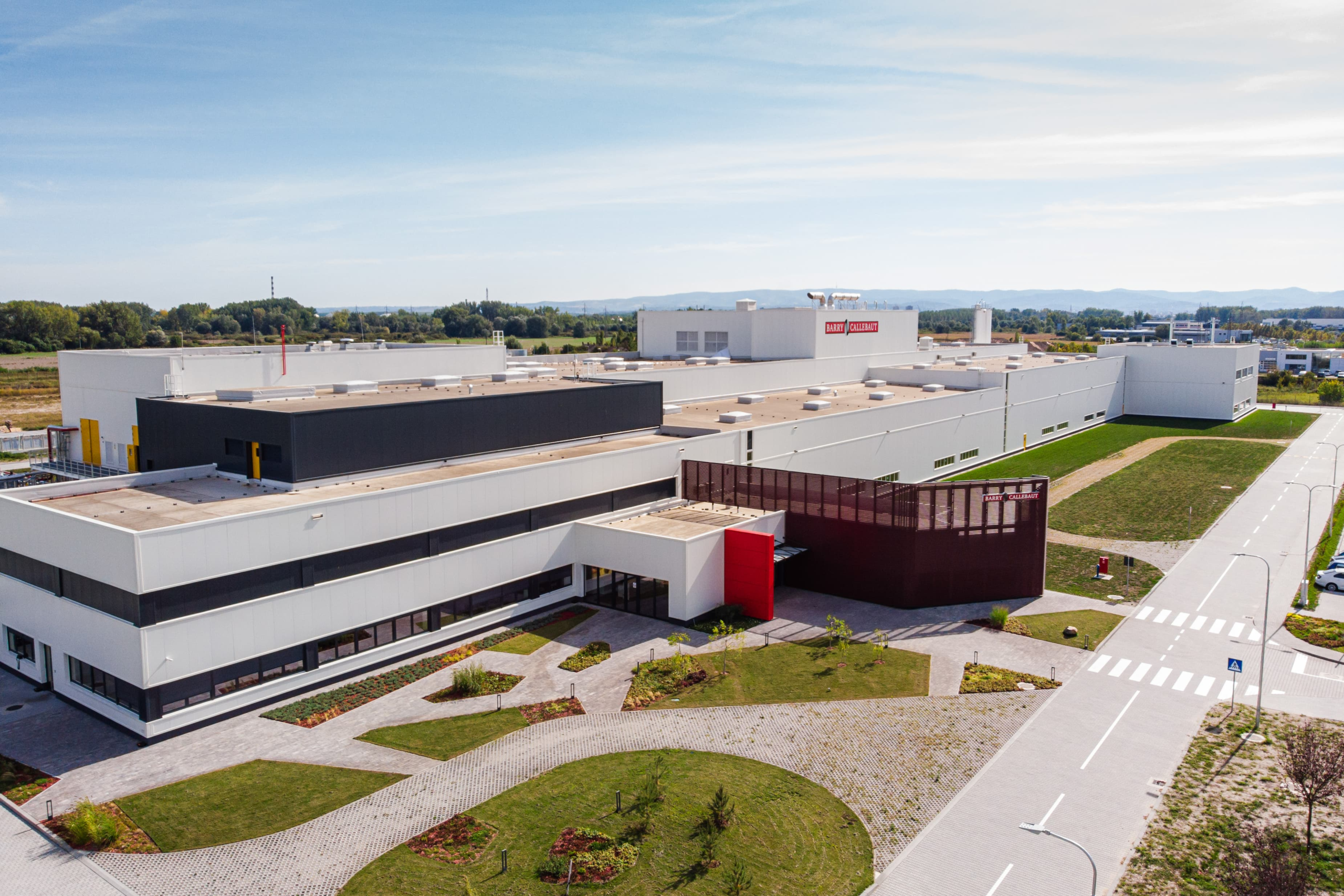
The company is addressing its operating cost base through its Focus for Growth programme, which combines investment in selected product categories with changes to its manufacturing footprint. The board has approved an expansion of the Brantford facility in Canada to increase cocoa coatings capacity and support demand from North American customers.
A new manufacturing facility has also been approved at Karawang in Indonesia, where the group intends to expand local capacity in a priority emerging market. Neither project has been accompanied by a complete public equipment specification, committed production tonnage, or commissioning timetable.
At the same time, Barry Callebaut is seeking to consolidate production into fewer, larger facilities. Proposed closures include its Hendersonville site in the United States and the beverage manufacturing operation in Chester, UK, during the second quarter of 2027.
These remain proposals rather than completed closures. The company has not published a detailed production transfer schedule or quantified the effects on individual product lines, although it expects the changes to improve asset utilisation and reduce complexity across the network.
Manufacturing consolidation involves more than transferring nominal production capacity between facilities. Cocoa processing, chocolate manufacture, coatings, and beverage products can require different equipment configurations, raw material handling systems, and quality specifications. Moving production therefore depends on the available capacity and technical capabilities of receiving sites.
Industrial chocolate production also involves processes whose performance depends on formulation and equipment settings. Refining determines the particle characteristics of dispersed solids, while conching, temperature control, and subsequent handling influence product properties. Coatings and specialist inclusions can have different processing requirements from conventional moulded chocolate.
The proposed restructuring must operate alongside changes to the group’s customer portfolio. Barry Callebaut’s longstanding agreement with Hershey is due to expire at the end of 2027, with the companies discussing their future commercial relationship and certain volumes expected to transition beforehand.
Hershey represented approximately 4% of Barry Callebaut’s sales volume in FY2025/26. The anticipated transition is expected to reduce group sales volume by approximately 1% in FY2026/27, an effect already included in the company’s guidance. Management expects the profitability impact to be neutral, although any further volume change will depend on continuing discussions.
Longer-term cocoa sourcing is another part of the group’s strategy. Barry Callebaut has entered a 15-year Future Farming Initiative agreement with Mondelēz International, initially focused on developing higher productivity cocoa farming operations in Brazil and diversifying supply arrangements.
The company has also introduced its Flavourcode controlled fermentation platform, which targets differentiated cocoa flavour profiles. Its first commercial product is directed towards professional chocolate applications, with wider industrial formulations still subject to development and validation.
Barry Callebaut expects sales volume to grow between 1% and 3% in FY2026/27, with recurring operating profit forecast to increase between 3% and 5% in constant currency. The outlook assumes a cocoa bean price of approximately £4,000 per tonne and incorporates the expected Hershey transition.
Capital investment, production consolidation, and contract prioritisation will proceed against that forecast. The approved projects in Canada and Indonesia represent new capacity commitments, while the proposed closures in the UK and US remain subject to subsequent implementation decisions.