IN Brief:
- Frozen cooked chicken products imported from Brazil were withdrawn after Listeria monocytogenes was detected.
- The products were supplied into catering channels, including NHS-related foodservice routes.
- The incident reinforces the difficulty of managing ready-to-eat risk in further-processed meat supply chains.
Food-Bridge-linked cooked chicken products imported from Brazil have been withdrawn after Listeria monocytogenes was detected in frozen cooked chicken supplied into UK catering channels, including NHS-related routes.
The affected products include frozen cooked chicken formats such as diced, strips, shredded, plain, and flavoured lines. The products were supplied frozen and appear to have been used mainly by catering services, where they may be further processed or handled before service. Health officials have opened an investigation, with contaminated isolates expected to be sequenced to assess whether there is any link to human cases.
No confirmed listeriosis cases have been linked to the incident at this stage. The concern remains serious because healthcare and care-related foodservice supplies vulnerable consumers, including older people, pregnant women, immunocompromised patients, and people with underlying illness. Listeria monocytogenes can cause severe disease in those groups, and the incubation period can be long enough to complicate exposure assessment.
The incident sits in a difficult part of meat processing and foodservice supply. Frozen cooked chicken often moves through several control points before final use: overseas processing, freezing, import, storage, wholesale distribution, defrosting, handling, portioning, reheating, chilling, or incorporation into prepared meals. The product may be considered ready to eat after defrosting in some uses, or treated as an ingredient for further cooking in others. That distinction changes the risk profile.
Ready-to-eat status is critical because there may be no later kill step. If a cooked chicken product is thawed and added to salads, sandwiches, wraps, cold meals, or other prepared foods without thorough reheating, control depends on the safety of the product as supplied and the hygiene of handling after defrosting. Low-level contamination can become more serious where the consumer group is vulnerable.
The tightening evidence burden around Listeria controls in ready-to-eat products has already highlighted the direction of travel for manufacturers handling products that may support growth during shelf life. Although regulatory requirements differ across Great Britain, Northern Ireland, and EU supply routes, the operational requirement is consistent: producers and suppliers need stronger evidence that products remain safe throughout shelf life and through realistic handling conditions.
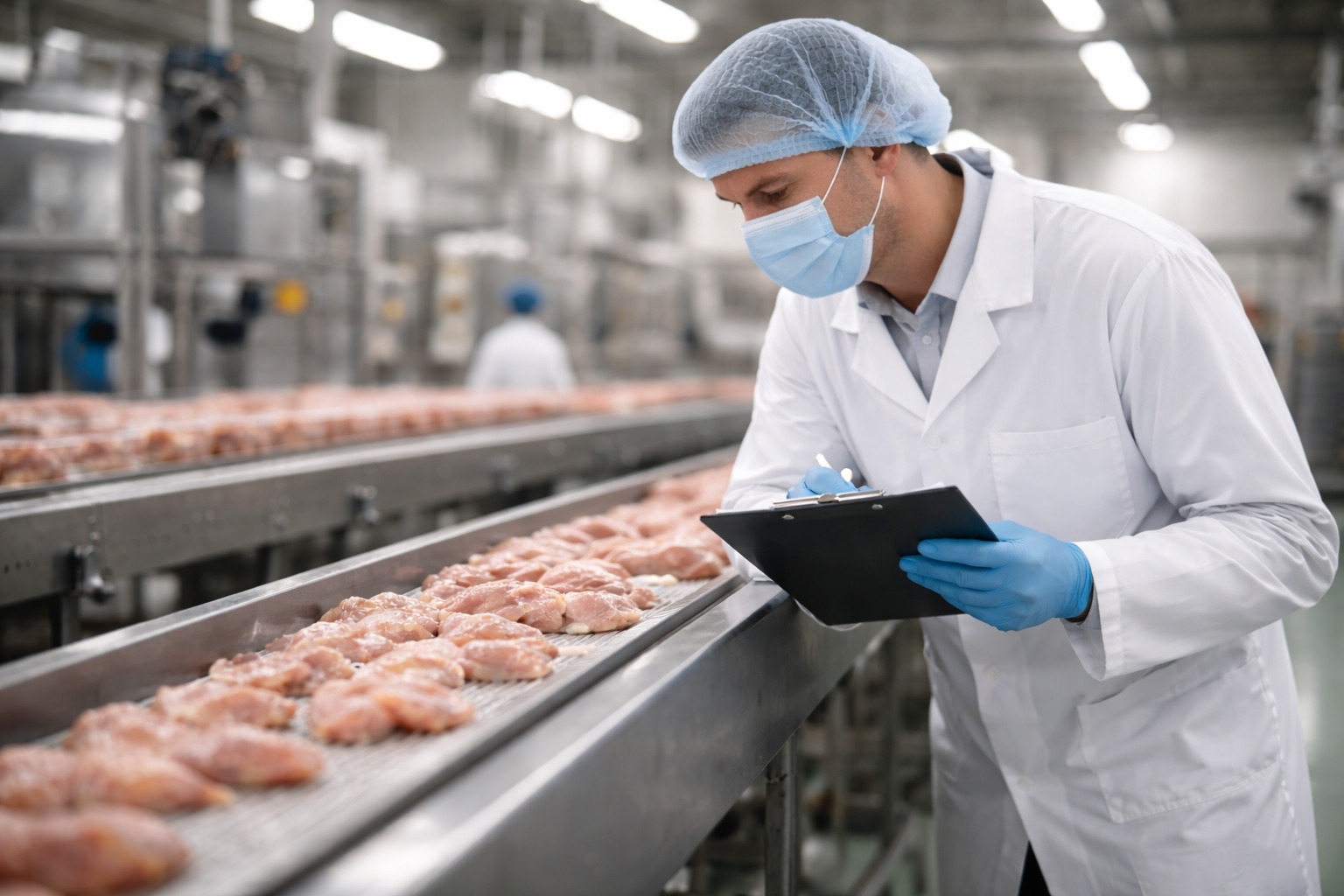
Cooked poultry is particularly exposed because the process combines high-volume production, handling after cooking, rapid chilling, freezing, cutting, packaging, and distribution. The thermal process may control the hazard at one point, but post-cook contamination remains a risk if environmental controls, equipment hygiene, air handling, staff practices, or packaging areas are weak. Listeria can persist in food manufacturing environments and survive at refrigeration temperatures, making it difficult to manage once established.
The import dimension adds another layer. When product originates overseas, UK buyers rely on supplier approval, specifications, audit records, microbiological standards, shipping controls, border documentation, temperature records, and customer testing. A chain involving overseas processing, importers, wholesalers, and catering customers can become complicated during an incident if batch records or responsibilities are not clear.
Healthcare supply chains require a more cautious approach because the consequence of failure is higher. Product risk assessments should consider not only legal microbiological limits, but also intended use and end consumer. A product that may be acceptable for general sale can be unsuitable for high-risk settings if it is likely to be served without a kill step or if vulnerable patients could be exposed.
Foodservice customers also need clear handling instructions. Frozen cooked chicken must be controlled during defrosting, storage, preparation, and service. If products are intended for reheating, instructions need to be unambiguous. If they are suitable for cold use, the evidence base needs to support that use. Ambiguity at this point can transfer risk from the supplier to kitchens that may not have the time, equipment, or technical capacity to resolve it.
Environmental monitoring remains one of the strongest protections in cooked meat supply chains. Finished-product testing can identify contamination, but it is often too late to prevent distribution. Stronger controls sit upstream: hygienic zoning, post-cook segregation, cleaning validation, drain management, equipment design, staff movement control, trend analysis, and rapid escalation where Listeria indicators appear.
Cooked protein ingredients are used across chilled and frozen meals, sandwiches, foodservice dishes, healthcare menus, and prepared foods. Their convenience depends on confidence that the supplied product is safe for its intended use. When that confidence is questioned, supplier approval, import assurance, handling instructions, and end-use validation all come under scrutiny.