IN Brief:
- Organic sales increased by 4.7%, including volume growth of 2.5% and pricing of 2.2%.
- The productivity programme generated €90 million of savings, including €70 million from supply chain operations.
- Waste reduction, factory utilisation, and capacity debottlenecking support a medium term savings target of €500 million.
The Magnum Ice Cream Company recorded first half revenue of €4.69 billion, with organic sales increasing by 4.7% as volumes rose by 2.5% and pricing contributed a further 2.2%.
Second quarter revenue reached €2.92 billion, representing reported growth of 7.8% and organic sales growth of 4.9%. Acquisitions in India and Portugal added to reported revenue after both transactions were completed around the end of the first quarter.
Adjusted EBIT increased from €666 million to €716 million, lifting the margin from 14.8% to 15.3%. Adjusted EBITDA rose to €880 million, although the margin narrowed from 19% to 18.7% as transitional service arrangements and the Indian acquisition affected the comparison.
Productivity activity generated €90 million of savings during the six month period. Supply chain measures contributed €70 million, while overhead changes provided the remaining €20 million. The programme has concentrated on reducing waste, raising factory utilisation, and removing constraints from production and distribution operations.
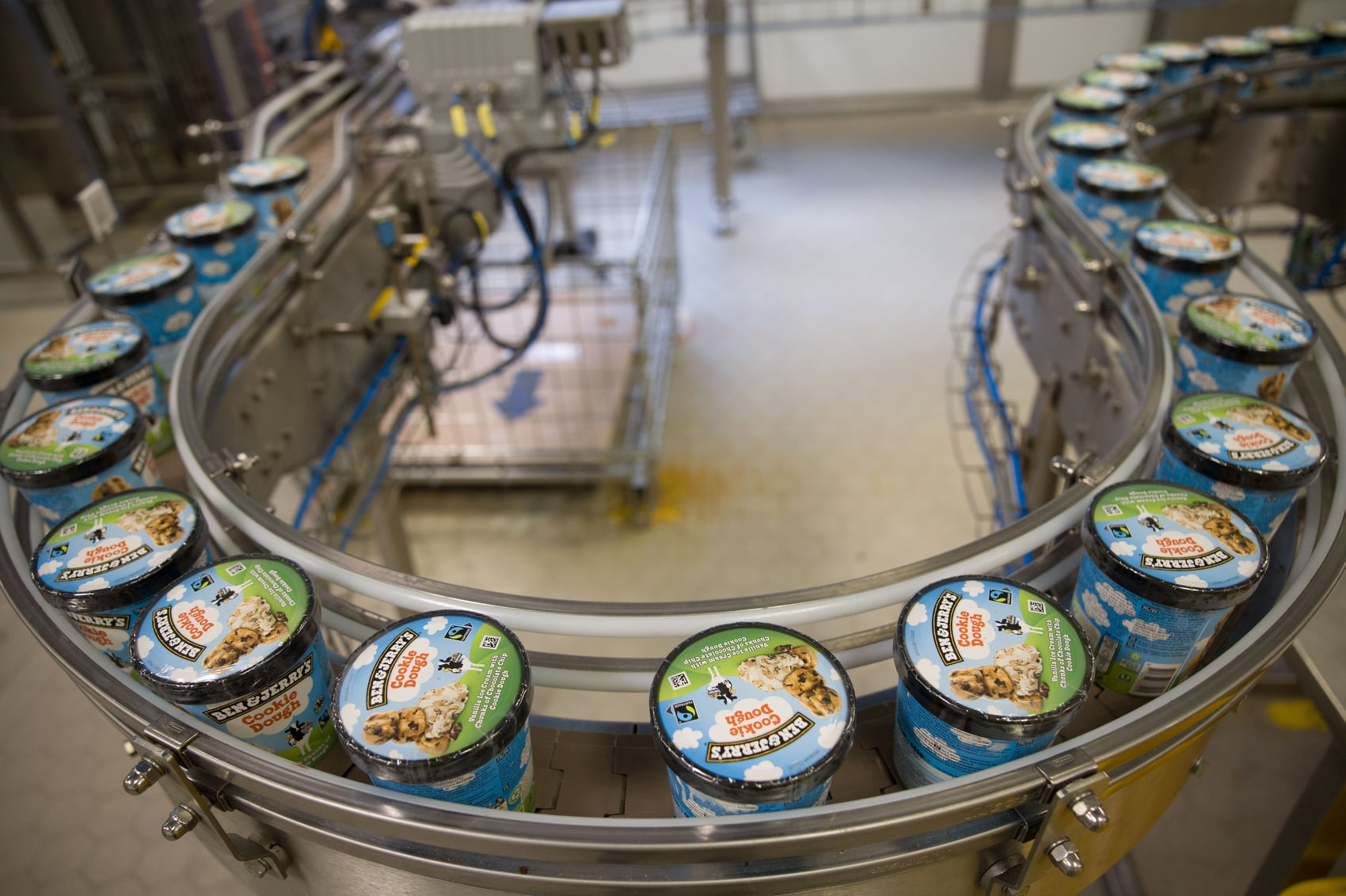
Magnum, Ben & Jerry’s, Cornetto, and Heartbrand all contributed to growth, supported by new flavours, portion formats, sandwiches, sticks, cones, and frozen dessert products. Yasso continued to expand through higher protein and lower calorie formats, while acquired businesses increased the company’s manufacturing and distribution reach.
The results follow the establishment of an independent ice cream business after separation from Unilever, a process that has also attracted external interest in Magnum’s future ownership. The operating programme is being carried out while the company builds standalone technology, finance, procurement, and management systems.
Ice cream factories combine several energy intensive and tightly connected processes. Mixing, pasteurisation, ageing, freezing, inclusion dosing, moulding, extrusion, hardening, wrapping, and frozen storage must remain balanced if a line is to achieve its planned output. Additional capacity at one stage can simply move the restriction to the next machine.
Debottlenecking therefore depends on detailed production data rather than headline equipment speed. Freezer capacity, hardening time, coating temperature, inclusion supply, wrapping reliability, and cold storage availability can each limit finished output. Relatively modest changes to conveyors, accumulation, controls, or scheduling may release capacity without requiring a complete new line.
Waste reduction spans both product and packaging. Mix retained during changeovers, coating giveaway, broken cones, misplaced sticks, rejected wrappers, damaged cartons, and temperature deviations all affect yield. Inspection systems can reveal losses, but mechanical condition, recipe control, operator practice, and maintenance remain essential to correcting them.
Seasonality adds another layer to factory utilisation. Plants build inventory before warmer periods, yet demand can move quickly with weather, promotions, and retailer activity. Longer runs improve efficiency, while a growing number of flavours and formats increases changeovers and material complexity. Production planning must hold enough stock without leaving excessive frozen inventory when demand shifts.
Magnum’s medium term productivity programme is intended to deliver about €500 million in savings. Reaching that level will require repeated gains across 32 factories, logistics operations, freezer cabinet networks, procurement, and administration rather than relying on a small number of restructuring projects.
First half volume growth provides stronger utilisation across the network, but it also exposes constraints that may have remained hidden when demand was lower. Continuing to increase output while adding formats and completing the separation programme will test whether the current savings can be converted into durable manufacturing performance.