IN Brief:
- Mettler-Toledo has launched the X56 DXD+ dual energy photon-counting X-ray inspection system.
- The system targets low-density contaminants such as rubber and plastics in complex packaged products.
- AI, traceability, and hygienic design are pushing inspection systems deeper into productivity and compliance strategy.
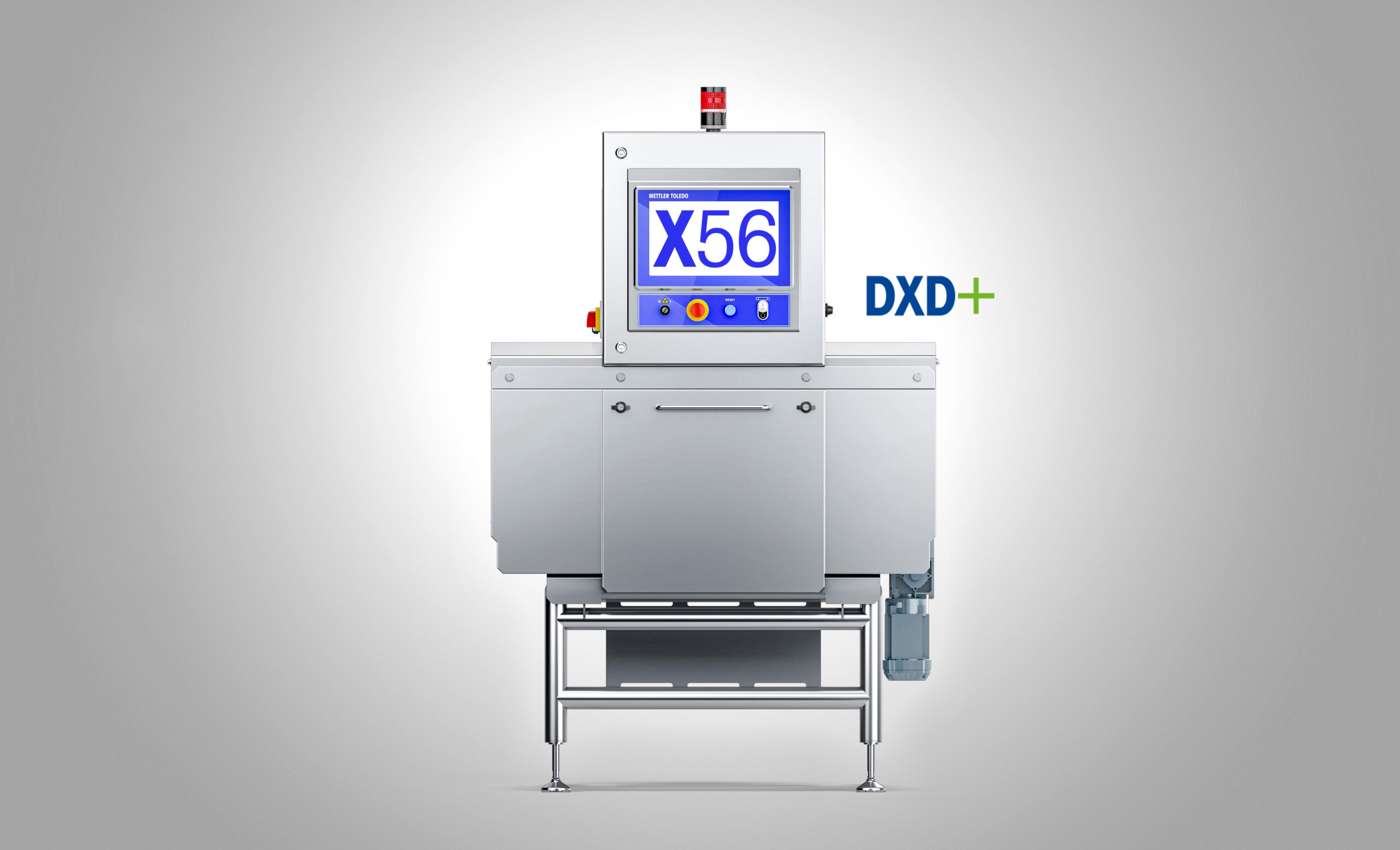
Mettler-Toledo Product Inspection has launched the X56 DXD+ dual energy photon-counting X-ray inspection system, expanding its X6 Series with AI-supported detection for complex packaged food applications.
The system has been developed for packaged products where conventional inspection can struggle with low-density contaminants, overlapping textures, variable thickness, and mixed-density formats. Target applications include pet food, crisps, potatoes, multi-packs, bags, cartons, and other medium to large packaged products running on single lanes, as well as smaller packs running across multiple lanes.
The X56 DXD+ uses DXD+ detector technology and Advanced Material Discrimination Pro software. It is designed to improve detection of hard-to-find contaminants, including rubber and plastics, while supporting quality checks beyond foreign-body detection. Built-in tools include completeness checks, clip detection, and product trapped in seal inspection.
The system has a 500mm width and can operate in single- or multi-lane configurations. Mettler-Toledo says it can handle throughput rates of up to 500 products per minute, supported by an intuitive interface, toolless belt removal, and hygienic design for high-speed, high-volume production environments.
AI capability is being used to improve inspection reliability and reduce unnecessary product rejection. Higher detection sensitivity only delivers full value when false rejects remain under control. Food manufacturers need systems that can distinguish more accurately between genuine contaminants and acceptable product variation, particularly where product density, pack overlap, and texture create complex images.
Chris Plant, Head of Market Management, Mettler-Toledo Safeline X-ray, said: “The launch of the X56 DXD+ expands our X6 Series, offering a comprehensive suite of inspection solutions tailored to modern food manufacturing. With its dual energy photon-counting capabilities, the X56 DXD+ delivers new levels of detection performance in complex packages across single and multi-lane formats. This advanced inspection capability will further help customers inspect every product with confidence, protect productivity, brand reputations and profits, plus comply easily with industry requirements.”
The launch builds on a period of increased inspection activity across the sector. Mettler-Toledo brings Eagle x-ray line to Europe examined photon-counting X-ray capability and inline fat analysis for demanding raw and packaged food applications. The X56 DXD+ extends that direction into packaged formats where product geometry and density variation create persistent inspection challenges.
Audit readiness is also becoming more closely tied to inspection equipment. Mettler-Toledo targets evidence-driven inspection audits in UK set out the growing role of connected inspection, data capture, preventive maintenance, and evidence-led audit preparation. The X56 DXD+ supports that approach through recorded image databases, ProdX data management integration, centralised monitoring, and secure record keeping.
Inspection systems are moving from end-of-line safeguards into connected quality-control nodes. A modern X-ray unit is expected to detect contaminants, check product integrity, support reject validation, reduce giveaway, assist traceability, and generate records that can withstand audits. That is a broader role than the historic expectation of finding metal, glass, stone, bone, or dense plastic before products leave the line.
Complex packaged products have accelerated that shift. Multi-packs, uneven snacks, overlapping products, mixed components, metallised materials, and high-speed packing lines all make inspection more difficult. At the same time, retailers and regulators expect stronger due diligence, while recalls remain expensive in both financial and reputational terms.
False rejection remains one of the hardest operational trade-offs. Removing too much good product creates waste, rework, labour demand, and margin loss. Missing contamination creates a much larger safety and brand risk. Dual energy photon-counting technology, AI-supported analysis, and material discrimination software are all aimed at narrowing that gap.
The X56 DXD+ gives Mettler-Toledo another platform in that direction. Its significance lies in the combination of contaminant detection, data capture, cleaning speed, flexible integration, and audit-ready inspection records. Food inspection is becoming more sensitive, more connected, and more closely tied to production efficiency, rather than sitting at the end of the line as a standalone safety check.