IN Brief:
- Mettler-Toledo is extending its European portfolio with the Eagle product line for advanced food inspection.
- The range adds photon-counting x-ray capability and inline fat analysis for meat and poultry processing.
- The launch points to stronger demand for higher-sensitivity inspection in demanding raw-product environments.
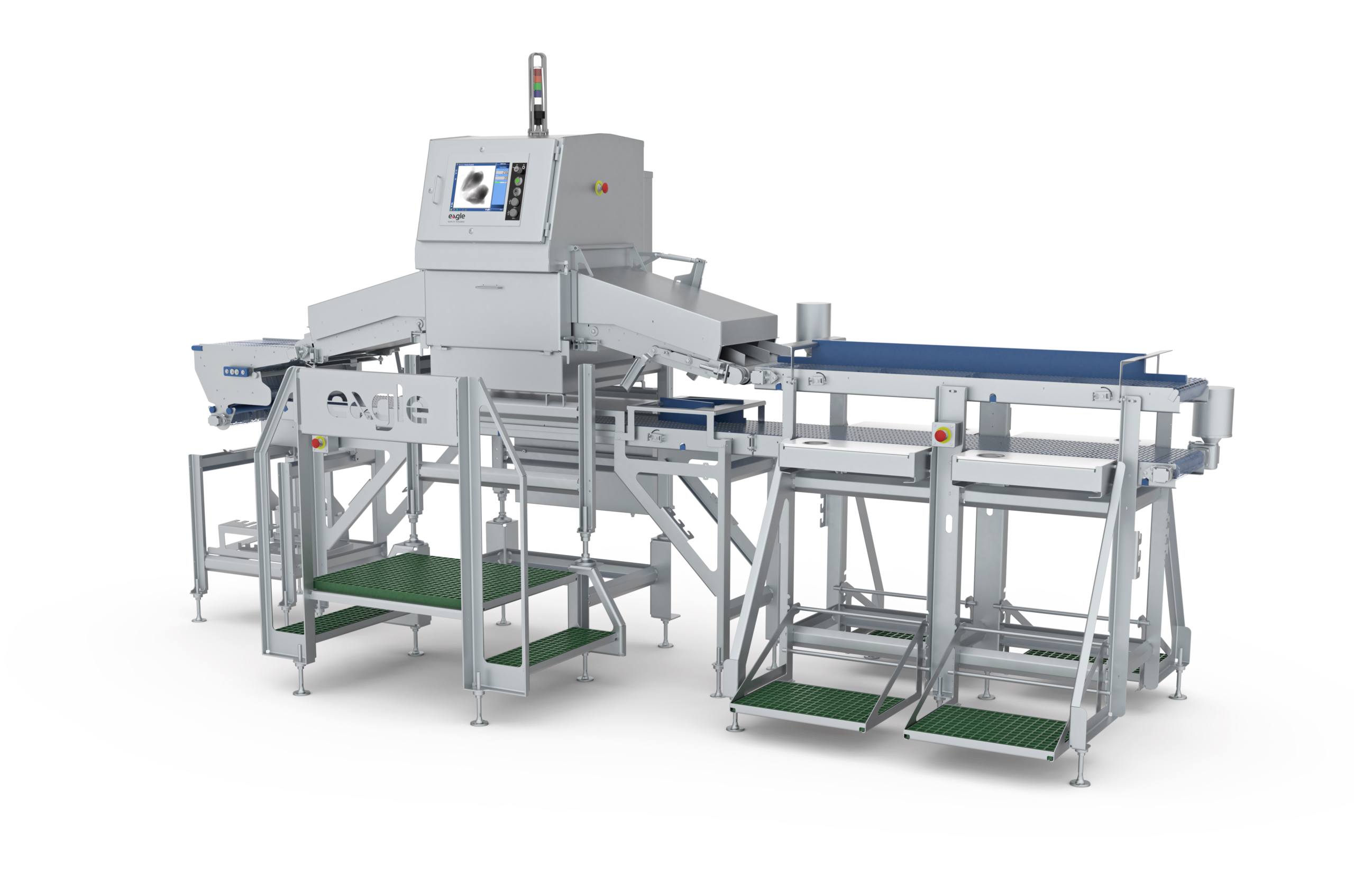
Mettler-Toledo Product Inspection is strengthening its European offer with the Eagle line of higher-performance x-ray systems, widening the company’s capability in demanding raw and packaged food applications while adding inline fat analysis for meat and poultry processors. The move is aimed at the premium end of the market, where standard inspection equipment may struggle to balance sensitivity, hygiene, throughput, and false-reject control on complex product lines.
The most important technical point is the addition of Eagle’s photon-counting x-ray capability. In meat and poultry, the hard jobs are usually the ones where density contrast is weak and contaminant detection sits too close to the product’s own natural variation. Bone fragments in deboned poultry are the obvious example, but the issue extends to low-density foreign bodies, raw material inspection, and applications where the cost of missed contamination is high and the cost of unnecessary rejection is not far behind. Eagle’s dual-energy platform is built to improve material discrimination in precisely those conditions.
That makes the launch more than a straightforward portfolio extension. It is a sign that processors increasingly want inspection systems that do more than provide a compliance backstop at the end of the line. Food manufacturers are under pressure to protect yield, improve operator workflow, and generate better control over raw material variability. Inspection technology is therefore being asked to contribute to process optimisation as well as hazard management. The inclusion of inline fat analysis in the expanded European offer fits that same direction. For red meat and poultry processors, chemical lean control is not a side issue. It is central to cost, consistency, and customer specification.
The European introduction of the MAXIMIZER RMI at Interpack adds another layer. The system is designed for raw poultry applications and combines Eagle x-ray inspection with automated material handling and reject management. In practical terms, that is where inspection systems become operational tools rather than isolated machines. High-throughput raw lines need structured reject handling, easy sanitation, and low disruption if they are to deliver their theoretical performance in the real world. European processors looking at poultry bone detection will likely focus just as much on line integration and washdown practicality as on pure detection numbers.
The business case is becoming clearer across the sector. Labour remains tight, food safety expectations are unforgiving, and recalls are still ruinously expensive. At the same time, yield losses and over-rejection can quietly erode margins every shift. That is why inspection investment is moving toward systems that promise both sensitivity and selectivity. A machine that finds more contamination but throws away too much good product creates a different problem. The current generation of higher-end x-ray systems is trying to solve both sides of that equation.
There is also a regional manufacturing angle in the decision to serve Europe more directly. Local production and support can shorten lead times, reduce freight costs, and make engineered-to-order configurations easier to deliver. For processors making capital decisions in a volatile cost environment, those factors increasingly matter alongside technology performance. Service coverage, spares, and application support often decide whether a premium inspection system is attractive in practice.
The wider trend is unmistakable: food inspection is moving upstream, getting smarter, and becoming more tightly tied to operational efficiency. Poultry processors want fewer bones, fewer false rejects, and faster sanitation. Meat processors want more accurate composition control. Dairy, seafood, and other categories are asking more from x-ray in package integrity and foreign-body detection. Mettler-Toledo’s Eagle push into Europe sits within that shift. It suggests the market for advanced inspection is no longer reserved for niche adopters. It is becoming a more mainstream route for processors trying to tighten quality control without handing away yield.