IN Brief:
- Pilgrim’s Europe has agreed to acquire Walkers Deli & Sausage Company from Samworth Brothers.
- Walkers operates four production facilities on one Leicester site and manufactures premium pork products for UK retailers.
- Completion remains subject to Competition and Markets Authority approval and employee consultation.
Pilgrim’s Europe has agreed to acquire Walkers Deli & Sausage Company from Samworth Brothers, potentially adding four Leicester production facilities and approximately 1,150 employees to its UK protein and prepared-food manufacturing operations.
The transaction was announced on 17 August and remains subject to approval from the Competition and Markets Authority and employee consultation in the UK. Pilgrim’s has not disclosed the purchase price or a completion date.
Walkers produces premium sausages, sliced cooked meats, cooked bacon, snacking products, and pâté from four facilities located on a single Leicester site. The business supplies leading UK retailers and has a significant position in premium own-label production.
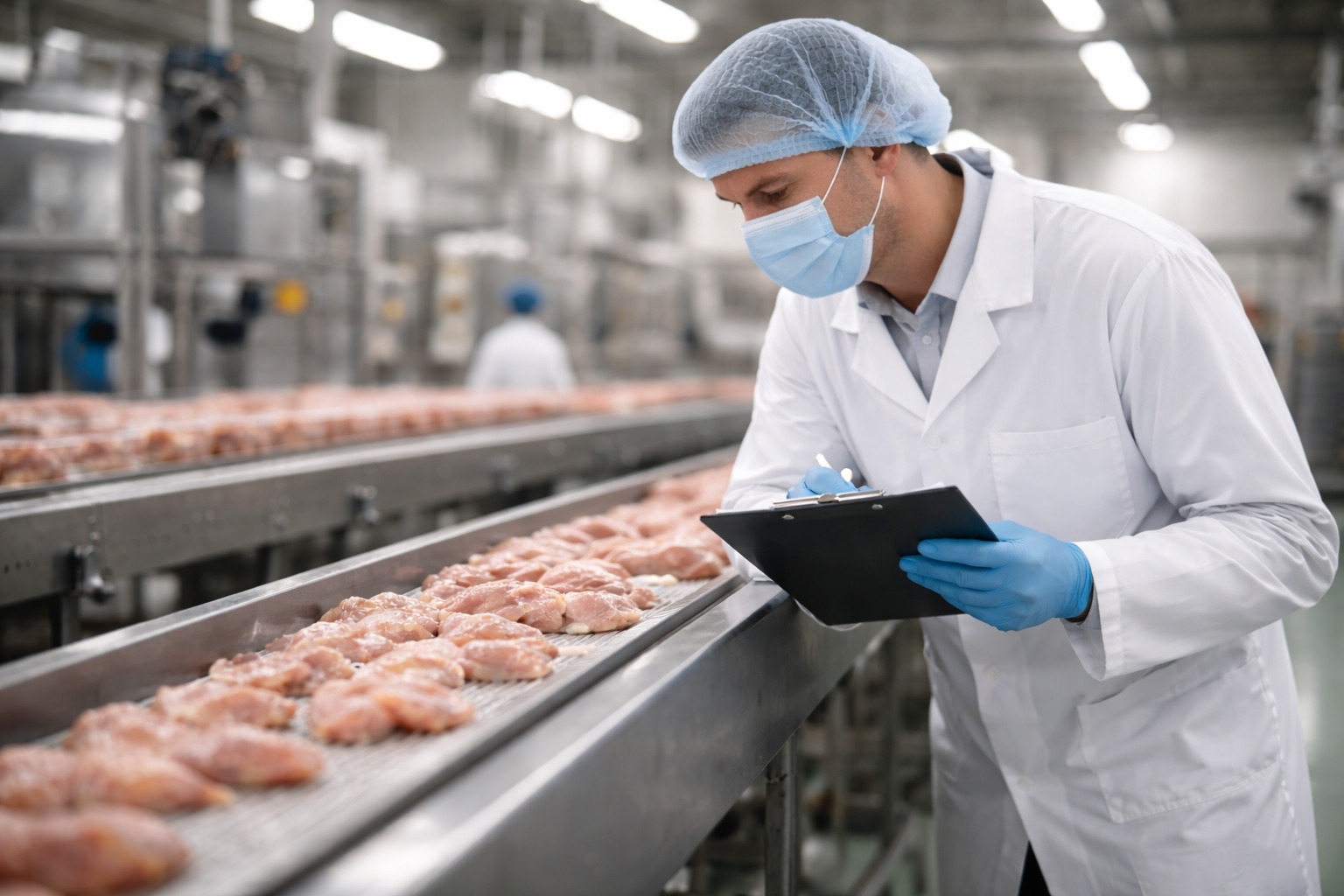
The acquisition would broaden Pilgrim’s presence in further-processed pork rather than simply adding primary meat capacity. Sausages, cooked meats, bacon, pâté, and snacking products require formulation, cooking, portioning, packing, chilling, quality assurance, and retailer-specific production controls beyond the initial handling of raw protein.
Pilgrim’s already has an established supply relationship with Walkers and currently provides some of its raw pork requirements. Bringing the two businesses under common ownership would therefore deepen an existing link between upstream protein supply and downstream added-value processing rather than establish an entirely new sourcing route.
That relationship can be important in a sector where raw material availability, carcass balance, processing capacity, and retailer demand have to be coordinated closely. A premium pork line may require specific cuts, fat levels, formulations, packaging formats, and production schedules, while short shelf lives leave less room for disruption between supply and factory output.
Walkers also adds manufacturing exposure to categories where differentiation depends heavily on recipe, processing, and presentation. Own-label production can involve substantial technical work behind products carrying another retailer’s name, with suppliers expected to meet detailed specifications while controlling yield, labour, quality, and service performance.
The Leicester workforce is consequently a major part of the proposed transaction. Pilgrim’s says its immediate priority after completion would be supporting Walkers employees through the transition while maintaining service and quality. Until the necessary approvals are secured, the businesses remain separately owned.
Pilgrim’s Europe already employs more than 17,000 people across more than 40 sites in the UK, Ireland, France, and the Netherlands. Its operations span poultry, pork, lamb, beef, ready meals, snacking, added-value products, and foodservice, providing an established manufacturing platform into which Walkers could eventually fit.
Samworth Brothers is also a substantial UK food manufacturer, with turnover of £1.8bn and more than 12,000 employees. Its activities include food to go, savoury pastry, meals, and branded products, making the disposal of Walkers a portfolio decision within a much larger manufacturing group rather than an exit from food production.
Samworth Brothers has described protein processing as an increasingly specialised and integrated sector and said the deal would allow it to concentrate investment on growth opportunities elsewhere in its portfolio. For Pilgrim’s, the same specialisation is part of the attraction because protein sits at the centre of its existing supply chain and manufacturing base.
Operational continuity will matter immediately if the deal completes. Retailer programmes depend on agreed volumes, specifications, delivery windows, technical approvals, and consistent product quality, so any ownership transition will have to protect line performance, labour availability, raw-material flow, and chilled distribution while management structures change around the site.
Competition scrutiny will decide whether the proposed combination can proceed. The CMA assessment comes before any full operational integration, and the announcement does not set out plant rationalisation, production transfers, or other post-completion restructuring.
That leaves the manufacturing case centred on the assets Walkers already operates: four facilities, an experienced workforce, premium pork categories, own-label expertise, established retail customers, and an existing raw-material relationship with the buyer.
If approved and completed, the transaction would place more of that supply and processing chain inside Pilgrim’s Europe. The practical test will be whether the group can preserve the product, service, and manufacturing performance expected by Walkers’ retail customers while extracting efficiencies from a closer relationship between pork supply and added-value processing.