IN Brief:
- Automate UK reports UK robot density of 112 industrial robots per 10,000 manufacturing employees.
- The trade association identifies financial and skills barriers to the installation and operation of automated systems.
- The manifesto calls for stronger collaboration with government, manufacturers, and technology and finance providers.
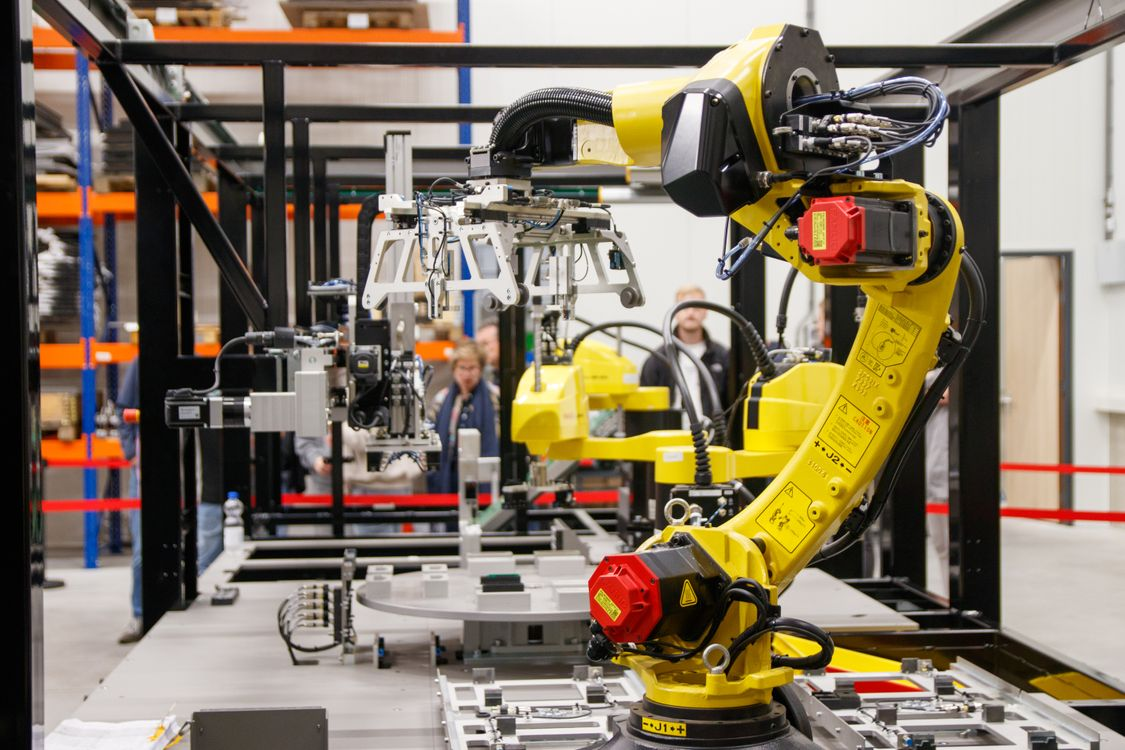
Automate UK is calling for a greater emphasis on the implementation of advanced manufacturing policy through investment in industrial robots, machine vision, and automation skills. Its refreshed Manifesto for Automation addresses barriers to the adoption of equipment and software, including the financial and engineering resources required to integrate them into established factories.
The association, whose membership includes processing and packaging machinery suppliers, puts British robot density at 112 industrial robots per 10,000 manufacturing employees, roughly half the European Union average. Its manifesto also cites figures indicating that only 2% of manufacturers have embedded automation and artificial intelligence throughout their businesses. These figures describe the manufacturing sector as a whole rather than the food industry specifically.
The updated policy programme places an emphasis on connecting suppliers and integrators with businesses considering investment. Automate UK also wants closer involvement from financial institutions, alongside collaboration with industry organisations and research centres capable of supporting the practical deployment of technology.
Food manufacturing contains operations with very different levels of suitability for automated handling. At the end of a packaging line, sealed cartons can present relatively consistent dimensions and mechanical characteristics to palletising robots. Earlier processing stages can involve soft, irregular, or wet products whose geometry and handling requirements change between batches.
Grippers used to transfer unpackaged foods must account for those variations while preserving the integrity of individual products. A soft bakery item may require control over the force applied during handling, whereas a chilled meat portion can present variations in surface characteristics and orientation. The selected gripping method must also allow access for cleaning and suit the conditions under which the machine operates.
Machine vision can help automated systems identify where individual products are positioned and determine how to handle them. Cameras and lighting must be selected to capture useful information at the required production speed. Reflective surfaces, overlapping items, and variations in colour can influence the reliability of image analysis, while sanitation procedures can affect the physical arrangement of equipment and optical components.
Retrofitting automation into a factory can consequently require modifications to the wider manufacturing process. A robot cannot handle products consistently if upstream conveyors deliver them in unsuitable orientations or at unpredictable intervals. Additional spacing, sorting, or conveying equipment may be needed before the handling operation can function effectively, increasing the scope and cost of the project.
The assessment of investment returns must incorporate that integration work alongside machinery purchase and installation. A system designed for a particular rate of production may achieve substantially different output in practice if it encounters frequent product changes, extended cleaning requirements, or restrictions elsewhere on the line. Manufacturers need representative operating data when calculating the labour, yield, and capacity benefits that underpin funding decisions.
Testing technology before installation offers a way to resolve some of those uncertainties. Trials with representative products can establish whether a proposed robot and gripper achieve acceptable handling speeds without damaging the food, and whether the control system can accommodate the required range of formats. Such testing also allows engineers to investigate changes to the production sequence before committing to machinery and factory modifications.
The need for those engineering capabilities extends into the operational life of an automated installation. Maintenance teams must understand sensors, actuators, control systems, and the interactions between adjacent pieces of equipment. Operators need sufficient training to manage changeovers and identify faults without compromising the production controls or safety arrangements established during commissioning.
Automate UK’s manifesto identifies difficulties attracting and developing skilled workers as part of the wider adoption problem. The association’s involvement in robotics training provides a route for developing practical skills alongside its policy work. Training programmes need to encompass both the personnel specifying and integrating new systems and the employees responsible for their day-to-day operation.
The increasing connectivity of equipment also changes the skills required within production engineering. Data collected from inspection systems, motor drives, and controllers can support maintenance planning and production analysis, but its value depends on the accuracy and consistency of the underlying measurements. Integrating that information across equipment from different suppliers creates additional work around interfaces, data definitions, and network security.
The manifesto does not commit the government to new spending or establish additional statutory requirements. Its emphasis is on turning existing policy ambitions into practical investments supported by finance, demonstration facilities, and technical training. Those resources will influence whether smaller food manufacturers can undertake projects of a scale sufficient to improve productivity without taking on disproportionate integration and operational risks.