IN Brief:
- University of Reading researchers produced chocolate from cocoa grown at the International Cocoa Quarantine Centre in Berkshire.
- The trial followed the crop through fermentation, drying, roasting, grinding, formulation, and finished chocolate manufacture.
- The project demonstrates links between cocoa genetics and processing resilience rather than a commercial case for British cocoa farming.
University of Reading researchers have produced a chocolate bar using cocoa grown at the university’s International Cocoa Quarantine Centre in Berkshire, completing the chain from harvested pod through fermentation and processing to finished chocolate.
The Reading 100 Chocolate Bar was created by food security master’s student Maha Khan as part of the university’s centenary year. The cocoa was grown under controlled conditions at Reading before the beans were harvested and taken through the processing stages in the Department of Food and Nutritional Sciences.
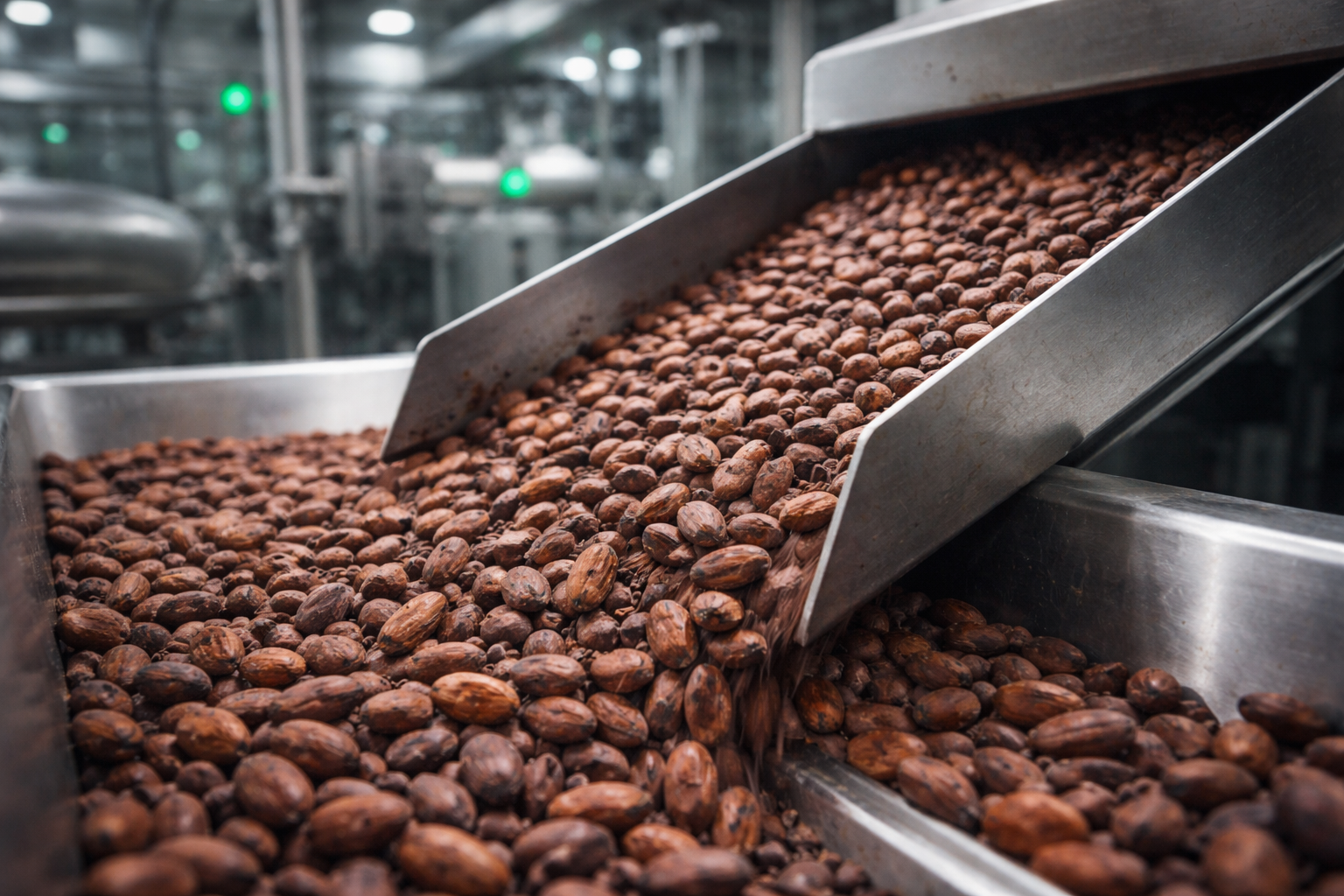
After the pods were opened, the beans were fermented and dried before roasting. Khan then crushed and ground the roasted material using industry-standard equipment, producing cocoa that was combined with British-grown sugar and milk before heating, shaping, and forming the finished bar.
The result is unusual because UK chocolate manufacturing remains dependent on internationally sourced cocoa. Reading says the British chocolate market is worth £10.4 billion, while commercial cocoa cultivation is concentrated in tropical producing regions whose growing conditions bear little resemblance to a controlled Berkshire research facility.
The experiment therefore says considerably more about the processing chain and the university’s cocoa research than it does about reshoring cocoa production. Producing enough beans for one research batch under glass is a different proposition from supplying a commercial chocolate factory with predictable volumes at an economically viable cost.
Khan said: “This British bar of chocolate highlights the precarious nature of our food supplies.”
The beans came from the International Cocoa Quarantine Centre, which maintains more than 300 cocoa types. Reading says the facility handles 97% of the world’s international movement of cocoa plants, operating under controlled conditions intended to prevent pests and diseases being transferred between producing regions.
That work begins a long way upstream of a confectionery line, but it has a direct connection with manufacturing resilience. Chocolate producers require secure supplies of cocoa with predictable flavour, fat composition, colour, microbiological quality, and processing characteristics. Disease, weather disruption, and changing growing conditions can affect both availability and consistency before beans enter an industrial plant.
The quarantine collection allows plant material to be studied and transferred into research and breeding programmes without moving unwanted pathogens alongside it. Maintaining genetic diversity gives breeders a wider base from which to select cocoa with improved disease resistance or tolerance to changing environmental conditions.
Those characteristics matter to processors only if the resulting beans also perform through fermentation, drying, roasting, and downstream manufacturing. A resilient tree that produces material with unsuitable flavour or processing behaviour is not automatically a useful commercial solution, so crop improvement and food processing ultimately have to converge.
The Reading project puts those normally separated stages into one visible chain. Fermentation begins developing the flavour precursors required later during roasting, while drying stabilises the beans for subsequent handling. Roasting then develops flavour and reduces moisture before the material is broken down and ground.
At industrial scale, manufacturers need those incoming characteristics to remain within much tighter limits than a demonstration batch. Variability in fermentation, moisture, bean size, fat content, or flavour can alter roasting profiles and formulation decisions, while contaminants or poor storage conditions can create additional quality-control problems.
The experiment arrives as cocoa users are investigating several ways to reduce exposure to volatile raw-material markets. Cultivated Food Labs is preparing an industrial trial of a faba bean-based cocoa alternative, for example, targeting partial substitution in products where manufacturers may be able to reduce conventional cocoa use without replacing it altogether.
Reading’s work addresses the problem from the opposite direction. Rather than designing an alternative ingredient, its quarantine programme supports the genetic resources needed to keep conventional cocoa production viable as disease and climate pressures change.
Neither route offers manufacturers an immediate escape from commodity exposure. Alternative ingredients still have to demonstrate flavour, colour, functionality, cost, regulatory compliance, and consistent supply at scale, while improved cocoa varieties can take years to breed, evaluate, propagate, and establish in producing regions.
The British-grown bar also underlines the importance of international trade rather than undermining it. Professor Carol Wagstaff, director of AgriFood Futures at Reading, has stressed that cocoa production provides livelihoods in tropical economies and that resilient global supply remains critical to both growers and chocolate manufacturers.
That is an important qualification to a project whose novelty comes from producing a familiar imported crop in Berkshire. The industrial value is not a vision of British cocoa plantations feeding domestic confectionery factories, but a compact demonstration of how genetics, crop health, fermentation, ingredient quality, and factory processing remain connected.
Chocolate manufacture begins long before ingredients reach a mixer or refiner. Reading’s small batch makes that connection unusually visible: every finished bar depends on decisions and controls stretching from plant material and crop disease through fermentation and roasting to the repeatability demanded on a production line.