IN Brief:
- RespectFarms has installed cultivated meat production units on a working farm in Zuid-Holland.
- The project is supported by EIP-Agri and the Province of Zuid-Holland.
- The farm-integrated model offers a decentralised route for cultivated meat production and farmer income diversification.
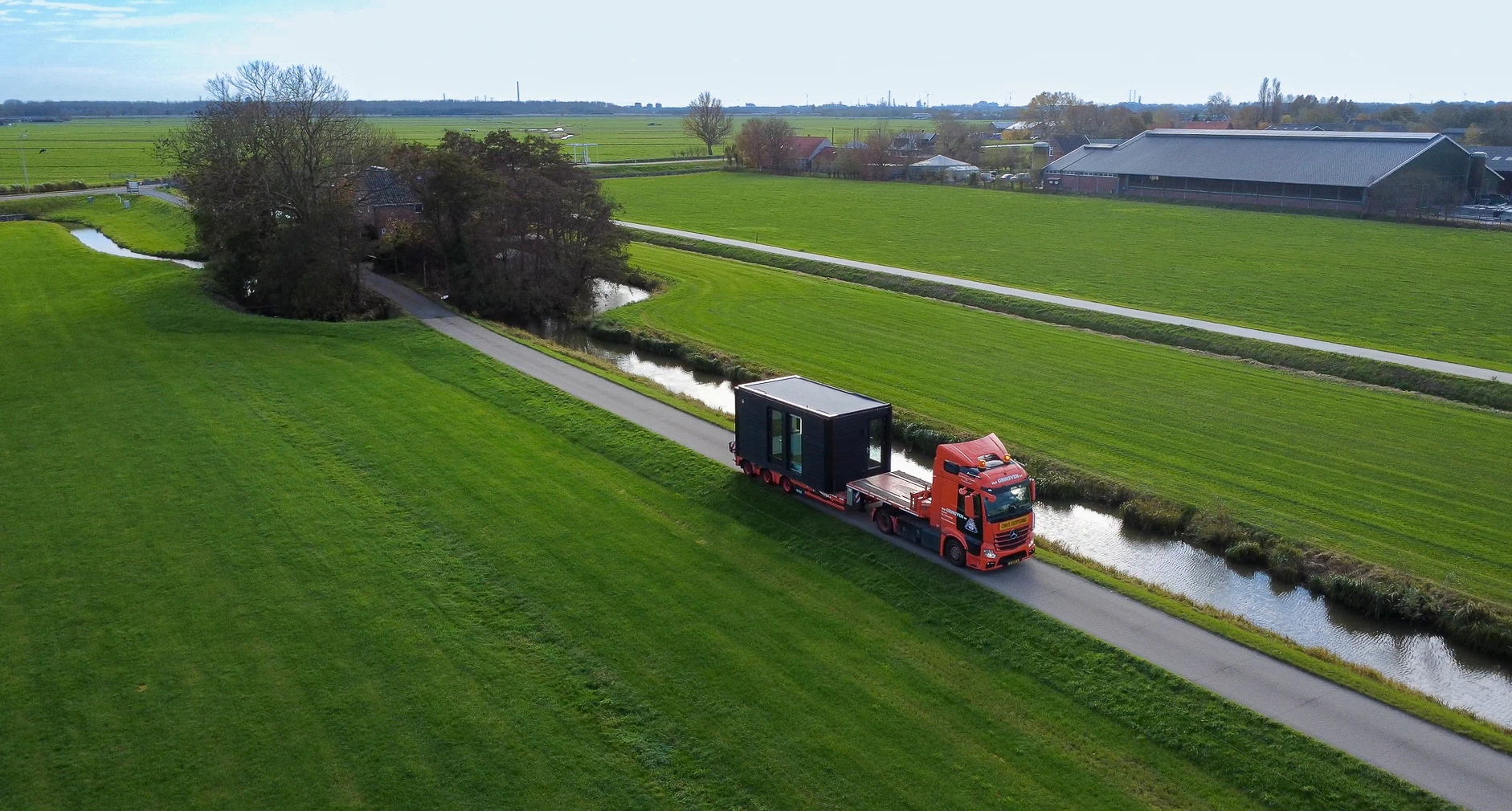
RespectFarms has installed a cultivated meat production unit on a working dairy farm in Zuid-Holland, bringing cell-culture meat production into an active agricultural setting.
The project has been developed with dairy farmer Corné van Leeuwen and is supported by EIP-Agri and the Province of Zuid-Holland. The units have been placed inside an existing farm operation, creating a test centre for producing meat from animal cells alongside conventional agricultural activity.
Unlike the large centralised pilot plants that have dominated much cultivated meat development, the Dutch model is designed around decentralised production. RespectFarms is positioning the farm-scale unit as a way for livestock farmers to take part in future protein production rather than being pushed to the edge of a food system built entirely around industrial biotechnology sites.
Cultivated meat production depends on growing animal cells in controlled environments using nutrients, oxygen, and carefully managed temperature conditions. The process has advanced steadily at laboratory and pilot level, but the manufacturing challenge remains demanding. Bioreactor productivity, media cost, contamination control, texture formation, energy use, and downstream processing all determine whether the technology can move from demonstration to reliable production.
By placing the process on a farm, RespectFarms is also testing the business architecture around the technology. A farm-based unit will not automatically deliver the lowest cost per kilogram, but it creates a different framework for adoption: distributed assets, farmer participation, local engagement, and operational learning inside the agricultural economy.
“We’re building a model where livestock farmers remain at the centre of food production, not replaced by factories,” said Ira van Eelen, co-founder of RespectFarms and Cellular Agriculture Netherlands. “This is an opportunity to make the protein transition fair, transparent, and rooted in rural communities.”
The approach sits alongside other cultivated meat scale-up efforts taking shape in the UK and Europe. Meatly’s planned London pilot, designed around pet food applications, is moving toward a 20,000-litre production system and a more centralised industrial model. RespectFarms is working from a different starting point, using agricultural infrastructure as the platform for a technology usually associated with biotech manufacturing.
For farmers, the attraction is not only technological novelty. Livestock businesses across Europe are dealing with tighter environmental rules, volatile feed costs, land-use pressure, and shifting protein demand. A small-scale production unit that can operate alongside existing activity could offer an additional income stream if the economics, regulatory approvals, and market channels develop in parallel.
The social dimension may also prove important. Cultivated meat has often struggled with public acceptance because the production process feels distant from familiar food systems. Locating production on a working farm gives policymakers, farmers, students, and value-chain partners a physical site where the technology can be seen, debated, and assessed in context.
“As a farmer you have to look ahead, especially these days,” said Van Leeuwen. “This is a chance to see whether a new income model can fit alongside what we already do. Making cultivated meat on the farm makes sense for many reasons.”
Alternative protein investment has become more disciplined after earlier enthusiasm, and investors are now pressing companies to show manufacturability, regulatory progress, route-to-market clarity, and credible cost reduction. RespectFarms will therefore need the site to generate operational evidence, not only attention. If the model proves technically robust, it could widen the cultivated meat debate from factory scale alone to a more diverse production network rooted in farms, processors, and regional food systems.