IN Brief:
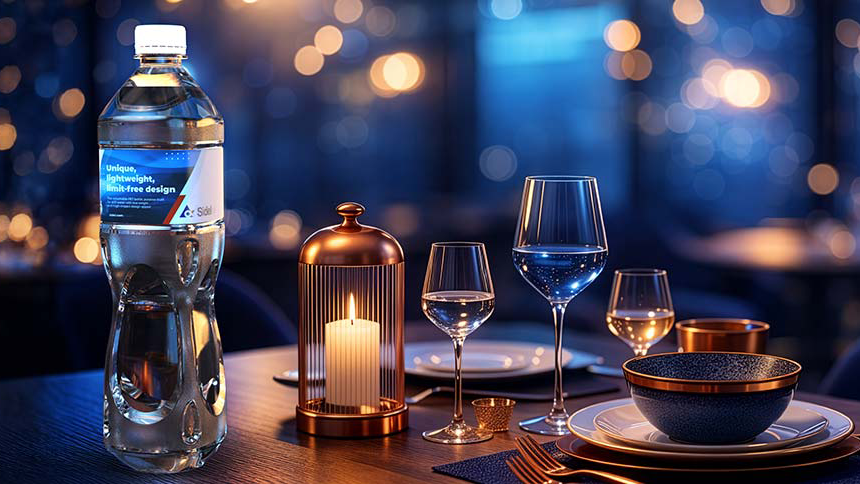
- Sidel has introduced a returnable PET bottle developed specifically for still water rather than adapted from carbonated formats.
- The bottle is designed for up to 25 wash cycles and is 10% lighter than the lightest 1-litre returnable CSD bottles used for still water.
- Reuse pressure is shifting bottle design from pilot concept to production engineering question in high-volume beverage lines.
Sidel has launched a returnable PET bottle designed specifically for the still water market, a move that points to a more serious push toward reusable packaging formats in one of the beverage sector’s highest-volume categories.
The new Returnable PET – Still Water bottle is being positioned as a dedicated format rather than an adaptation of packaging originally designed for carbonated soft drinks. That distinction matters. Returnable PET has been technically possible for some time, but still water has often been served by compromises in bottle geometry and performance because packaging was borrowed from carbonation-led applications. Sidel is now arguing that still water producers need a bottle built around their own process and handling requirements, not one inherited from another category.
According to the company, the bottle is 10% lighter than the lightest 1-litre returnable carbonated-water bottles currently used for still water. It is designed to withstand up to 25 washing cycles and remains compatible with existing PET recycling streams at end of life, allowing bottle-to-bottle circularity once the reusable format has completed its service life. The design is also compatible with Sidel’s EvoBLOW blow-moulding range, which lowers one of the practical barriers to adoption by linking the format to existing processing and packaging infrastructure.
Sidel is also stressing design flexibility. The range covers capacities from 0.5 to 2 litres and includes cylindrical and square bottle forms, allowing producers to retain more of their brand identity while shifting into a reusable format. That may sound like a marketing detail, but it is relevant at scale. Beverage producers have historically been cautious about reuse formats where brand distinction, shelf impact, and line compatibility are constrained. A reusable bottle that preserves some design freedom while remaining durable enough for repeated washing is more likely to make it through internal packaging reviews.
The launch arrives as water producers and retailers are under stronger pressure to show progress on packaging circularity. In the past, many reuse discussions stalled at the level of targets, pilots, and regional deposit models. What tends to determine adoption in practice is whether the bottle can survive the real conditions of collection, washing, transport, and repeated filling without destroying line efficiency or unit economics. That is where packaging stops being a policy story and becomes an engineering one.
Still water is a logical place for this next step. It is a large, standardised category with comparatively simple product characteristics, but also one where margins can be tight and logistics volumes are enormous. A reusable PET format that cuts weight, survives repeated wash cycles, and fits existing production platforms could alter the economics of return systems more meaningfully than a bespoke premium-pack concept. The challenge, of course, is that any gains at bottle level still depend on a functioning collection and reverse-logistics system around it. Reuse is not just a container decision; it is a network decision.
That is why Sidel’s launch is best read as part of a wider shift in how packaging suppliers are responding to regulatory and retailer pressure. The industry is moving away from abstract commitments toward machine-compatible formats that can be plugged into actual production and reuse systems. Lightweighting remains important, recyclability remains essential, but neither on its own is enough. Packaging suppliers now need to show how a container behaves over multiple lives.
For water bottlers, the appeal of a format like this lies in its attempt to reduce the trade-off between durability and efficiency. Heavier returnable formats improve resilience but penalise material use and logistics. Lighter formats improve material efficiency but can struggle in wash and handling systems. The balance between the two is where adoption will be won or lost.
Sidel’s new bottle does not settle the reuse debate, but it does move it into more useful territory. The question is no longer whether reusable PET for still water can exist. It is whether producers are ready to treat reuse as a mainstream packaging format rather than a side project.