IN Brief:
- EquiTherm Power recovers low-grade energy from fermentation cooling and other brewery processes.
- The company specifies combined heating and cooling coefficients of performance up to eight under suitable conditions.
- The modular system can supply higher-temperature processes and supports integration into existing steam infrastructure.
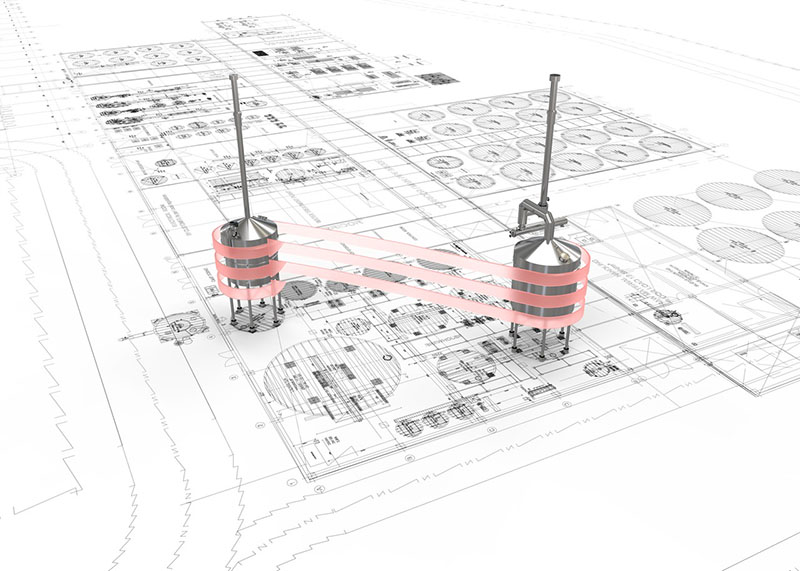
Steinecker has introduced EquiTherm Power, a modular approach to producing brewery process heat using electricity, recovered thermal energy, heat pumps, and steam compression. Developed within the Krones Processing network, the concept is intended to lower the amount of fossil fuel required by breweries while making use of heat that would otherwise be rejected by refrigeration and cooling systems. It can be integrated into new facilities or adapted to existing production infrastructure.
Breweries require both refrigeration and heat in different parts of the process. Fermentation produces heat that has to be removed to maintain the required temperature in the tank, while mashing, wort treatment, cleaning, and sterilisation call for controlled heating. Conventional refrigeration commonly rejects recovered heat at a temperature too low for direct use in those higher-temperature operations. EquiTherm Power is designed to connect these otherwise separate utility demands and raise the temperature of recovered energy to a useful level.
In the fermentation example, cooling energy is collected from the tanks and transferred through the refrigeration circuit. Instead of allowing the heat absorbed by that circuit to pass unused to the environment, a heat pump lifts it to a temperature suitable for the production process. Steinecker says this arrangement can provide useful hot water at temperatures up to 96°C. The exact temperature, recovered heat volume, and electric demand will depend on the available source energy and the load required by the brewery.
The system can also link the production of ice water with that of hot water. These demands have often been served by separate refrigeration and heating equipment, with the cooling plant disposing of heat while another utility supplies thermal energy. By recovering the energy absorbed during ice-water production and transferring it to the hot-water circuit, the same electrically driven process performs two useful functions. Steinecker reports a combined coefficient of performance of up to eight when heating and cooling outputs are considered together.
That headline efficiency figure needs to be read as a combined heating and cooling measure, rather than as eight units of high-temperature heat from one unit of electricity. Steinecker describes the potential as up to eight kilowatt-hours of useful heating and cooling energy per kilowatt-hour of electricity. The attainable result will vary with the temperatures, operating hours, and simultaneous demand for both services. If one side of the circuit is unable to use the available energy, the total practical benefit may differ.
Higher-temperature duties, including wort boiling and sterilisation, require a further increase beyond the temperature available from recovered low-grade heat. EquiTherm Power therefore combines heat-pump technology with electrically driven steam compression. Compressing vapour raises its pressure and temperature, allowing energy to be delivered to a hotter process circuit. Steinecker specifies steam production at up to 135°C with a coefficient of performance of up to six. The announcement does not describe a common pipework arrangement or confirm a site-specific steam balance, so these values should be treated as capabilities of the proposed concept rather than measurements from an installed brewery.
Thermal storage helps match the operation of the equipment to brewery production schedules. Fermentation cooling, ice-water demand, mashing, and steam use do not necessarily peak at the same time, particularly where production proceeds in batches. A store can retain useful heat between its recovery and subsequent consumption, reducing simultaneous peak loads and supporting steadier heat-pump operation. Steinecker says that the modular arrangement can accommodate other thermal sources and respond to changing electricity availability and pricing. The required storage size and operating strategy will depend on each brewery’s measured energy demand and temperature requirements.
EquiTherm Power builds on Steinecker’s established work on heat recovery in the brewhouse, including transferring energy from wort cooling into mashing and related operations. This new concept extends the principle to thermal sources elsewhere in the factory and to electrically driven temperature upgrading. It does not eliminate the need to design the brewery’s distribution temperatures, thermal storage, and production schedules together. Existing plants may also require assessment of electrical capacity, the condition of utility circuits, and the compatibility of steam consumers before a retrofit is specified.
Steinecker describes EquiTherm Power as suitable for both new breweries and retrofits, with only limited changes to existing infrastructure anticipated in its proposed approach. It has not identified a commissioned customer installation or reported measured fuel savings for this specific new configuration. The quoted coefficients of performance describe different operating duties: one combines heating and cooling, while the other applies to electric steam generation. Neither figure represents a measured whole-site fuel saving. Adoption will require site-specific heat-balance design, utility integration, and operating data once the equipment has been installed.