IN Brief:
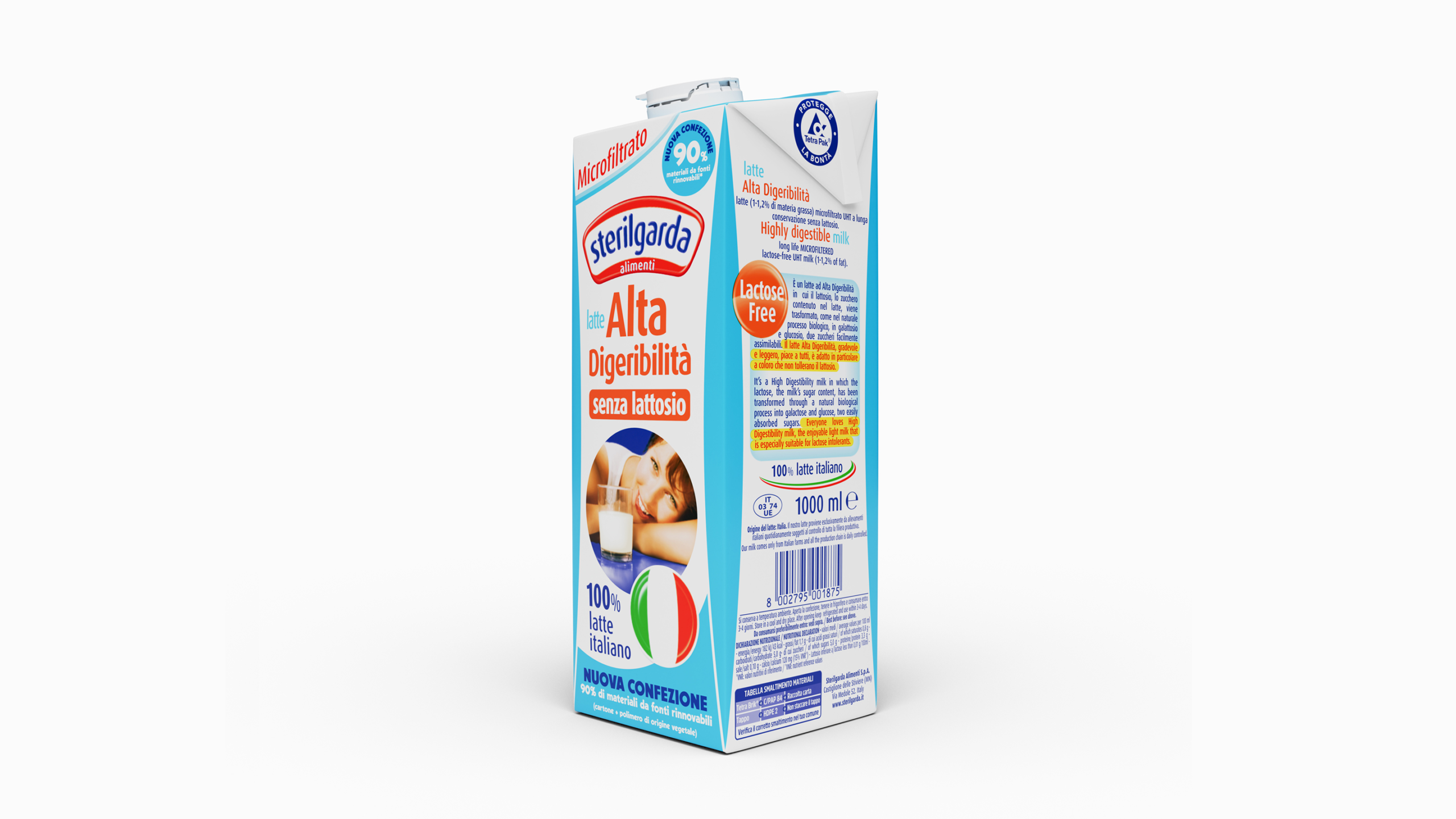
- Tetra Pak and Sterilgarda Alimenti have launched a 1-litre aseptic carton with a paper-based barrier.
- The pack can reach 90% renewable content when paired with plant-based polymers.
- The launch brings paper-barrier technology into a larger format used widely in dairy and beverages.
Tetra Pak and Sterilgarda Alimenti have launched a 1-litre aseptic carton with a paper-based barrier, taking a packaging concept that has drawn sustained industry interest and placing it into one of the most commercially important carton formats in food and beverage.
The new format is based on the Tetra Brik Aseptic 1000 Edge pack. By replacing the conventional aluminium foil barrier with a paper-based alternative, the structure can reach up to 90% renewable content when used with plant-based polymers. Tetra Pak has said the design offers shelf-life and product protection in line with standard aseptic performance, while verified modelling for Europe indicates a carbon-footprint reduction of up to 50% compared with a conventional carton.
The barrier layer has long been one of the hardest parts of carton redesign. In aseptic packaging, every structural decision has consequences for oxygen protection, light barrier, seal integrity, filling compatibility, storage stability, transport performance, and line speed. Moving toward higher paper content has therefore never been a simple substrate swap. It depends on whether the full pack still performs under industrial conditions at scale.
That question becomes more demanding in a 1-litre format. Family-size cartons are deeply embedded in ambient dairy, juice, and plant-based distribution, and they must withstand filling, handling, stacking, warehousing, and transport without losing barrier performance or pack strength. A launch in this size moves the technology beyond limited trials and into the kinds of packs that drive substantial commercial volume.
Sterilgarda’s role adds weight. Commercial adoption by a large producer says more than an innovation prototype ever can, particularly in categories where ambient performance and packaging reliability are non-negotiable. Food manufacturers do not need another elegant concept that only works in a controlled demonstration. They need formats that fit existing operations, protect product quality, and stand up to real distribution conditions.
The packaging sector is also heading into a more exacting phase. Carbon reduction targets remain in place, but they now sit alongside tougher questions around recyclability, fibre content, pack simplification, and the financial cost of difficult-to-manage materials. Brand owners and pack developers are being asked to improve performance across all of those fronts at once, without introducing new line problems or compromising shelf life. That pressure is pushing more attention toward structural changes that can run on established systems.
Tetra Pak’s latest move reflects that shift. The industry is no longer looking only for lighter language around sustainability; it is looking for packaging that reduces material complexity while remaining operationally credible. A 1-litre aseptic carton with a paper-based barrier does not settle the whole carton debate, and it does not remove the wider questions around collection, recycling infrastructure, or cost at scale. It does, however, put a major packaging redesign into a mainstream format and into commercial hands. In a packaging market crowded with incremental promises, that is a more meaningful step than most.