IN Brief:
- AutoFlight completed a 120km autonomous spring-tea cargo flight in Guizhou in 37 minutes.
- The shipment then moved by high-speed rail to Shanghai, reaching market within 24 hours.
- The trial offers a live example of multimodal logistics adapted to remote agricultural supply chains.
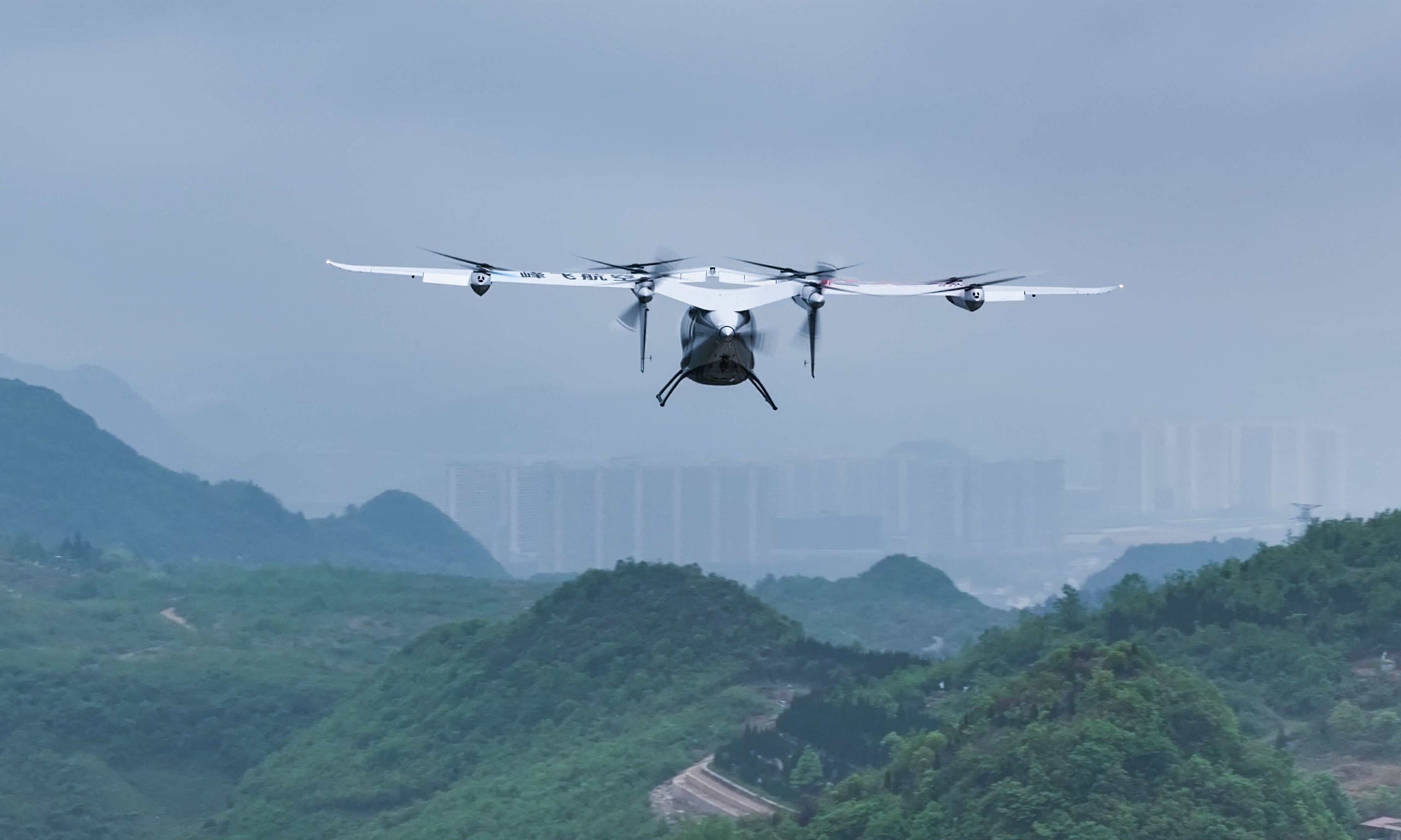
AutoFlight has completed a spring-tea transport trial in Guizhou using its CarryAll cargo eVTOL, testing a multimodal route designed to move freshly picked tea out of mountainous growing areas and into major eastern markets far more quickly than conventional road transport allows.
The trial carried fresh spring tea between Anshun and Guiyang, a distance of about 120km, in 37 minutes. From Guiyang, the consignment continued by high-speed rail to Shanghai over nearly 2,000km, creating a route that delivered tea from western mountain plantations to market within 24 hours. The aircraft used was AutoFlight’s unmanned CarryAll V2000CG, an all-electric cargo eVTOL with a maximum payload of 400kg, a range of up to 200km, and a cruise speed of around 180km/h.
The route addresses one of the most difficult parts of perishable agricultural logistics: the first leg out of remote production areas. Mountain roads can turn relatively short distances into long, unpredictable journeys, particularly during peak harvest periods. For premium spring tea, those delays can affect freshness, handling options, and the value that can be captured later in the chain. Compressing that first-stage journey changes what is possible downstream.
The rail connection is central to the model. Rather than trying to replace long-distance freight infrastructure, the trial uses autonomous air transport to bridge the awkward section between plantation and transport hub, then hands the shipment over to an existing high-speed route. That is a more practical shape for emerging logistics technology. It allows new transport modes to serve the sections where they are strongest instead of forcing them into a full end-to-end role too early.
Tea is a natural fit for that kind of trial. It is high-value, time-sensitive, and often grown in terrain that makes rapid collection difficult. Yet the same logic could extend to other premium agricultural products where harvest timing, geography, or perishability create bottlenecks before goods even reach a processing or distribution point. Specialty fruit, remote seafood landings, chilled inputs, and other high-value categories all sit within that wider field.
Commercial use will depend on the harder questions that follow any successful trial: route economics, weather resilience, handling procedures, payload utilisation, certification, and operational permissions. Those questions are substantial, and they will determine whether eVTOL logistics becomes a repeatable agricultural tool or remains limited to selective demonstrations. Even so, the Guizhou run stands out because it is tied to a real crop, a defined logistics constraint, and an existing onward transport network.
Food logistics tends to change first at the margins, where geography and product value make conventional transport weakest. AutoFlight’s tea trial sits squarely in that territory. It does not suggest a wholesale rewrite of agricultural distribution, but it does show how autonomous aircraft could begin to carve out a role in moving fragile, high-value products through parts of the chain that are still slow, costly, and terrain-bound.