IN Brief:
- Morinaga has opened a second Hi-Chew manufacturing facility in Mebane, North Carolina.
- The plant spans more than 132,000 sq ft, represents more than $130 million in investment, and is expected to add 1.2 billion chewlets annually.
- The expansion shows confectionery manufacturers still backing North American production close to demand.
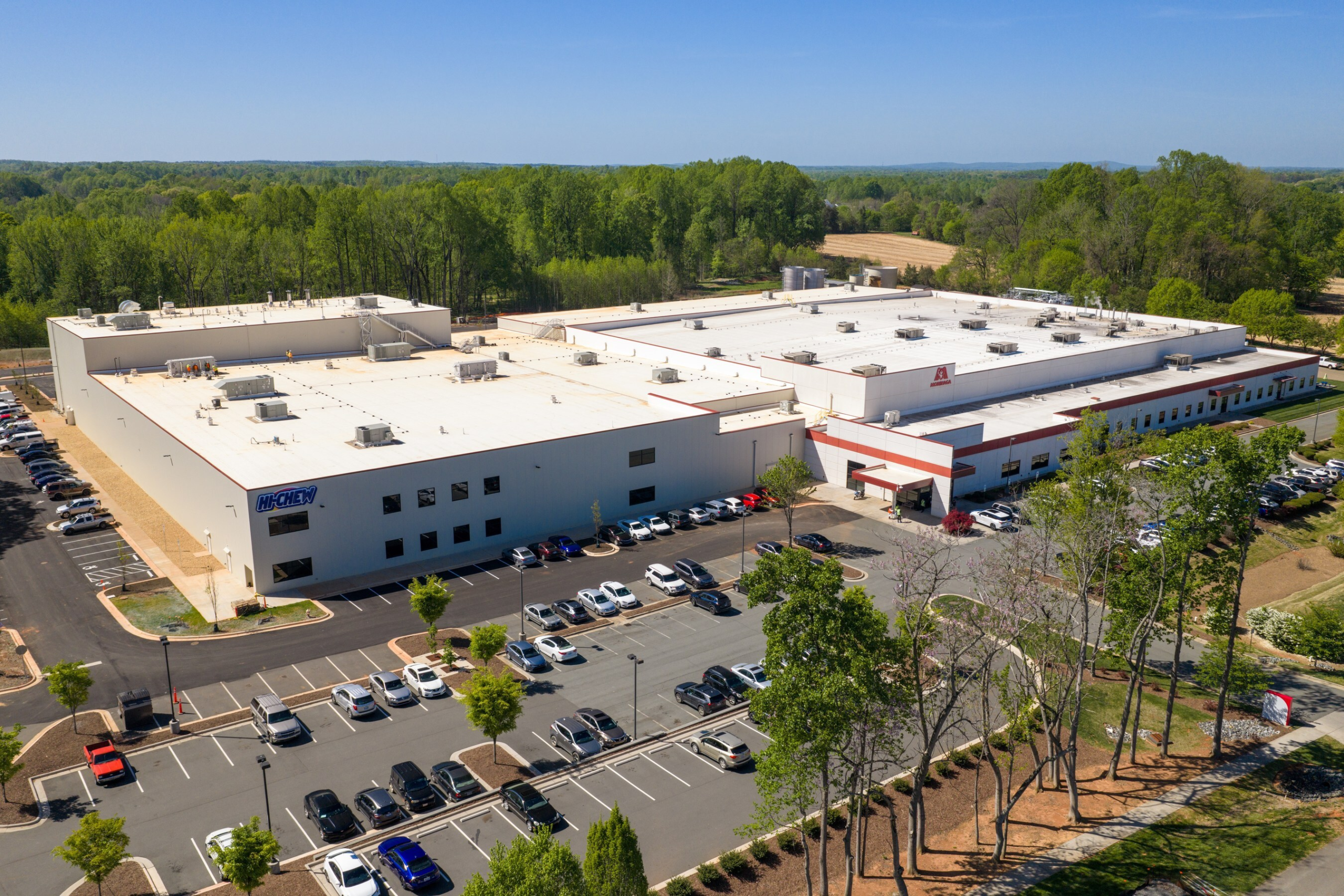
Morinaga America has opened its second Hi-Chew manufacturing facility in North Carolina, expanding US confectionery capacity as the Japanese group builds out local production for one of its most important overseas markets.
The new factory in Mebane covers more than 132,000 square feet and represents an investment of more than $130 million. Morinaga has said the site is expected to create around 200 jobs in Orange County and, once fully operational in October 2026, add 1.2 billion Hi-Chew chewlets a year across peg bag and stand-up pouch formats.
The project builds on Morinaga’s earlier US manufacturing base in North Carolina, where the company opened its first facility outside Asia in 2015. A second plant shifts the business into a different stage of development. It suggests demand is no longer being served by a single foothold operation but by a broader production model designed for higher volume, greater flexibility, and stronger service to a national market.
That kind of investment says a great deal about how confectionery growth is being managed. Brand momentum can create shelf presence, but sustained scale depends on plant capacity, packaging capability, and the ability to replenish quickly across multiple channels. A larger manufacturing footprint gives companies more scope to manage promotions, launch extensions, absorb growth, and reduce the exposure that comes with longer-distance supply.
North Carolina continues to strengthen its position as a food-manufacturing base in that context. The state offers established logistics links, labour availability, and a wider industrial ecosystem around packaging, warehousing, and processing support. Those factors matter once output begins to rise. Confectionery may be sold as an impulse purchase, but its production economics are heavily shaped by freight, packaging formats, throughput efficiency, and the ability to keep customers supplied without interruption.
The new Mebane site also reflects a wider trend toward placing manufacturing closer to demand. Food companies operating in North America have spent recent years trying to reduce lead-time exposure, improve responsiveness, and build more resilience into regional production networks. That does not eliminate import activity or international sourcing, but it does shift more of the value-added work into local facilities capable of serving the market directly.
Hi-Chew’s expansion is therefore best read as plant strategy rather than brand theatre. Morinaga is adding another major US production site, committing substantial capital, and preparing a facility that will materially lift output. In confectionery, those are the moves that show where confidence actually sits. Packaging updates and flavour launches may carry the headlines, but new factory capacity is what turns demand into durable market presence.