IN Brief:
- Umios has agreed to acquire High Liner Foods for C$27 per share in cash.
- The offer values the Canadian seafood group at approximately C$804 million in equity and C$1.25 billion enterprise value.
- The transaction requires shareholder, court and regulatory approvals and is expected to complete in early 2027.
Japanese seafood group Umios has agreed an all-cash takeover of Canadian frozen seafood processor High Liner Foods at C$27 per share. The 26 October agreement places a fully diluted equity valuation of approximately C$804 million on High Liner, with enterprise value of about C$1.25 billion. The companies already trade with one another: Umios supplies seafood, while High Liner prepares and distributes finished products across North America. Completion is conditional on shareholder, court and regulatory approvals, with closing expected in the first quarter of 2027.
High Liner is based in Lunenburg, Nova Scotia, and manufactures frozen prepared seafood for retailers and foodservice distributors. It receives raw materials that must be turned into standard portions or other specified formats before packaging and cold storage. Umios brings large-scale access to marine resources and an established supply relationship with High Liner; the proposed acquisition would link that upstream sourcing more directly to processing, brands and North American distribution. Until closing, however, ownership and the companies’ legal operations remain separate.
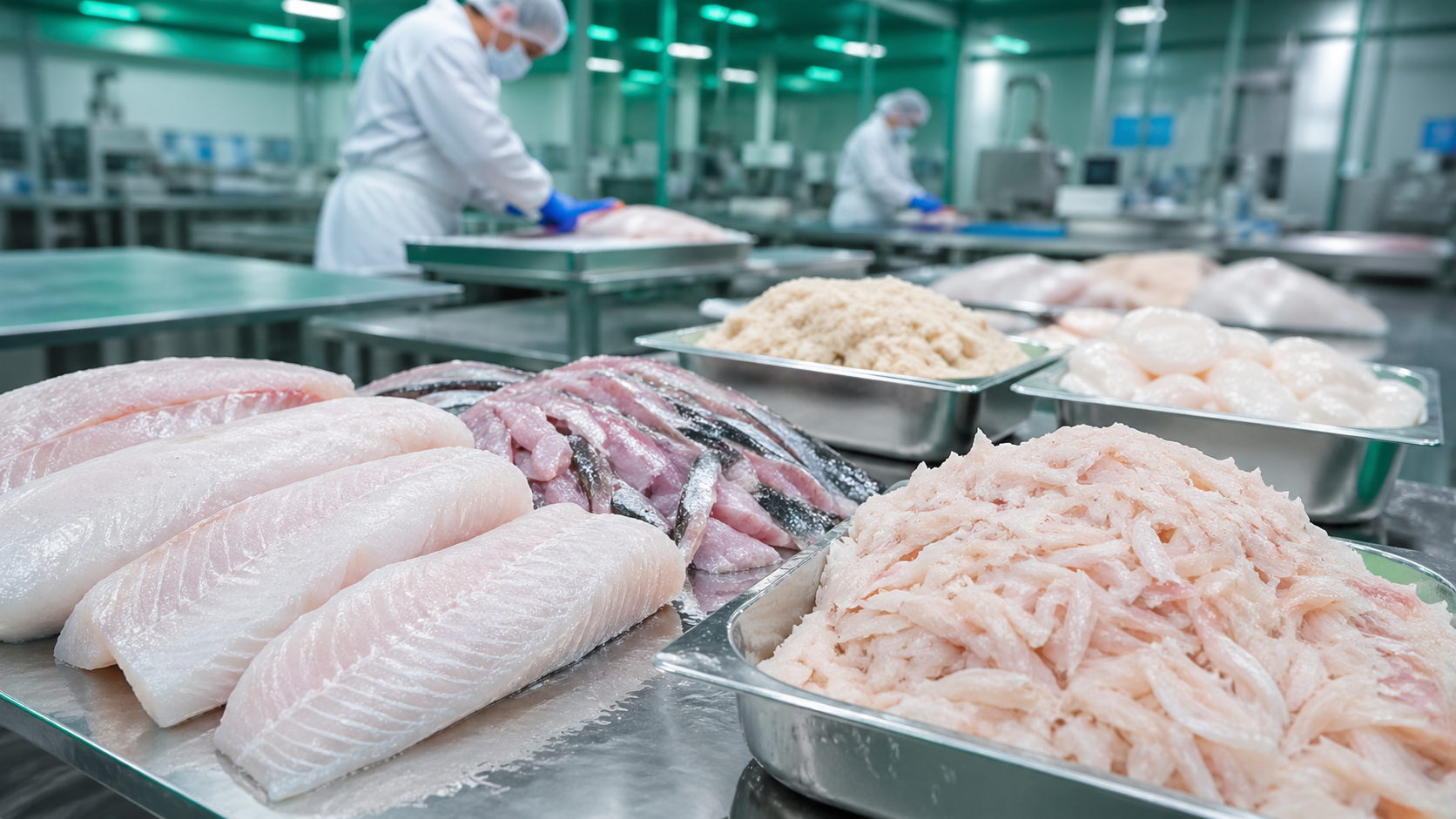
Value-added seafood production starts with checking incoming frozen fillets or blocks against the required species, weight and quality specifications, then cutting or forming the fish into portions. On breaded lines, portions can pass through flour predusting, liquid batter and breadcrumb application; some products undergo brief frying before freezing. The finished pieces are checked, packed into labelled retail or foodservice cartons and moved into frozen storage for distribution. Portion weights, coating pickup, temperature control and lot traceability affect finished yield and product consistency. High Liner already manufactures breaded and battered seafood, but the acquisition agreement does not announce new factories or an immediate increase in capacity. Additional processing lines would depend on investment decisions made after completion.
Umios attributes approximately 26% of the Bering Sea’s Alaska pollock resource access to its group. That sourcing position could support supply planning for processed seafood, but final output depends on usable raw material rather than gross catch alone. Trimming losses, portion weights, coating pickup, freezing throughput and customer specifications all affect how much finished product a plant can make. Common ownership may allow closer coordination of those variables across procurement and production; there is no announced numerical yield or capacity improvement tied to the transaction.
The agreed cash price represents a premium of approximately 79% to High Liner Foods’ Toronto Stock Exchange closing share price on 23 October and 86% to its 20-day volume-weighted average at that date. Those measures explain the financial terms offered to shareholders; they do not imply equivalent changes to production capacity or future earnings. The company said the transaction is fully financed and not subject to a financing condition. On completion, High Liner is expected to repay its outstanding credit facilities and subsequently seek delisting from the exchange.
A court-approved plan of arrangement under Nova Scotia’s Companies Act is proposed, with at least 75% of the votes cast at a High Liner shareholder meeting required in favour. The meeting is expected in December 2026. Competition approval in Canada, clearance under the US Hart-Scott-Rodino regime and other customary conditions must also be satisfied. Both boards support the agreement and major shareholders have entered voting commitments, but those endorsements do not replace the outstanding approvals. Umios expects the deal to close in the first quarter of 2027, with January its stated target.
Umios has said High Liner will remain headquartered in Nova Scotia and serve as the foundation of its North American business. It also intends to maintain established operations and invest in processing capability, product development and growth. Those are stated plans following completion, not an announced schedule of machinery installations or factory closures. High Liner’s existing management and employee expertise are part of the business Umios is seeking to acquire. The operational structure and any additional capital expenditure will only become measurable after the ownership change and subsequent investment decisions.
Across the combined supply chain, seafood quality depends on temperatures being controlled from initial handling through processing, freezing, storage and delivery. Retail packs and foodservice formats impose different requirements for portion sizes, coating, labelling and case packing, while frozen inventory needs careful rotation and traceability. Closer procurement and processing coordination could help manage these demands, but it will still depend on customer orders, equipment availability and factory yields. No immediate changes to High Liner’s manufacturing footprint follow simply from the signed agreement.
The next decisions lie with High Liner shareholders, the courts and competition authorities. If those conditions are met, the company is expected to become a wholly owned Umios subsidiary while retaining its Nova Scotia headquarters. Umios has described further investment in processing and product development, but no line installations or additional capacity have been formally scheduled. Any production benefits will emerge only after completion and subsequent operating decisions, separately from the C$804 million equity price paid to shareholders.