IN Brief:
- Yangi dry formed trays from its Varberg demo line are being used by Flavor Boss in Sweden.
- The trays are part of a quick-serve range that includes lids, bowls, and plates.
- The project tests fibre packaging performance under real food service conditions before high-volume production.
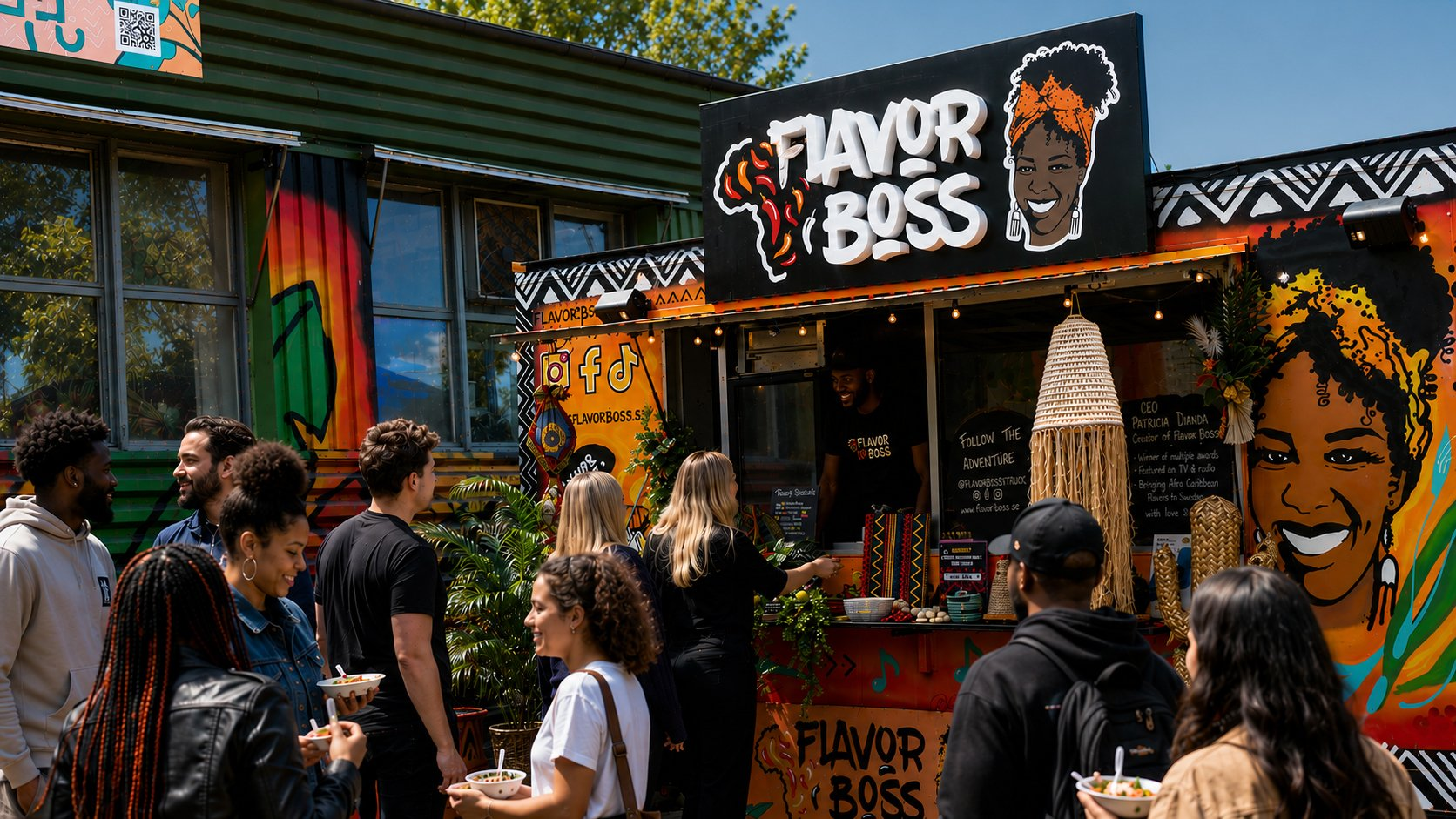
Yangi has moved its dry formed takeaway trays into live food service use through a collaboration with Swedish street food operator Flavor Boss.
The trays are produced on Yangi’s industrial demo line in Varberg and are now being used to serve customers in real operating conditions. The collaboration gives the company direct feedback on handling, functionality, tray separation, strength, moisture resistance, and everyday usability before any move into high-volume production.
The project marks the first public introduction of Yangi’s quick-serve and takeaway packaging range. The wider range includes lids for hot and cold beverages, bowls, plates, and other single-use food service formats developed as alternatives to selected plastic applications.
Dry forming is being developed as a lower-resource route for fibre-based packaging. Conventional moulded fibre production can be water intensive, while dry forming shapes fibre materials with less water and lower energy demand. Yangi’s technology is intended to produce recyclable fibre-based packs compatible with existing paper recycling streams.
Food service use gives the material a practical test that controlled demonstrations cannot fully replicate. A tray used in takeaway service must separate cleanly from the stack, hold hot or moist food, resist oil and sauces for the required use period, keep its shape in one hand, and remain acceptable in appearance. Weaknesses in rigidity, staining, grip, or moisture resistance become visible almost immediately.
Yangi’s approach uses tailored material recipes with integrated barrier chemistry matched to the short life of takeaway meals. Many food packaging formats are over-engineered for their actual use period because they borrow materials or barriers from longer shelf-life applications. Short-use food service packs need resistance to grease and moisture for minutes or hours, not days or weeks.
Fibre-based alternatives have gained momentum as food businesses look for ways to reduce single-use plastic exposure, but they face technical limits. Moisture, oil, heat, rigidity, stackability, denesting, lidding, and recyclability can all conflict. Adding coatings or plastic layers may improve performance while making the pack harder to recycle, while removing barriers can improve recovery but increase leakage or collapse.
Regulatory pressure has accelerated the search for workable alternatives, with European packaging companies warning that shifting single-use plastics rules risk creating uncertainty for investment and design decisions. The engineering problem remains unchanged: replacement materials must work in the hands of operators and customers, not only in sustainability documents.
The industrial demo line gives Yangi a controlled route between laboratory development and full-scale investment. That middle stage is valuable because food packaging buyers need evidence before committing to new materials. A retailer, food service chain, or manufacturer will want to understand strength, cost, quality consistency, barrier performance, storage conditions, filling compatibility, waste rate, and end-of-life handling.
The Flavor Boss deployment also brings customer feedback into packaging development. Food operators working at speed will identify problems that may not appear during laboratory trials: trays sticking together, poor grip, flex under load, condensation, sauce staining, odour, or weak stacking. Those findings can feed directly into material recipe and tooling decisions.
Dry formed fibre packaging has potential across food service and selected retail applications, but each category will need separate validation. A takeaway tray has different requirements from a chilled ready meal tray, a fruit punnet, a bakery clam pack, or a fresh meat tray. The closer the application gets to shelf-life extension or modified atmosphere packing, the more complex the technical challenge becomes.
Yangi’s live service trial places dry formed packaging into normal use, where strength, handling, and short-term barrier performance can be judged under everyday conditions. If the format holds up, the technology gains a stronger route into broader food packaging trials and eventual commercial production.