IN Brief:
- Sensient is investing up to $250 million in natural colour capacity, supply chain, and staffing.
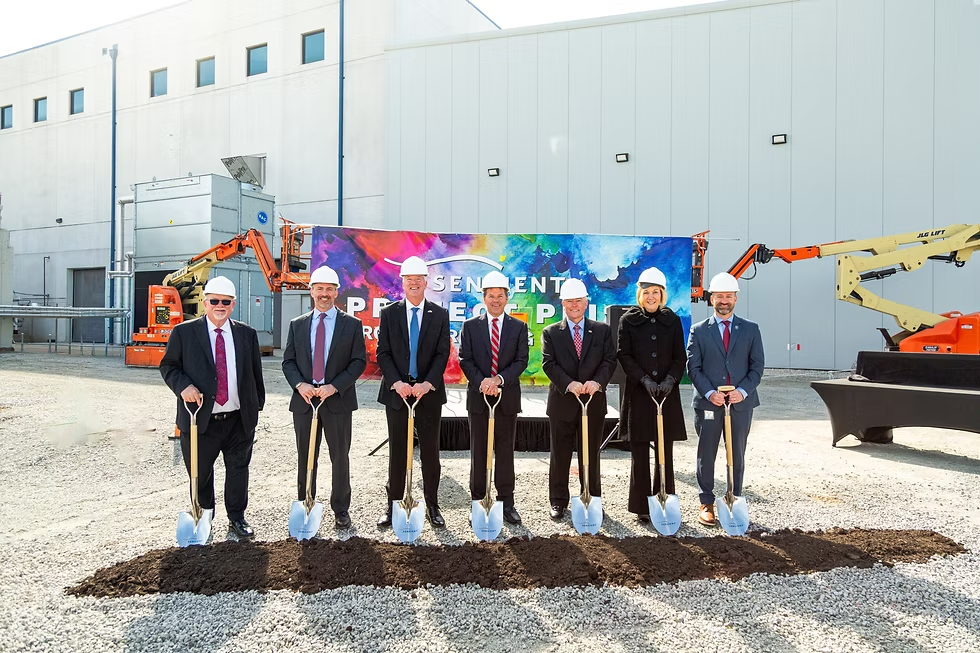
- Project Prism adds new specialised production space at the company’s St Louis manufacturing base.
- The move reflects faster US reformulation away from petroleum-based synthetic dyes.
Sensient Food Colors is expanding its flagship St Louis manufacturing operation as part of a broader investment of up to $250 million in natural colour capacity, supply chain capability, and personnel. The project, known as Project Prism, adds 28,800 square feet of specialised processing and production space to the site and marks one of the more substantial recent bets on the speed of colour reformulation in the US food and beverage market.
The core story is simple enough: demand for natural colours is rising and ingredient suppliers are building for it. The more interesting part is why the spending now looks unavoidable. Reformulation away from synthetic dyes has moved well beyond a branding exercise. It is increasingly being driven by regulatory pressure, retailer standards, portfolio commitments from large manufacturers, and the practical need to keep new launches aligned with a market that is becoming far less tolerant of petroleum-based colours.
That changes the role of colour in formulation strategy. When processors replace synthetic systems, they do not simply swap one additive for another. They often have to rethink heat stability, pH tolerance, light performance, interaction with other ingredients, processing losses, and shelf-life behaviour. Natural colours can demand more from the formulation and the plant. They may require different sourcing models, more application support, tighter process control, and in some cases a willingness to redesign the product itself rather than chase a one-for-one replacement.
Sensient’s investment speaks directly to that complexity. The company is not only adding footprint. It is expanding the manufacturing and supply base needed to support what has become a more technically demanding category. St Louis is already Sensient’s largest natural colours facility globally, and this latest work is being framed as a long-term effort to support the conversion of food and beverage portfolios across the US. The involvement of Burns & McDonnell in the project adds to the sense that this is infrastructure for a multi-year shift rather than a quick response to a temporary demand spike.
The timing fits the regulatory backdrop. FDA actions over the past year have continued to push industry away from petroleum-based synthetic colours, while major food businesses and retailers have rolled out their own deadlines for removal or restriction. That combination matters more than any single announcement. Once regulation, retail, and brand commitments start to reinforce each other, reformulation turns from optional positioning into an operational programme. Ingredient suppliers then need not just better colour systems, but enough manufacturing depth to keep up.
For food manufacturers, the immediate implication is that supply-side support for reformulation is getting stronger, but so is the pressure to move. Natural colours can be harder to stabilise and standardise than synthetic equivalents, especially in products exposed to heat, acidity, oxygen, or long storage cycles. As more portfolios convert, the companies with robust colour application capability and secure sourcing will be in the best position to avoid delays, inconsistent shades, or repeated reformulation rounds.
There is also a competitive point here. Ingredients businesses rarely spend at this level unless they believe the category is moving from episodic demand into structural growth. Natural colours now look like that kind of category. The question is no longer whether food manufacturers will need more of them, but how quickly they can reformulate without disrupting throughput, cost, and product performance.
Sensient’s St Louis move is therefore less a plant expansion in isolation than a marker of where the US market is heading. Colour reformulation is becoming a manufacturing problem, not just a labelling decision, and the suppliers building capacity now are positioning themselves for a much bigger share of the work ahead.