IN Brief:
- Ornua reported higher turnover, operating profit, EBITDA, and net profit for 2025 as Kerrygold crossed $1 billion in US retail sales.
- The co-op expanded Kerrygold with 16 new products and extensions, while ingredients and foodservice also supported performance.
- The results underline how brand strength and value-added dairy routes are cushioning volatility in milk supply, pricing, and trade.
Ornua has reported stronger full-year results for 2025, with Kerrygold passing $1 billion in retail sales in the United States and helping drive higher turnover, operating profit, EBITDA, and net profit across the group.
Group turnover reached €3.45 billion during the year, while operating profit rose to €136.6 million and EBITDA, before Ornua Value Payment, increased to €171.4 million. Net profit climbed to €34.1 million. Ornua also paid €1.87 billion to member co-operatives, including €74.3 million in premiums and bonuses, underlining the value of branded and differentiated routes to market at a time when dairy remains exposed to swings in supply, demand, and farmgate returns.
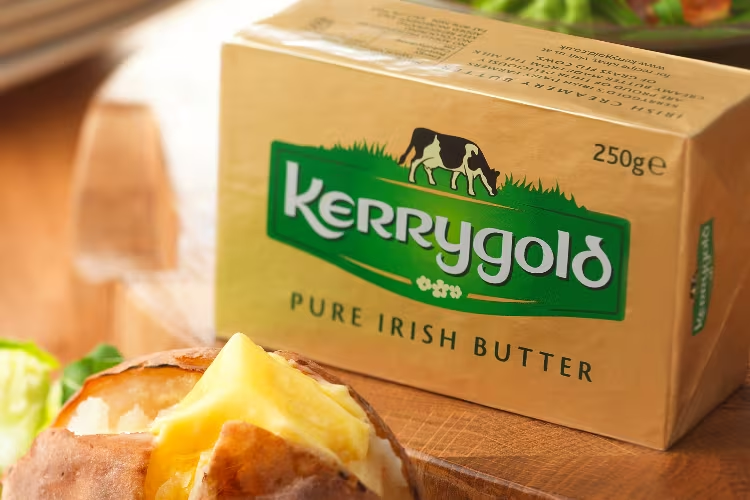
Kerrygold remained central to that performance. The brand crossed the $1 billion threshold in US retail sales early in 2025 and maintained strong market positions across Ireland, Germany, the United Kingdom, and the United States. Ornua also expanded the range with 16 new products and extensions during the year, including butter blends, flavoured butter sticks, cream cheese variants, and cheese snacking products.
The result points to the continued strength of premium, value-added dairy in markets where consumer demand has become more selective. Butter and cheese are not immune to pressure on household spending, but the Kerrygold performance suggests there is still room for established brands with clear provenance, consistent quality, and disciplined portfolio expansion to hold pricing power better than more exposed commodity businesses.
Ornua’s wider ingredients and foodservice operations also contributed to the year, with tailored dairy ingredients and customised cheese supporting performance beyond the retail channel. That matters because it gives the group a broader base than a single consumer brand, however successful that brand may be. Ingredients, foodservice, and retail all move to different rhythms, and a business with exposure across those channels is generally better placed to absorb market volatility than one leaning too heavily on commodity sales alone.
That volatility remains very much in view. Ornua said global milk production accelerated as 2025 progressed, eventually pushing supply ahead of demand and softening commodity conditions. The company also pointed to energy market uncertainty, geopolitical disruption, trade pressures, and weather-related volatility. None of those pressures are likely to fade quickly. Dairy processors have spent the past several years dealing with abrupt shifts between supply tightness and oversupply, often while managing higher input costs and more fragmented export conditions.
The latest figures suggest that value-added positioning remains one of the more effective ways through that environment. Strong brands can support margin and visibility, while ingredients and foodservice provide a second line of resilience when retail demand softens or promotional conditions tighten. That is a more durable mix than simple exposure to bulk product markets, where price swings can quickly overwhelm processing gains.
There is also a longer-term signal in Ornua’s results. Dairy businesses have talked for years about premiumisation, but the model only holds if it is backed by manufacturing consistency, supply discipline, and enough investment in product development to keep growth moving once the easy gains are gone. Kerrygold’s performance in 2025 suggests that strategy is still delivering, particularly in the United States, where competition from private label and wider consumer caution has made the premium end of the category harder to defend.
The outlook remains unsettled, and Ornua has made no attempt to suggest otherwise. Yet the shape of these results is clear enough. In a dairy market still prone to sharp reversals, the processors that can pair scale with brand strength, product mix, and differentiated channels are likely to come through the cycle in stronger condition than those relying on commodity momentum alone.