IN Brief:
- HiPP baby food has been pulled from sale across multiple Central European markets after jars tested positive for rat poison.
- Authorities have treated the incident as deliberate tampering, not a manufacturing defect at source.
- The case puts fresh focus on pack integrity, retailer channel controls, and cross-border recall coordination.
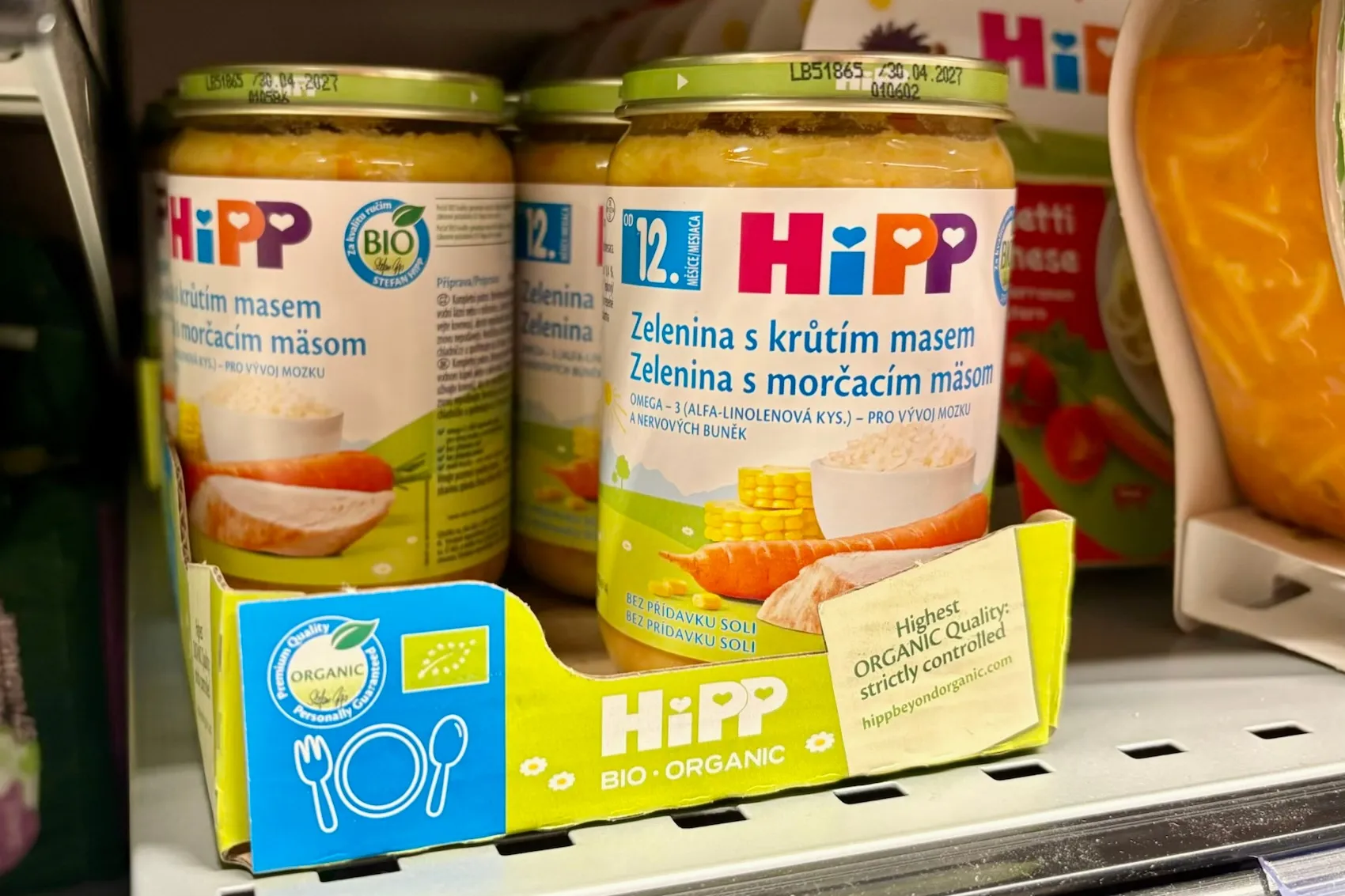
HiPP is facing a widening food safety incident after baby food jars linked to a suspected tampering case in Austria were pulled from sale across several Central European markets. The issue centres on 190g jars of carrot and potato baby food, with authorities in Austria, the Czech Republic, and Slovakia confirming contaminated jars and warning that at least one additional jar may still be unaccounted for.
What began as a single suspicious sample has moved quickly into the kind of cross-border response that tests every part of a food business’s crisis system. Austrian authorities said the product taken into evidence tested positive for rat poison. By Monday, jars had been secured in three countries and retailers had already removed products from sale as a precaution. The warning signs identified by officials were highly specific: a white sticker with a red circle on the base of the jar, evidence of prior opening, lack of the usual pop on first opening, and an unusual smell.
The company has said the affected jars were subject to external criminal manipulation rather than a defect in manufacturing. The case is being treated as an attempted extortion, with investigators saying five tampered jars had been recovered safely and one more could still be in circulation in Austria. That distinction matters. From a plant perspective, the incident is not a process contamination event. From an operational perspective, however, it lands exactly like one: products must be traced, withdrawn, communicated, and defended in public under extreme time pressure.
For food manufacturers, the deeper significance lies in the gap between product leaving a facility in specification and product remaining secure through the distribution chain. Glass jars with tamper-evident lids have long been treated as a robust packaging format for sensitive categories such as infant food. This case is a reminder that tamper evidence is not the same thing as tamper prevention, and that the weakest point in the chain may sit beyond the filling line. Once a malicious actor can target retail channels, the burden shifts to detection, communication, and speed of withdrawal.
That creates difficult questions for brands and retailers alike. How quickly can suspect batches or channels be isolated when evidence suggests targeted manipulation rather than factory-wide contamination? What visual indicators can be communicated without causing confusion or overreach? How far should a recall extend when the risk appears channel-specific but public trust in the category depends on decisive action? HiPP and retail partners have clearly chosen breadth over hesitation, which is usually the only workable path in infant nutrition.
There is also a packaging lesson here. Tamper-evident closures remain essential, but incidents like this push attention toward secondary verification measures, in-store handling controls, CCTV coverage in vulnerable channels, and more disciplined escalation procedures when suspicious messages or threats are received. The food industry has spent years strengthening traceability around allergens, pathogens, and foreign-body risk. Deliberate sabotage is a different challenge, and one that sits awkwardly between food safety, security, and retail operations.
The wider industry will watch how quickly investigators close the loop. Infant food is an especially sensitive category, where confidence once lost is expensive to rebuild. Even if the source of the problem lies outside production, the commercial and reputational burden still lands on the brand. That is why this story reaches beyond one recall. It underlines how food safety resilience now depends not only on what happens inside the factory gate, but on how well a brand can monitor, secure, and respond across the full path to shelf.