IN Brief:
- Danone is investing €20 million in two Normandy sites to expand Skyr production in France.
- Ferrières-en-Bray will add two new lines, while Le Molay-Littry will begin producing Skyr for the first time.
- The project underlines continued dairy investment in high-protein formats and local manufacturing capacity.
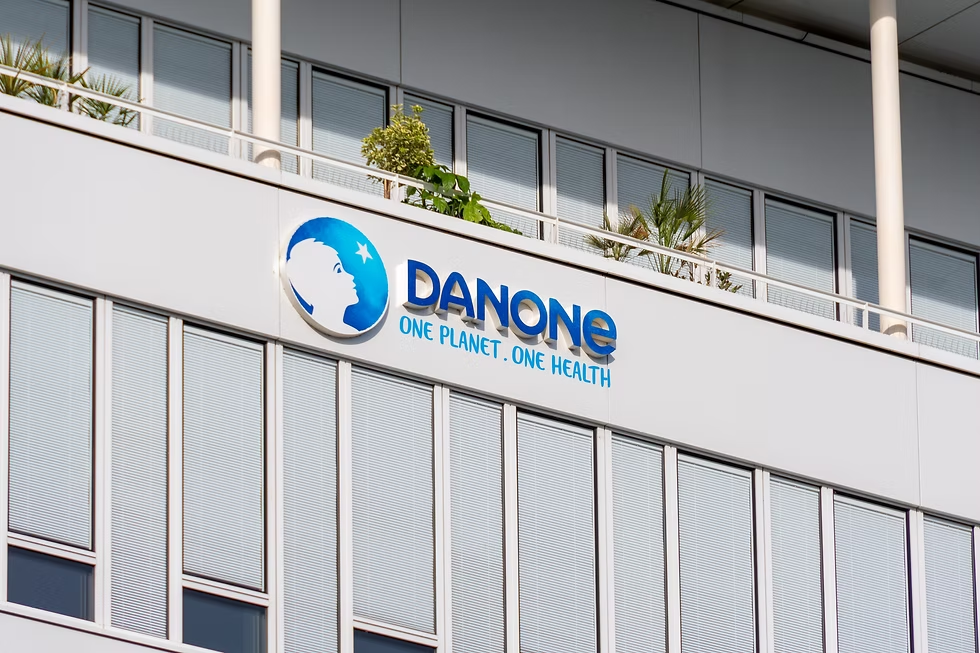
Danone is investing €20 million in Normandy to expand Skyr production at two French sites, strengthening its position in high-protein dairy while increasing local manufacturing capacity in one of France’s core milk regions.
The programme covers Ferrières-en-Bray and Le Molay-Littry. Ferrières-en-Bray, where Danone first began making Skyr in France, will receive two new production lines. Le Molay-Littry will start producing Skyr for the first time, with new processing equipment and associated site upgrades. Danone has said capacity at Ferrières-en-Bray is set to increase by more than 80% by 2027, while the wider investment supports its plan to relocalise 45,000 tonnes of production in France by 2026.
The decision comes as Skyr continues to hold its ground in a crowded chilled dairy market. What began as a fast-growth premium segment has settled into a more established role, supported by demand for high-protein, spoonable formats with everyday appeal. Once a category reaches that stage, the pressure shifts away from novelty and toward manufacturing depth, supply reliability, and line efficiency. Danone’s Normandy spend reflects that change.
Normandy gives the company an obvious industrial base for the expansion. It combines milk supply, processing heritage, established infrastructure, and proximity to major markets. Adding capacity through existing sites also tends to be less risky than building from scratch, particularly in dairy, where energy use, hygiene standards, utilities, labour, and chilled distribution all shape investment decisions as much as end-market demand.
The emphasis on localisation is just as notable as the extra output. Dairy processors across Europe have spent the past few years working through inflation, energy shocks, freight volatility, and rising pressure on environmental performance. Producing more volume closer to market helps reduce transport exposure, gives more control over availability, and can make it easier to justify site-level efficiency upgrades. In a category with tight retail scrutiny and frequent promotional cycles, that kind of control has become harder to do without.
The move also sharpens competition in protein-led dairy. Retailers and branded players alike have continued to build out skyr, Greek-style yoghurt, high-protein pots, and adjacent chilled formats. Shelf space may be more familiar now, but it is no less contested. Companies that can secure local output, maintain quality consistency, and respond quickly to changes in pack format or volume requirements are better placed to hold ground as the segment matures.
Danone’s investment is therefore less about launching a fashionable line than about backing a category with plant capacity. Ferrières-en-Bray will take on more volume, Le Molay-Littry will join the Skyr network, and Normandy will carry more of the load in meeting French demand. In dairy, those factory decisions usually say more about the future of a category than the next flavour extension ever will.