IN Brief:
- Boparan Private Office has completed its acquisition of German poultry processor Heidemark after European Commission clearance.
- Heidemark becomes part of Storteboom Food Group, adding five sites and 2,300 employees to the European poultry division.
- The deal strengthens European poultry capacity as processors face pressure on automation, traceability, labour, and cost control.
Boparan Private Office has completed its acquisition of German turkey and chicken processor Heidemark after securing unconditional clearance from the European Commission.
The Ahlhorn-based business will join Storteboom Food Group, Boparan’s European poultry division, extending the group’s processing footprint across mainland Europe. Heidemark is Germany’s third-largest poultry meat producer and will continue to operate as an independent German business unit within the wider structure.
With around 2,300 employees across five sites and annual turnover of approximately €760m, Heidemark brings scale in primary processing, further processing, and supply to retail, foodservice, and industrial customers. The company has developed from a turkey-focused producer into a broader poultry specialist, giving Boparan a stronger German platform at a point when European meat processors are working under sustained cost and labour pressure.
The acquisition follows the agreement announced in February and confirms Boparan’s wider European expansion strategy around poultry capacity, product innovation, and supply chain transparency. Heidemark will sit alongside Storteboom operations in the Netherlands, Poland, and the Republic of Ireland, creating a broader base for cross-border customer supply, procurement alignment, and plant-level performance benchmarking.
Retaining the Heidemark name, sites, and management team should provide continuity in a category where local supply relationships and plant expertise are central to production stability. Poultry processing depends on tightly controlled relationships between livestock supply, slaughter, cutting, chilling, packing, hygiene, welfare, and logistics. Integration risk is not only financial; it is biological, operational, and regulatory.
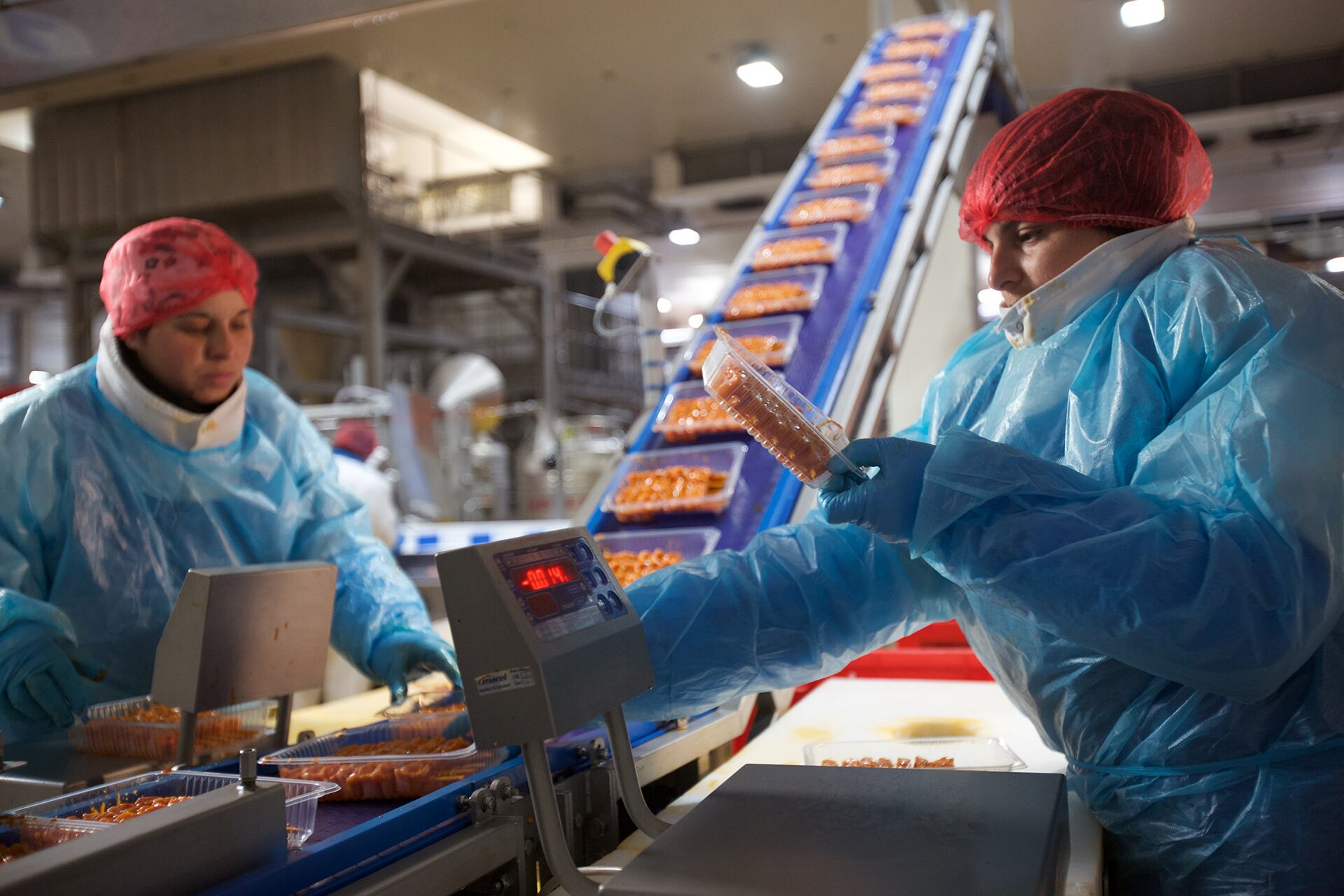
Across Europe, high-volume poultry operations are being pushed to invest in automation, digital traceability, and productivity while managing volatile feed, energy, labour, and compliance costs. Deboning, portioning, packing, and inspection remain labour-intensive areas, and processors are increasingly looking for technology that can reduce manual handling without compromising yield, quality, or flexibility.
Boparan has linked the acquisition to its Next Gen strategy, including automation, innovation, productivity, and net-zero sustainability. Those priorities reflect the wider direction of travel in meat processing, where larger operating platforms are better placed to justify investment in robotics, inspection systems, refrigeration efficiency, packaging automation, and digital production controls.
The transaction also sits against a stricter food safety backdrop for meat producers. Recent recall activity, including Gilbert’s recall of turkey pastrami after a Listeria finding, underlined the importance of environmental monitoring, post-cook hygiene, and chilled-chain control in ready-to-eat meat. Larger processors may have more capital to invest in such controls, but they also carry greater exposure when failures move through multiple customers or markets.
European poultry consolidation is likely to continue where assets offer established livestock networks, experienced production teams, and modernisable plant infrastructure. The Heidemark deal gives Boparan a stronger operating base in Germany and gives Storteboom a larger European platform in a category where demand remains resilient but production economics are becoming less forgiving.