IN Brief:
- Mondelēz International’s R&D agenda is connecting cocoa resilience, regenerative agriculture, packaging, and efficiency.
- The company is exploring cultivated cocoa technologies while keeping conventional agriculture at the centre of future supply.
- The wider direction shows how confectionery innovation is moving beyond NPD into sourcing, process control, waste, and competitiveness.
Mondelēz International is placing cocoa resilience, regenerative agriculture, packaging, and process efficiency at the centre of its R&D agenda as confectionery manufacturers face heavier pressure across raw materials, sustainability, and production economics.
The company’s innovation work now spans agricultural systems, analytical science, packaging materials, start-up collaboration, and manufacturing efficiency. Product development remains central, but the operational value of innovation is increasingly found in the systems behind the finished product: sourcing, crop resilience, formulation, energy, waste, packaging, and supply-chain assurance.
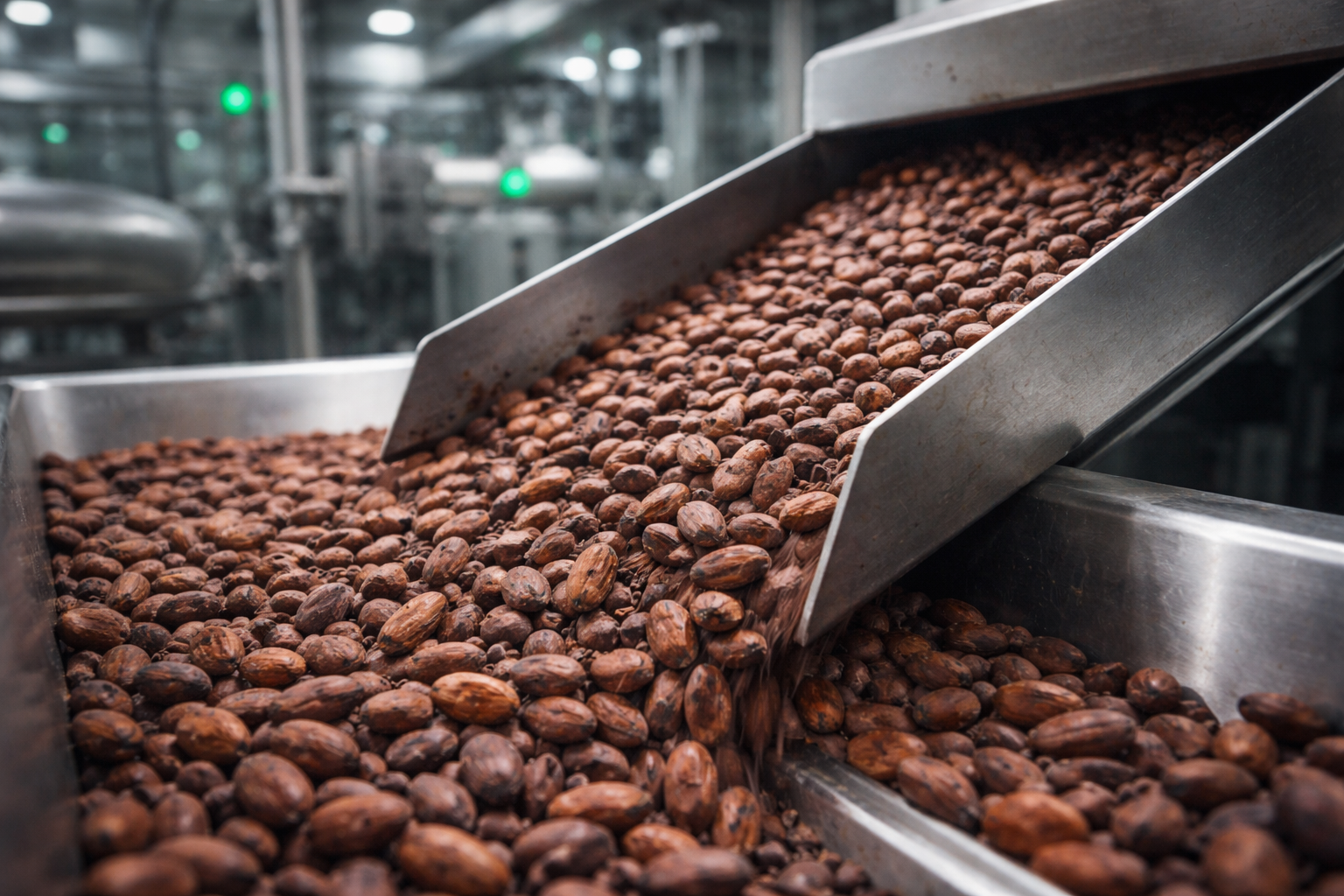
Cocoa remains one of the clearest pressure points. Confectionery manufacturers have faced volatile cocoa prices, crop disease, weather risk, and supply concerns, while also responding to sustainability expectations from customers, retailers, and regulators. Mondelēz has explored cultivated cocoa technologies, including work with Celleste Bio on cell-cultivated cocoa butter, while conventional agriculture continues to carry the overwhelming share of future supply.
That balance sets the direction for the category. Alternative cocoa technologies may offer valuable options for specific formulations or supply-risk reduction, but global confectionery volumes still depend on crop performance, grower economics, disease control, and resilient agricultural systems. Better cocoa supply will require biological science, breeding, agronomy, and farmer adoption as well as laboratory-based alternatives.
Regenerative agriculture sits within that broader system. Mondelēz has been involved in sector-level work around regenerative frameworks and is focusing on systems biology, soil health, crop performance, and evidence that can support adoption at farm level. The practical challenge is moving from isolated success to repeatable practice across different farm sizes, regions, climates, and economic conditions.
Packaging is another central strand in the company’s R&D work. Material choices can no longer be reduced to a simple hierarchy of paper, plastic, metal, or compostable formats. Fibre-based packaging may offer advantages in some applications, but it faces its own questions around energy use, barrier performance, food contact, and recycling limits. Plastic can provide strong barrier performance and lightweighting benefits, but those benefits depend on collection, sorting, and recycling systems that work at scale.
Confectionery and snacks make those choices more complicated. Moisture, oxygen, fat migration, aroma retention, portion control, shelf appeal, machine speed, and retail presentation all influence packaging design. A pack has to protect product quality, run cleanly through high-speed equipment, meet retailer and regulatory expectations, and retain credibility at end of life.
Cocoa-free and cocoa-reduced systems are already moving into branded confectionery. Nestlé Germany’s ChoViva-based Choco Crossies extension illustrates how alternative chocolate systems are moving from pilot activity into mainstream product development. At the process end, Bühler’s updated refining and conching systems show how equipment suppliers are responding to raw-material pressure with improved process control, automation, and hygienic design.
Ingredient suppliers are also responding to cocoa exposure. AAK’s ILLEXAO EN 10 launch targeted higher substitution levels in enrobed confectionery, bakery, and snack applications, with flow stability and cleaning performance forming part of the manufacturing case. Together, these developments show how cocoa volatility is being addressed through ingredients, processing, and product architecture rather than through sourcing alone.
Start-up collaboration gives large manufacturers another route into emerging technologies. Mondelēz’s CoLab accelerator allows early-stage ideas to be tested against food industry requirements, where regulation, labelling, scale-up, process compatibility, cost, and retailer acceptance can quickly separate viable technologies from attractive concepts.
Efficiency work is becoming just as important as product novelty. Process improvements can protect margin, reduce waste, lower energy exposure, improve yield, and stabilise supply. In a category exposed to commodity volatility and intense retail negotiation, less visible manufacturing gains can carry as much commercial value as a new launch.
Mondelēz’s R&D agenda reflects a confectionery sector being forced to innovate at several levels at once. Cocoa supply, regenerative agriculture, alternative ingredients, packaging performance, and factory efficiency are becoming parts of the same resilience strategy.