IN Brief:
- Momo Kombucha has developed custom fermentation vessels after more than two years of work.
- The company is moving into the former Brixton Brewery site in Herne Hill.
- The project replaces thousands of manual glass jars with a more scalable fermentation platform while retaining raw, unfiltered production.
Momo Kombucha is scaling its London brewing operation through custom-built fermentation vessels and a move into the former Brixton Brewery site in Herne Hill, South London.
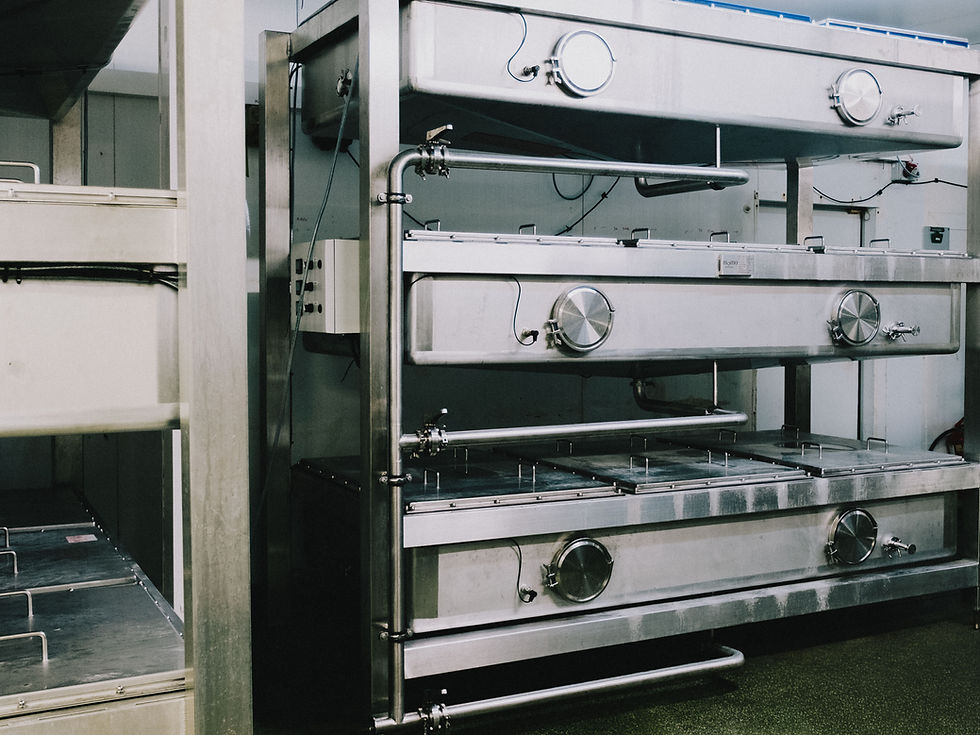
The company has spent more than two years developing a fermentation system intended to retain the character of its small-jar process while improving consistency, capacity, safety, and manual handling. The project marks a shift from thousands of individual glass fermentation jars toward a more controlled production platform built around repeatable process conditions.
Momo was founded in 2018 and built its product identity around raw, unfiltered kombucha brewed in small 5-litre glass jars. That method helped define the drink’s flavour and live-culture positioning, but it also created clear production constraints as demand grew. Each jar had to be handled, monitored, emptied, cleaned, and moved through later chilling, carbonation, bottling, and dispatch steps.
The new vessels have been designed to preserve the liquid depth of the original glass-jar process while using controlled airflow and heat management to improve fermentation stability. In kombucha production, vessel geometry, oxygen transfer, temperature, time, sugar conversion, acidity, and culture performance all influence the finished drink. Changing scale without changing product character requires more than simply buying larger tanks.
Automation through pipework and pumps will remove manual transfer from jars into tanks, reducing labour intensity and improving control over liquid movement. Retiring thousands of glass jars also reduces breakage risk, ergonomic strain, cleaning complexity, and batch-to-batch variation created by repeated manual handling.
The Herne Hill move gives Momo a larger and more coherent operating base close to where the business began. The company has described the relocation as a return to South East London, with brewing, bottling, operations, and team space being built into a former beer production site. The setting is commercially neat, but the operational point is more important: fermented drinks need controlled production space as they move from craft origin to wider distribution.
Functional and fermented beverages are becoming more technically demanding. Raw kombucha has to balance live cultures, acidity, flavour, carbonation, shelf life, pack pressure, chilled handling, and consumer expectations around freshness. A product that is valued for being alive and minimally processed still needs industrial control if it is to reach more customers safely and consistently.
Functional soft drinks are already carrying more formulation complexity, with collagen, caffeine, electrolytes, Lion’s Mane, L-theanine, and magnesium moving into lightly carbonated formats. Fermented drinks add biological variability to that equation. Culture health, raw ingredient quality, oxygen exposure, temperature, and time can alter flavour and stability even before packaging begins.
Scaling fermentation is often less forgiving than scaling conventional blending. Larger vessels can change heat transfer, oxygen availability, liquid movement, headspace, and microbial behaviour. Small variations that are manageable in jars can become more pronounced in larger batches unless the process is designed around the biology rather than imposed on it.
Momo’s custom vessel approach suggests that the company is treating fermentation as the core manufacturing system, not as a heritage detail to be replaced once volume rises. Preserving liquid depth from the original method keeps one important process variable stable, while airflow and temperature controls create a more disciplined operating environment.
Capacity expansion also brings distribution pressure. Wider retail and foodservice channels require product availability, reliable lead times, consistent carbonation, stable labelling and coding, and fewer out-of-stock periods. A fermentation process that depends heavily on manual jar work can become a bottleneck long before brand demand is exhausted.
The move should also improve safety and training. Operators working with thousands of glass vessels face repetitive handling and cleaning demands, while a more engineered system can concentrate attention on monitoring, sanitation, transfer control, and quality checks. Safer handling does not reduce the craft credentials of a fermented drink; it reduces avoidable production risk.
Kombucha’s mainstream opportunity will depend on whether producers can scale without flattening the category into generic carbonated soft drinks. Momo’s investment points to a middle route, where fermentation remains central but the factory is redesigned around consistency, capacity, and control. That is where the category’s next stage will be won: not in the language of craft, but in the engineering that allows craft-origin processes to survive growth.