IN Brief:
- Fusion 360 reports rising food and drink sector interest in rooftop solar following energy market volatility.
- Refrigeration, chilled storage, processing equipment, and distribution operations make the sector highly electricity-dependent.
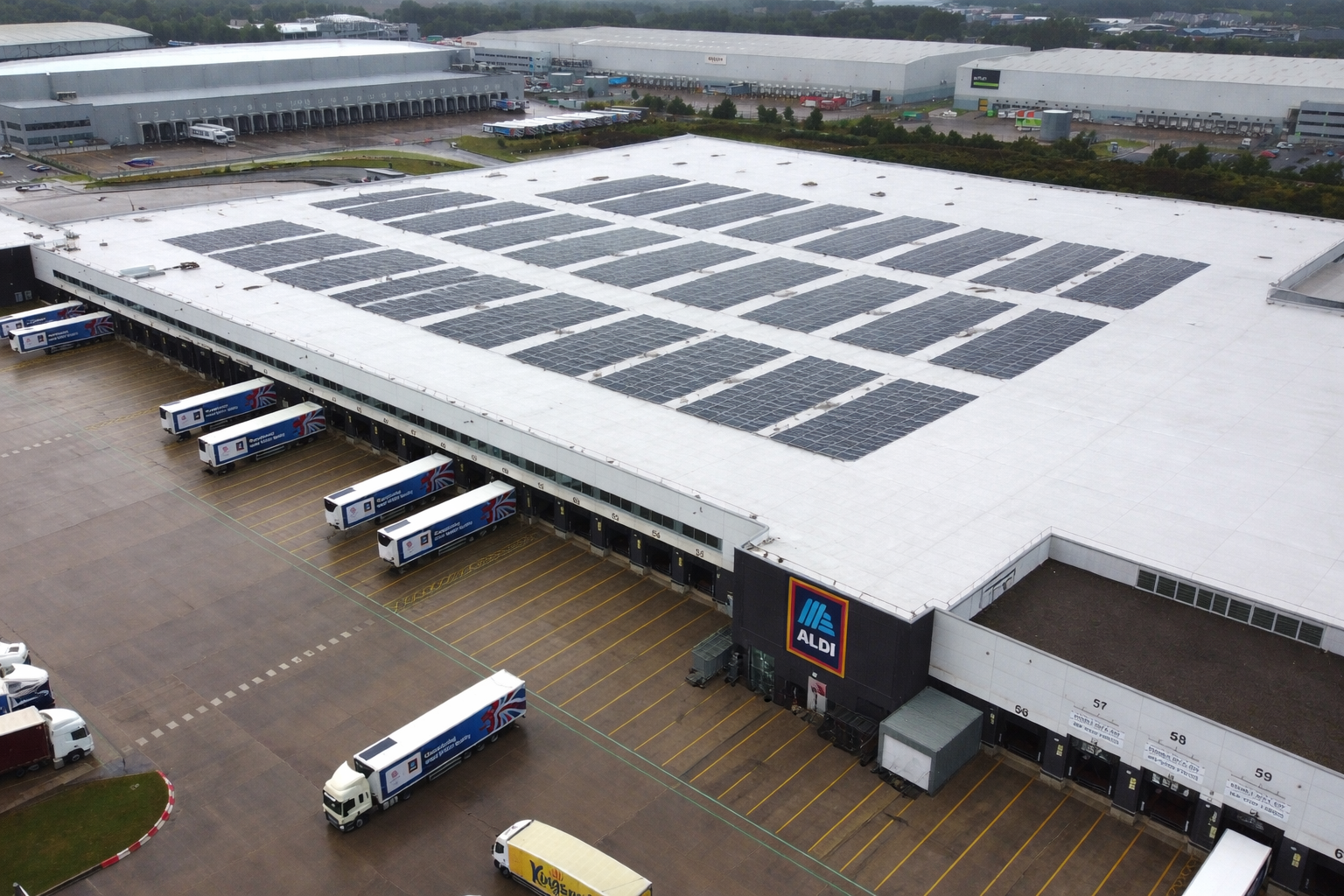
- The company recently replaced thousands of panels at Aldi’s Bathgate regional distribution centre.
Fusion 360 says food and drink manufacturers, packers, chilled warehouses, and distribution centres are showing increased interest in rooftop solar as they seek greater control over volatile energy costs.
The UK-wide installer works on solar panel systems for large structures, including food and beverage manufacturing and distribution premises. Enquiries from food and drink-related businesses have risen since the beginning of 2026, with the US-Iran conflict adding another layer of uncertainty to energy supply and pricing.
Rooftop solar is becoming more attractive because many food and drink sites have large roof areas and high daytime electricity demand. Refrigeration, chillers, freezing, compressed air, pumps, conveyors, packaging machinery, lighting, and electric vehicle charging can all contribute to significant power consumption. In chilled and frozen operations, electricity is not a background overhead; it is central to product integrity and service continuity.
Joanne Skinner, Commercial Director of Fusion 360, said: “One of the strongest benefits of installing solar panels is the reduced reliance on mains energy. Add to that the increased sustainability and lower costs, particularly when powering energy-hungry refrigeration and chillers, and it’s perhaps clear why we’re seeing growing interest from businesses helping to feed Britain.”
The company recently completed a major replacement project at Aldi’s regional distribution centre in Bathgate, Scotland. Fusion removed and recycled existing panels and installed a new solar system across two extensive roof areas, supporting chilled and ambient warehousing operations. The project included almost 4,000 new panels, with the system now powering refrigeration and reducing reliance on the grid.
Food and drink energy strategy has changed significantly since the first major price shock. Earlier projects were often justified primarily through sustainability or long-term cost reduction. Current projects are more likely to be assessed through resilience, predictability, and exposure management. Businesses are looking for ways to reduce the proportion of electricity bought at market rates, especially where production cannot easily shift away from peak demand.
Solar does not solve every food factory energy problem. It cannot remove the need for grid connection, and output varies with weather and season. Many manufacturers will still need to combine solar with energy efficiency, refrigeration optimisation, heat recovery, battery storage, demand management, and smarter procurement. Even so, onsite generation can reduce exposure where roof area and load profile align.
The sector’s load profile gives rooftop solar a stronger case than in some other industries. Chilled distribution centres and food factories often use substantial electricity during daylight operating hours, increasing the amount of generated power that can be consumed onsite rather than exported. Self-consumed power usually carries greater value than exported surplus, improving the economics of the system.
Joanne Skinner added: “From food factories to packing plants and distribution warehouses, many food and drink related companies have expansive roofs which lend themselves well to solar energy. With continuous advances in PV technology, every new generation of solar panels is delivering greater power, longer life and a faster return-on-investment.”
Project feasibility remains site-specific. Roof condition, structural loading, planning constraints, grid export limits, insurance requirements, maintenance access, safety management, and operational disruption all affect delivery. Food sites must also consider hygiene zones, pest control, drainage, roof penetrations, and business continuity during installation.
Energy prices influence processing cost, cold storage, packaging, logistics, and retailer negotiations. As delayed cost movement continues to affect the sector, onsite generation offers one route to reducing uncontrollable exposure. Solar adoption across food and drink is likely to accelerate where businesses have large roofs, stable ownership or lease arrangements, and predictable electricity load.