IN Brief:
- Zoe has launched a Gut Health Bar made with more than 10 plant-based ingredients.
- The product uses visible nuts, seeds, legumes, seaweed, and kombucha to support plant diversity and fibre-led positioning.
- The launch reflects the continued shift of nutrition science into mainstream snack and functional food formats.
Zoe has entered the functional snacking market with a Gut Health Bar built around plant diversity, fibre, and microbiome-led nutrition.
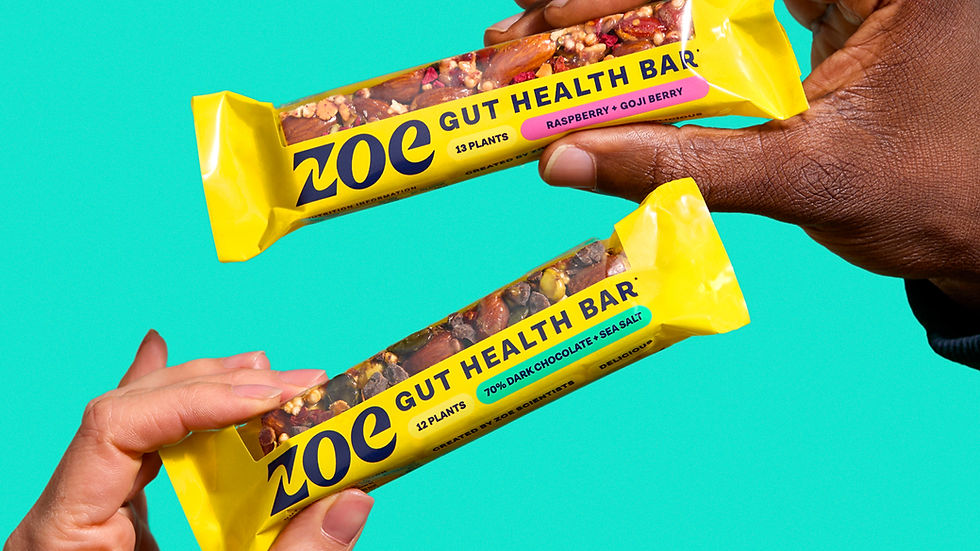
The bar is made with more than 10 plant-based ingredients, including almonds, cashews, edamame, red lentils, flaxseeds, pumpkin seeds, seaweed, and kombucha. It is available in dark chocolate and raspberry variants, with a format designed to retain visible nuts, seeds, and inclusions rather than creating a fully homogenised bar.
The launch moves Zoe from personalised nutrition services into consumer packaged goods. The company has built its profile around microbiome research, nutrition testing, and data-led dietary guidance, and the new product gives it a physical route into a category where functional positioning is becoming increasingly crowded.
Bars remain one of the most adaptable formats for functional food development. They can carry fibre, protein, botanicals, prebiotic ingredients, seeds, grains, nuts, and indulgent flavour systems while remaining compatible with ambient distribution and portion-controlled consumption.
Zoe’s ingredient approach reflects a wider shift away from single-claim functional foods towards layered nutrition. Rather than relying on one hero ingredient, the bar uses plant diversity and food structure as its core proposition. That creates formulation complexity, because nuts, legumes, seeds, seaweed, fermented ingredients, and chocolate systems all bring different moisture, texture, flavour, and processing demands.
Functional food and drink launches have been spreading across several formats, from soft drinks built around added health cues to new entrants in functional beverages and large-company investment in nutrition-led meal formats. Zoe’s move places microbiome-led positioning into the same broader commercial current.
The manufacturing challenge is to balance nutritional density with eating quality. High-fibre and plant-rich bars can become dry, bitter, tough, or unstable if formulation and processing are not carefully managed. Visible inclusions can support premium positioning, but they also need controlled distribution through the bar matrix to ensure consistency from pack to pack.
Legumes and seeds also broaden the ingredient base beyond conventional cereal and nut systems. Red lentils, edamame, flaxseed, pumpkin seed, seaweed, and fermented components can improve nutrient density, but they may require more precise flavour balancing and supply management. As functional snacking scales, ingredient availability and processing behaviour will sit alongside the headline nutrition claim.
The bar format gives Zoe a route into everyday consumption. Personalised nutrition services can build credibility and data assets, but packaged food tests whether that knowledge can be translated into products with acceptable taste, texture, cost, shelf life, and repeat purchase rates.
Established snack producers are likely to face more competition from companies that start with nutrition science rather than conventional brand development. That could push the category towards stronger evidence, more complex ingredient systems, and clearer links between formulation and health positioning.
The Gut Health Bar enters a market already familiar with protein, fibre, and energy claims. The next stage of competition will depend on how convincingly brands connect ingredient systems to digestive health, satiety, and everyday dietary improvement. Manufacturing execution will decide whether microbiome-led snacking moves beyond early adopters and becomes part of the mainstream functional food shelf.