IN Brief:
- MULTIVAC, TVI, and Handtmann will host the Meat & Minds Summit in Germany from 27–29 October 2026.
- The programme will cover meat and sausage manufacturing, protein processing, sustainable packaging, automation, and digitalisation.
- The event brings processing, packaging, research, and production data into a single technical programme.
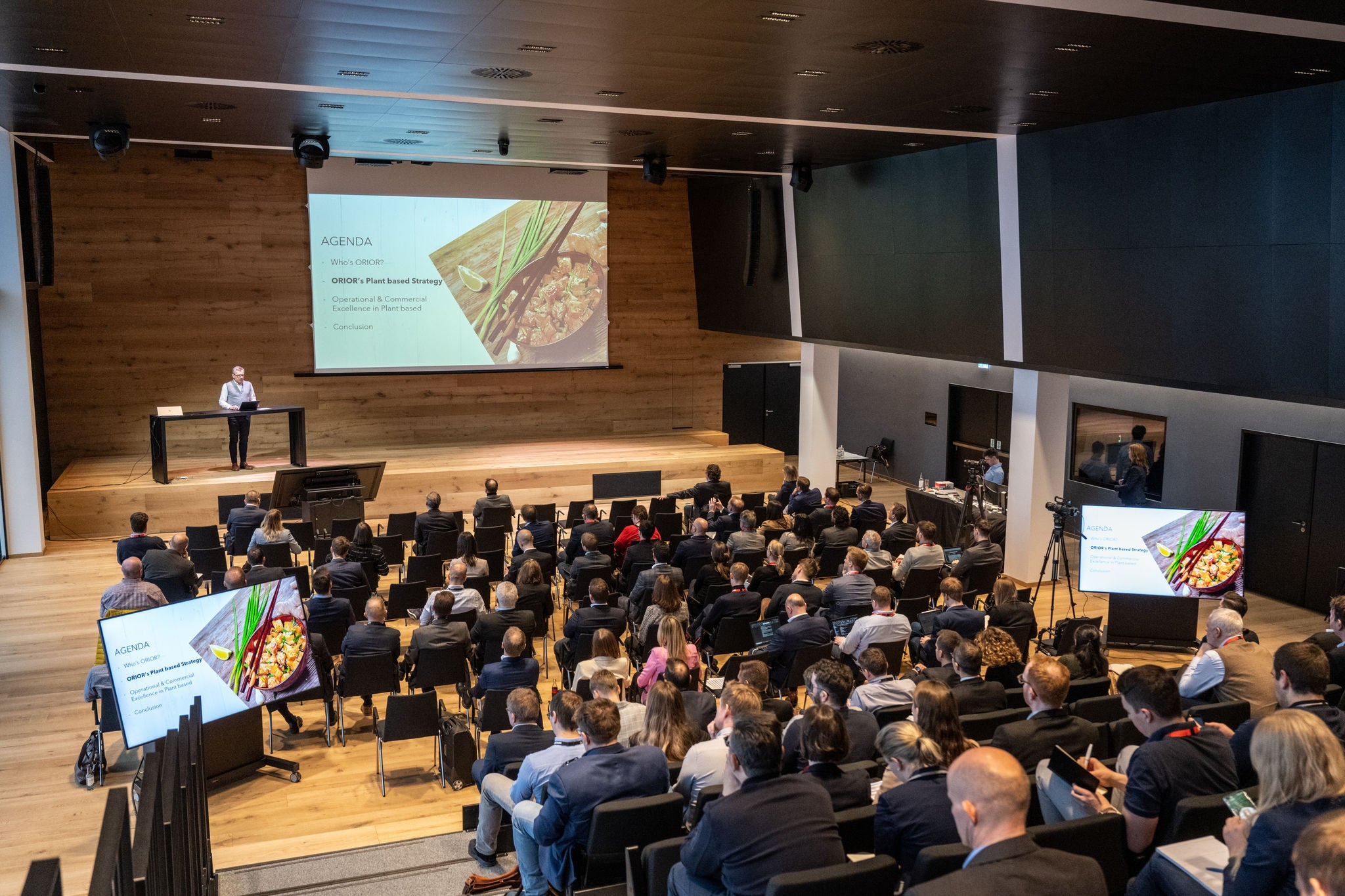
MULTIVAC, TVI, and Handtmann will host the Meat & Minds Summit from 27–29 October 2026, creating a three-day technical programme for meat, sausage, and protein manufacturers.
The event will run across sites operated by the three companies in Germany, with sessions at MULTIVAC in Wolfertschwenden, TVI in Bruckmühl, and Handtmann in Biberach. The structure takes visitors through the production chain from processing to packaging, combining technical lectures, live demonstrations, expert sessions, and practical application work.
Current developments in meat and protein production, the future of sausage manufacturing, and the advancement of sustainable packaging solutions will sit at the centre of the programme. A Future Lab will bring research input into the event under themes including Save Food, Sustainable Packaging, and Production of the Future.
Research contributors are expected to include the Fraunhofer Institute, the Danish Meat Research Institute, the University of Hohenheim, Munich University, and the Sustainable Packaging Institute at the University of Albstadt-Sigmaringen. By placing meat processing, protein handling, packaging efficiency, automation, and digitalisation into the same operational programme, the summit reflects how production decisions are now made on integrated lines rather than around isolated equipment purchases.
The second and third days will allow participants to select deep-dive sessions around company-specific production challenges. Interactive demonstrations and moderated expert sessions will cover packaging, meat and sausage processing, automation, and digitalisation, with the three-site format giving manufacturers a route through different stages of the production chain.
Meat processors are dealing with a dense mix of operational pressures. Labour availability remains uneven across European food factories, energy costs continue to influence investment cycles, and retailers are pressing suppliers for more consistent portioning, lower packaging waste, and stronger traceability. Those pressures tend to reveal themselves between machines rather than inside a single process step.
High-value proteins create especially narrow margins for error. Slicing, portioning, loading, sealing, inspection, labelling, and secondary packaging all affect yield, shelf life, quality, and giveaway. A small improvement in portion control or rework reduction can carry a material impact when repeated across high-throughput meat lines.
The packaging side of the equation is also becoming harder. Manufacturers are trying to reduce material use while maintaining pack integrity, barrier performance, visual appeal, and shelf-life protection. Thinner films, alternative substrates, and reduced-plastic packs can expose weaknesses in forming, sealing, handling, and inspection, particularly where product shape and moisture are variable.
The summit follows the same direction as MULTIVAC’s wider connected packaging work, including its recent focus on AI-supported traysealing, yield-monitored slicing, thermoforming, smart packaging, and production data at interpack 2026. Connected packaging systems are increasingly being presented as productivity tools rather than standalone packaging machines.
That direction is visible in the Meat & Minds programme. Meat plants need cleaner data on raw material variability, cutting accuracy, pack material performance, inspection results, cleaning regimes, labour use, and downstream bottlenecks. A line that runs quickly but creates rework, inspection rejects, or poor material efficiency will not protect margin.
Practical demonstrations carry weight in this market because meat processing equipment has to prove itself under demanding handling conditions. Product temperature, fat content, shape, moisture, bone risk, hygiene controls, and shift patterns all affect performance. Technical lectures can frame the direction of travel, but production teams still need to see how machinery behaves with realistic product and cleaning constraints.
As meat and protein manufacturers plan the next investment cycle, the strongest systems will be those that reduce manual intervention while retaining enough flexibility for shorter runs and varied pack formats. Retail and foodservice customers are still pushing variation in portion size, protein type, packaging format, and shelf presentation, even as factories search for standardisation.
The summit gives MULTIVAC, TVI, and Handtmann a platform to show how processing and packaging decisions are converging. Yield, hygiene, material reduction, automation, data capture, and service support now sit in the same capital investment conversation, and meat plants will increasingly judge suppliers on how well they connect those requirements at line level.