IN Brief:
- Glacier will invest €45m across ice cream manufacturing and product development in Italy and Belgium.
- Two Italian lines will expand fruit ice and layered water ice capacity, while Langemark gains automation, warehousing, cooling, and bite-sized production.
- The programme connects new formats with the cold infrastructure and development capability needed to manufacture them at scale.
Glacier is investing €45m across ice cream manufacturing operations in Italy and Belgium, adding production lines, automation, warehousing, cooling infrastructure, and product development capacity to its European private-label and co-manufacturing network.
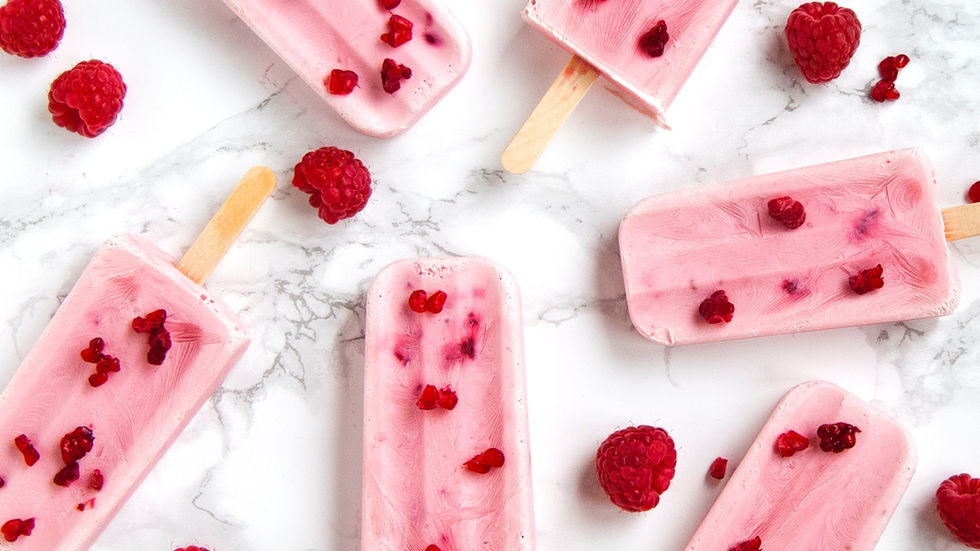
Two new lines will be installed in Italy, with the first manufacturing spiral ice lollies and fruit-coated sticks and doubling capacity across those formats. A second line will extend water ice production, increase operating speeds, and support products containing as many as seven flavour layers.
At Langemark in Belgium, additional warehousing, automation, and cooling infrastructure will be joined by a bite-sized ice cream line capable of producing 50,000 pieces an hour. Glacier expects the line to add approximately 220m units to annual capacity, strengthening a segment in which the group already supplies retailers and brand owners across Europe.
Product development will also move closer to manufacturing through an innovation centre at Cavriago in Italy, scheduled for completion by the end of 2026. A multisensory kitchen and interactive product studio will allow customers to develop, refine, sample, and test concepts before they enter full production.
By linking factory capacity with development facilities, the programme addresses the increasingly compressed route between concept approval and retail launch. Private-label customers are asking for more frequent range changes, retailer-specific formats, and seasonal products, while manufacturers still have to protect service, quality, and cost across established lines.
Fruit-led products occupy a prominent position in the investment, reflecting demand for lighter formats that retain colour, flavour, and visual impact. Spiral lollies, fruit-coated sticks, and layered water ices require controlled depositing, freezing, coating, demoulding, and handling, particularly when several flavours must remain sharply separated at industrial speed.
Bite-sized products introduce a different group of process demands. At 50,000 pieces an hour, small variations in depositing, coating, temperature, or transfer can generate substantial losses over a production campaign. Piece dimensions must remain consistent for count accuracy and packaging, while freezing and hardening profiles have to protect texture and minimise damage through inspection and packing.
Cold capacity supports the new lines
Ice cream output cannot expand without corresponding refrigeration, hardening, storage, and dispatch capacity, so the inclusion of cooling infrastructure and warehousing at Langemark is central to the programme. A faster filler or freezer merely transfers the bottleneck if downstream hardening tunnels, frozen storage, pallet handling, or loading capacity remain unchanged.
Energy use remains one of the category’s largest operating costs because plants consume power across mixing, pasteurisation, homogenisation, ageing, continuous freezing, hardening, frozen storage, and temperature-controlled distribution. Modern cooling systems and automation can improve control and reduce losses, although they also increase the need for disciplined maintenance, energy monitoring, refrigerant management, and peak-load planning.
Glacier reports annual output of 298m litres of ice cream and 450m cones, alongside net sales of €582m in 2025. That scale gives the group room to spread development and capital costs across a broad customer base, including specialist formats that would be difficult for smaller manufacturers to justify on dedicated equipment.
The investment follows the appointment of Tunc Tezel as group chief financial officer, adding a substantial manufacturing programme to the group’s wider expansion strategy. Glacier has also left open the prospect of selective acquisitions and partnerships as it develops its international presence.
Private-label and co-manufacturing growth brings demanding production economics. Retail and branded customers may require rapid reformulation, exclusive shapes, dedicated packaging, and sharp cost control, while volumes can move quickly between permanent listings, promotions, and seasonal ranges. Every new format has to justify tooling, trials, change parts, stockholding, and line time.
The Cavriago centre should reduce some of that risk by bringing factory constraints into product development earlier. Ingredient behaviour, inclusion size, coating viscosity, freezing performance, allergen controls, packaging compatibility, and equipment availability can be assessed before a concept reaches a commercial line, rather than being resolved during an expensive commissioning run.
Closer integration between development and production also supports faster transfer between sites. A formula proven under representative process conditions can be documented more precisely, while equipment settings, quality limits, and packaging requirements can be established before scale-up. That discipline becomes more valuable as product architectures grow more complex and launch windows shorten.
Glacier’s €45m programme spans the complete manufacturing flow, from development and depositing to freezing, warehousing, and dispatch. The additional lines will increase output, but the surrounding infrastructure will determine whether that capacity can be used efficiently across the varied, fast-changing portfolios demanded by European retailers and brand owners.