IN Brief:
- Deli 24 has added a second oil-free compressor to create duty and standby capacity.
- An air audit identified leaks and distribution losses before the new equipment was installed.
- The upgraded system supports product handling, packaging, maintenance, and production continuity.
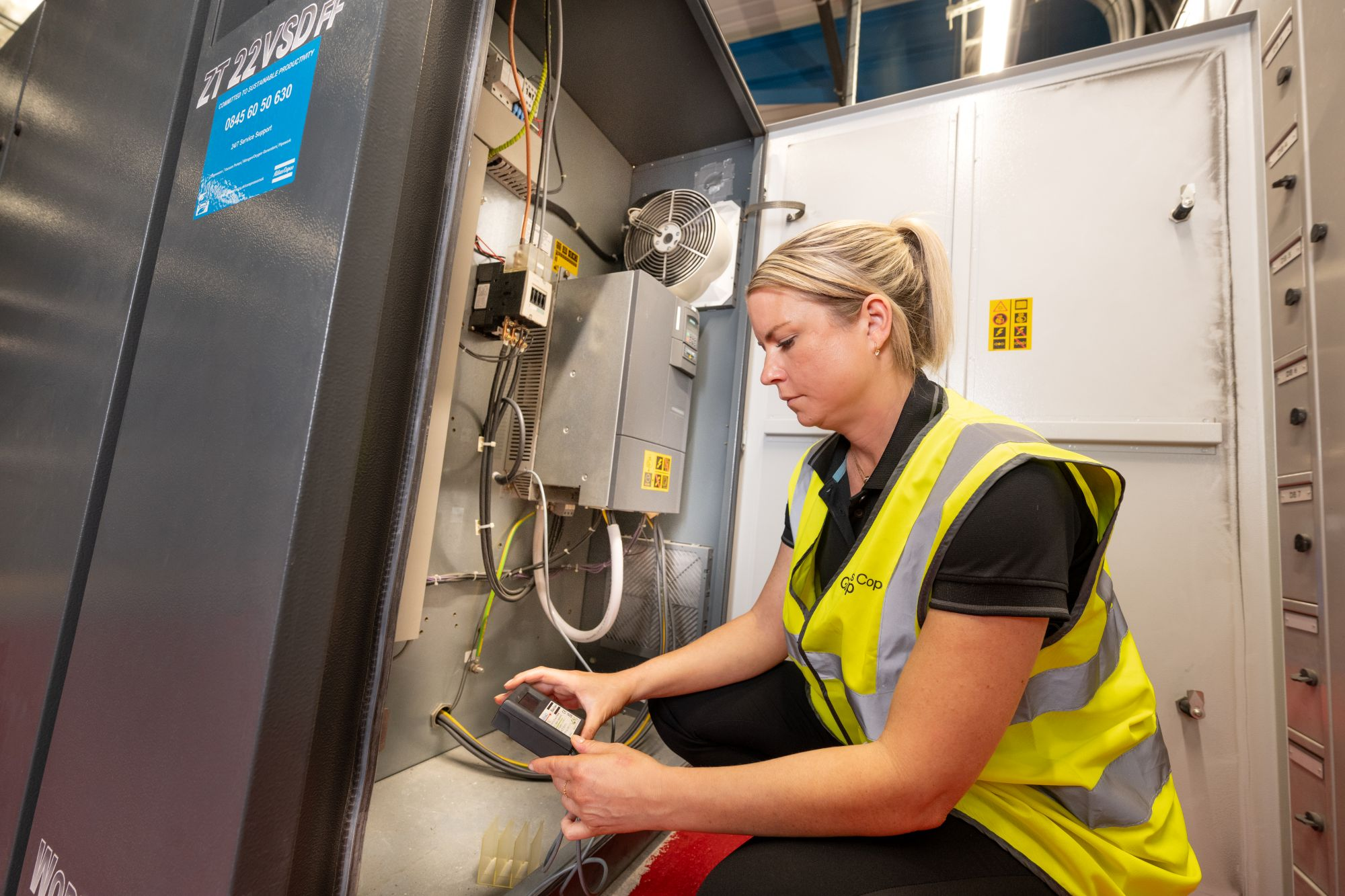
Deli 24 has strengthened the compressed-air network at its Milton Keynes high-pressure-processing facility by adding a second Atlas Copco ZT22 VSD oil-free rotary-tooth compressor.
The new machine operates alongside an existing ZT22 VSD in a duty and standby configuration, providing additional capacity and allowing one compressor to be taken offline for maintenance without interrupting production.
Deli 24 provides contract high-pressure processing for food categories including baby food, meat, seafood, dairy, and prepared products. HPP subjects sealed food to intense hydrostatic pressure, reducing vegetative pathogens and spoilage organisms without applying the heat associated with conventional pasteurisation.
Treatment after packaging can extend shelf life while retaining more of the product’s fresh flavour, colour, texture, and nutritional characteristics. Packaging flexibility, seal integrity, and the control of trapped air are central to the process because the complete sealed pack enters the pressure vessel.
Compressed air supports conveyors, machinery, actuators, and air knives used to dry packs before date coding. Although the air system does not generate the hydrostatic pressure inside the HPP vessel, a loss of supply can still interrupt product handling and packaging across the facility.
The project began with a full air audit covering the compressor installation and the wider distribution network. Previously undetected leaks and inefficient pipework were identified, leading to changes in connections and distribution before the additional compressor was commissioned.
A follow-up assessment confirmed that the corrective work had reduced losses. Repairing the distribution system before adding generating capacity avoided using a new compressor to supply air that would continue escaping through leaks.
The installation includes an air receiver to stabilise supply as demand changes. Equipment and pipework were rearranged within the existing plant room so both compressors could operate side by side, with commissioning completed in stages around the production schedule.
Variable-speed drive allows output to follow demand more closely than a fixed-speed machine operating repeatedly between loaded and unloaded states. The energy result will depend on the site’s consumption profile, pressure set point, sequencing, and the way the two compressors share duty.
Utilities carry production-wide risk
Food factories often concentrate capital planning on the main processing or packaging line, although a shared utility can stop several areas simultaneously. Compressed air may serve valves, conveyors, cylinders, drying, cleaning, and control functions across the site, creating a common point of dependency.
A duty and standby arrangement reduces that exposure and changes the way maintenance can be scheduled. Service work can take place during normal hours while the second machine maintains supply, avoiding the need to compress maintenance into weekends or short production shutdowns.
Oil-free compression is used where air may contact food, product-contact surfaces, or primary packaging. Atlas Copco’s ZT rotary-tooth design keeps oil out of the compression chamber, reducing one potential contamination source within the air stream.
Delivered air quality still depends on the complete installation. Intake position, filtration, dryers, receivers, condensate management, pipework condition, and maintenance all affect the final specification, so oil-free generation does not remove the need for monitoring and verification.
Centralised utilities are also being used elsewhere to improve packaging resilience. Migros recently replaced line-level vacuum pumps with a shared system serving six meat-packaging lines, combining redundancy with easier maintenance and more consistent process conditions.
Pressure optimisation is a significant part of compressed-air efficiency. Generating air above the level required by the most demanding application increases power use and can worsen leakage, while low pressure creates unreliable operation at distant points of use.
Auditing the network allows the site to distinguish genuine process demand from avoidable losses and pressure drop. Flow, pressure, power, dew point, operating hours, and alarm trends can also reveal deterioration before it develops into a production stop.
Deli 24 is considering digital monitoring to improve visibility of performance and maintenance. Linking compressor data with production schedules would help the engineering team identify abnormal consumption, recurring leaks, or equipment that remains supplied outside operating periods.
Contract HPP increases the importance of continuity because a single stoppage can disrupt products belonging to several customers. Booked vessel capacity, incoming chilled goods, packaging schedules, and outbound shelf-life commitments are all affected when supporting equipment is unavailable.
Additional compressed-air capacity also provides room for growth, although reserve capacity must be managed carefully. Permanently operating both machines at inefficient load points would weaken the energy case, while an effective control strategy can rotate duty and preserve standby availability.
The installation sequence demonstrates the value of measuring before specifying new equipment. Leaks and distribution losses were addressed first, after which the second compressor was sized against a more accurate demand profile.
That approach avoids treating equipment replacement as the complete solution. In many factories, the compressor is only one part of a system whose performance is shaped by pipe diameter, pressure drop, storage, demand peaks, controls, and poorly maintained connections.
Deli 24 now has greater flexibility to service equipment, absorb short-term faults, and support future expansion without leaving the HPP operation dependent on one compressor. Clean, stable air strengthens the supporting processes that move packaged food into treatment and prepare it for coding and dispatch.
As production becomes more automated, utility reliability increasingly determines whether expensive processing assets can remain available. The second ZT22 VSD gives the Milton Keynes site a stronger operating base, while the audit and network repairs ensure that the added capacity is used by the process rather than lost before reaching it.