IN Brief:
- Rotterdam’s floating dairy farm has been placed on the market seven years after opening.
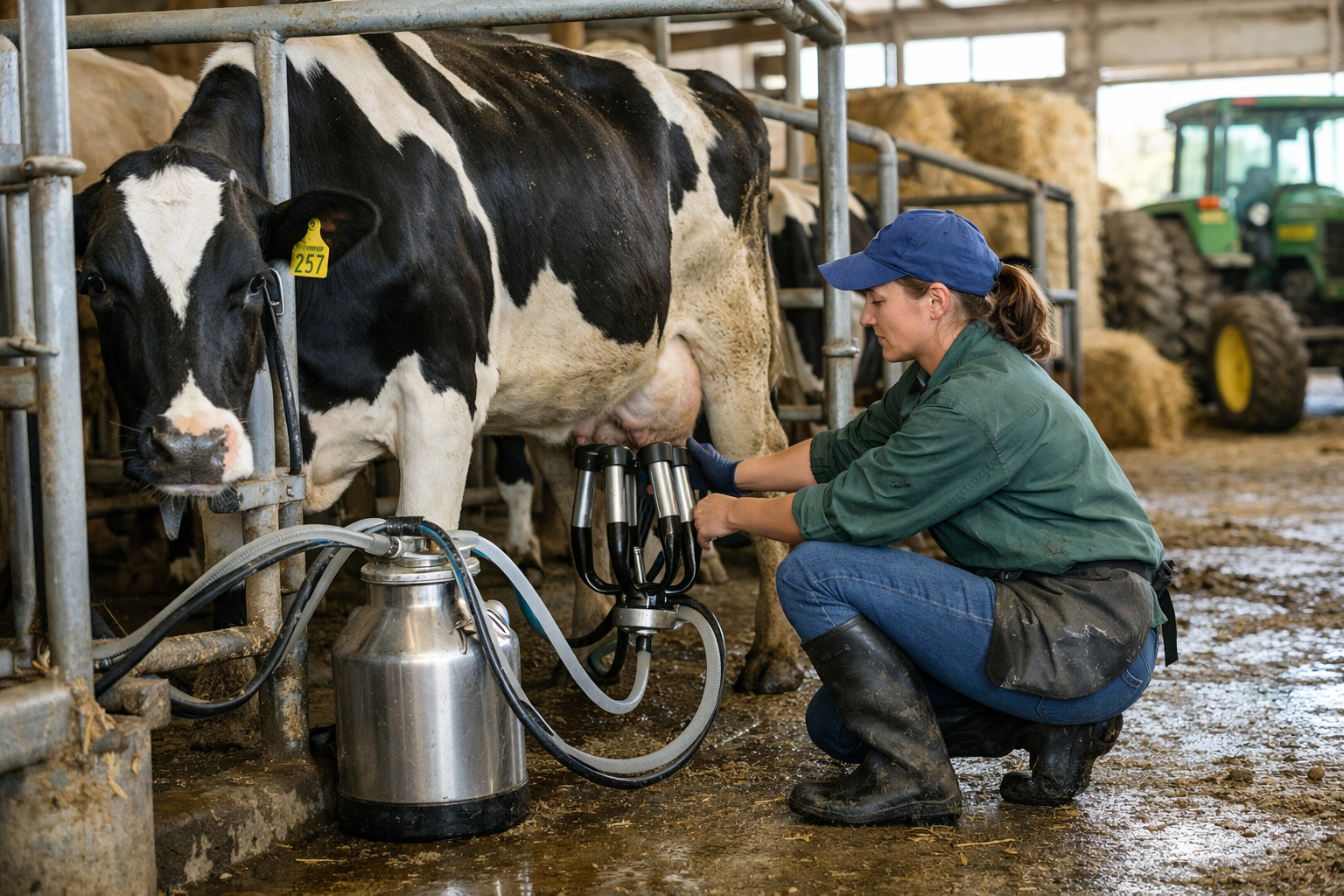
- The facility houses 28 cows and incorporates automated feeding, milking, manure handling, and dairy processing.
- Redevelopment plans and a dispute over emissions certification for replacement flooring contributed to the sale.
Floating Farm Rotterdam has been put up for sale after redevelopment pressure at its port location and a dispute over emissions certification for replacement livestock flooring.
The three storey floating structure opened in May 2019 as an urban dairy operation combining cow housing, automated milking, manure management, processing, storage, and local sales. It currently accommodates 28 Meuse Rhine Issel cows and can be moved by water to another site.
Founders Peter and Minke van Wingerden invested approximately €4m in the project, which produces milk, yoghurt, and cheese. Dairy processing and cheese ripening take place within the same compact structure as the livestock operation.
The farm’s permission to remain at the Rotterdam port site is due to expire as the surrounding area is prepared for housing. Relocation has become the principal route for continuing the operation, although any new destination would require suitable mooring, utilities, access, and regulatory approval.
A separate problem developed when the original low emission rubber floor began to bulge. The uneven surface affected cow movement and interfered with the robotic manure scraper, creating a need for replacement.
The operators installed a German flooring system and conducted emissions measurements, but the replacement lacked certification accepted by the Dutch environmental authority. The disagreement left the farm facing regulatory uncertainty despite the operators’ performance data.
Several systems within one structure
Floating Farm was designed to shorten the distance between primary production, processing, and sale while using an urban location close to consumers. Residual materials from the surrounding city and port could be incorporated into feed where suitable, while milk moved only a short distance before chilling and processing.
Combining those operations reduces some transport, yet it places animal areas, food production, cleaning, utilities, waste handling, visitors, and storage within a restricted footprint. Separation between clean and dirty activities has to be maintained despite the close physical arrangement.
Automated feeding and milking reduce some routine labour, but the equipment also creates concentrated points of dependency. A fault affecting the robot, scraper, milk cooling, pasteuriser, filling equipment, or cold room can interrupt a large proportion of the farm’s output.
Manure management carries equal weight because slurry must be removed consistently without compromising animal welfare or the environment surrounding the floating structure. Flooring, scraping, storage, and treatment operate as one system, which made the certification dispute more than a question about a single construction material.
The same integration challenge appears within other attempts to change food production geography. A cultivated meat demonstration unit installed on a Dutch dairy farm has also combined a novel production process with an existing agricultural site rather than relying on a conventional central factory.
Both models bring production closer to farms or urban markets, but they must still comply with rules written around established categories. Planning, environmental emissions, building standards, animal welfare, food hygiene, and machinery conformity may be handled separately even when the operating system is integrated.
Relocation requires more than towing
The floating structure can physically move, although the production operation depends on infrastructure beyond the hull. A new site needs electricity, potable water, drainage, wastewater arrangements, road access, feed delivery, milk processing approval, and a suitable route for finished products.
Local customers and direct sales have supported the business model in Rotterdam. Relocating to a less populated area could reduce land pressure while also weakening the short distribution routes and visitor interest that distinguish the operation from a conventional dairy.
Urban production also carries difficult economics. Higher value direct sales may provide greater revenue per litre, but small sites carry processing, packaging, maintenance, compliance, laboratory, and retail functions that larger dairies spread across much greater volumes.
Certification remains a further cost. An equipment component accepted elsewhere may still require national testing or documentation, and a small demonstration operation has fewer units over which to spread that expense.
A buyer could use the structure as a working dairy, research facility, education site, visitor destination, or demonstration project. Each option would need a different balance between production volume, public access, regulation, and commercial income.
Seven years of operation have shown that livestock, processing, and local distribution can be combined on water. The sale will determine whether that engineering concept can find a location where long term land use, certification, and operating economics are as carefully aligned as the physical production system.