IN Brief:
- ABP acquired a 25% interest through the purchase of former shareholder Amanda Buitelaar’s holding company.
- Dovecote Park’s existing chairman and chief executive remain responsible for the processor’s operations.
- The business employs more than 700 people across meat procurement, processing, retail packing, and despatch.
ABP Food Group has acquired a 25% stake in Dovecote Park, the British meat processor supplying beef, veal, and venison to Waitrose and food service customers.
The investment follows the departure of former co-owner and director Amanda Buitelaar, who resigned from Dovecote Park and its parent company, Extra Detail Limited, on 30 April. ABP acquired the interest by buying Benoni Corporation, the holding company through which Buitelaar held her stake.
Dovecote Park’s existing leadership remains in place. Chairman David Gunner and chief executive Richard Canvin continue to oversee the business, while ABP director Tom Kirwan joined the board of Extra Detail on 16 June. No purchase price has been disclosed, and neither company has announced an operational merger.
The transaction changes Dovecote Park’s shareholder base without transferring day-to-day control. The processor has described ABP’s position as a long-term strategic investment, while its existing board and management retain responsibility for operations and development.
An integrated processing model
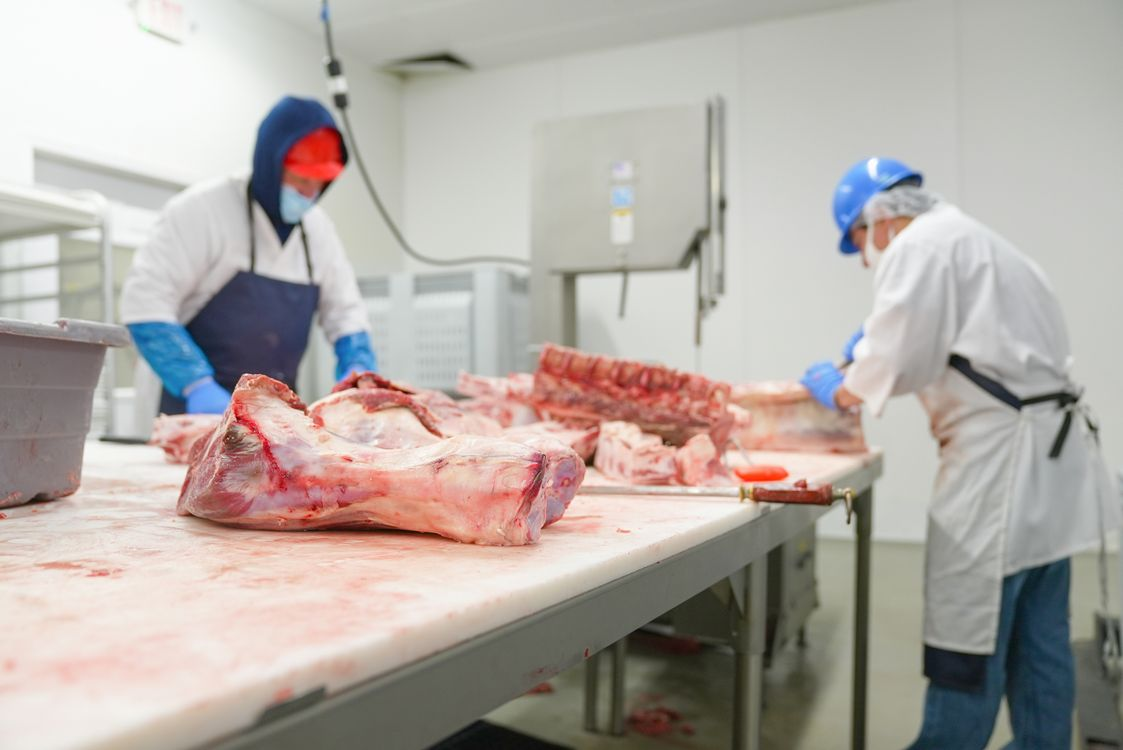
Dovecote Park was established in Yorkshire in 1997 and operates its main facility at Stapleton, with a second site at Skellingthorpe in Lincolnshire. More than 700 employees work across livestock procurement, butchery, retail packing, frozen production, and despatch, giving the company control over a broad section of the chain between approved farms and finished customer specifications.
Its relationship with Waitrose began in the company’s first year, when it supplied Aberdeen Angus beef to the retailer’s then 50 stores. Dovecote Park now supplies British beef, veal, and venison across the Waitrose estate while also serving food service customers. The model places traceability, animal welfare verification, yield, consistency, and retail presentation at the centre of plant operations.
The company has added specialist capacity as its product range and customer base have developed. Its operating history includes an individually quick-frozen facility opened in 2013, a dedicated venison-processing operation completed in 2017, a robotic dry-ageing facility built in 2018, and a separate production facility for Burger King opened the following year.
Those investments show why a minority holding can carry industrial weight beyond its percentage. Meat production depends on matching livestock availability with carcass balance, cutting plans, customer forecasts, packaging formats, labour, cold chain capacity, and markets for co-products. A shareholder with a large procurement and processing network can influence capital planning and supply resilience even where formal operating independence is retained.
ABP operates across beef and lamb processing in the UK and Ireland. Its involvement gives Dovecote Park access to a shareholder with experience in livestock purchasing, primary processing, retail packing, food service, and international meat markets, although no shared production programme or new supply agreement has been announced.
Governance will shape the outcome
The absence of an integration plan is significant for a business whose value is closely tied to established customer programmes, British producer relationships, product specifications, and operating culture. Rapid consolidation could disturb the characteristics that made the company attractive, particularly where retail contracts depend on distinct sourcing, welfare, and quality requirements.
A minority investment provides a less disruptive route. It can support capital planning, technical exchange, and procurement resilience while leaving the current management team responsible for customers, employees, suppliers, and plant performance. ABP also gains exposure to a specialist operation without taking full control or immediately reorganising sites.
The balance will become visible through board decisions. Future choices on automation, capacity, energy use, packaging, livestock procurement, and customer development will show how far the new shareholder influences Dovecote Park’s direction.
UK meat processors continue to face tight labour markets, energy costs, livestock supply constraints, retailer pricing pressure, export conditions, and increasingly detailed assurance requirements. Scale can help absorb those pressures, but it does not remove the need to protect specialist programmes or maintain producer confidence.
The structure also leaves customer concentration and governance risk largely unchanged. A minority shareholder can provide support, but management still has to deliver the operating plan.
For Dovecote Park, the immediate position is continuity: the same management team, the same operating sites, and no announced change to customer supply. For ABP, the stake creates a strategic position in a processor with a differentiated retail relationship and an established British farming network.
The ownership filing is only the first measurable change. Capital projects, procurement arrangements, board decisions, and any expansion of processing or customer capacity will reveal whether the stake remains a financial interest or develops into a practical industrial partnership.