IN Brief:
- KILOM has installed four Ishida Fresh Food Weighers and three DACS-GN checkweighers across three poultry packing lines.
- Output reaches 35 portions per minute on single-weigher lines and 50 portions per minute on the dual-weigher configuration.
- Staffing has fallen from nine to six operators per line, while KILOM reports efficiency improvements of up to 33%.
KILOM has automated weighing and tray packing across three fresh poultry lines in Portugal, installing four Ishida Fresh Food Weighers and three DACS-GN checkweighers in a project that has reduced staffing and increased reported line efficiency.
The processor, part of the Valouro Group, had previously relied heavily on manual weighing and filling. Nine operators were required on each packing line, while variations associated with manual batching made it more difficult to hold packs consistently close to their target weight at higher production rates.
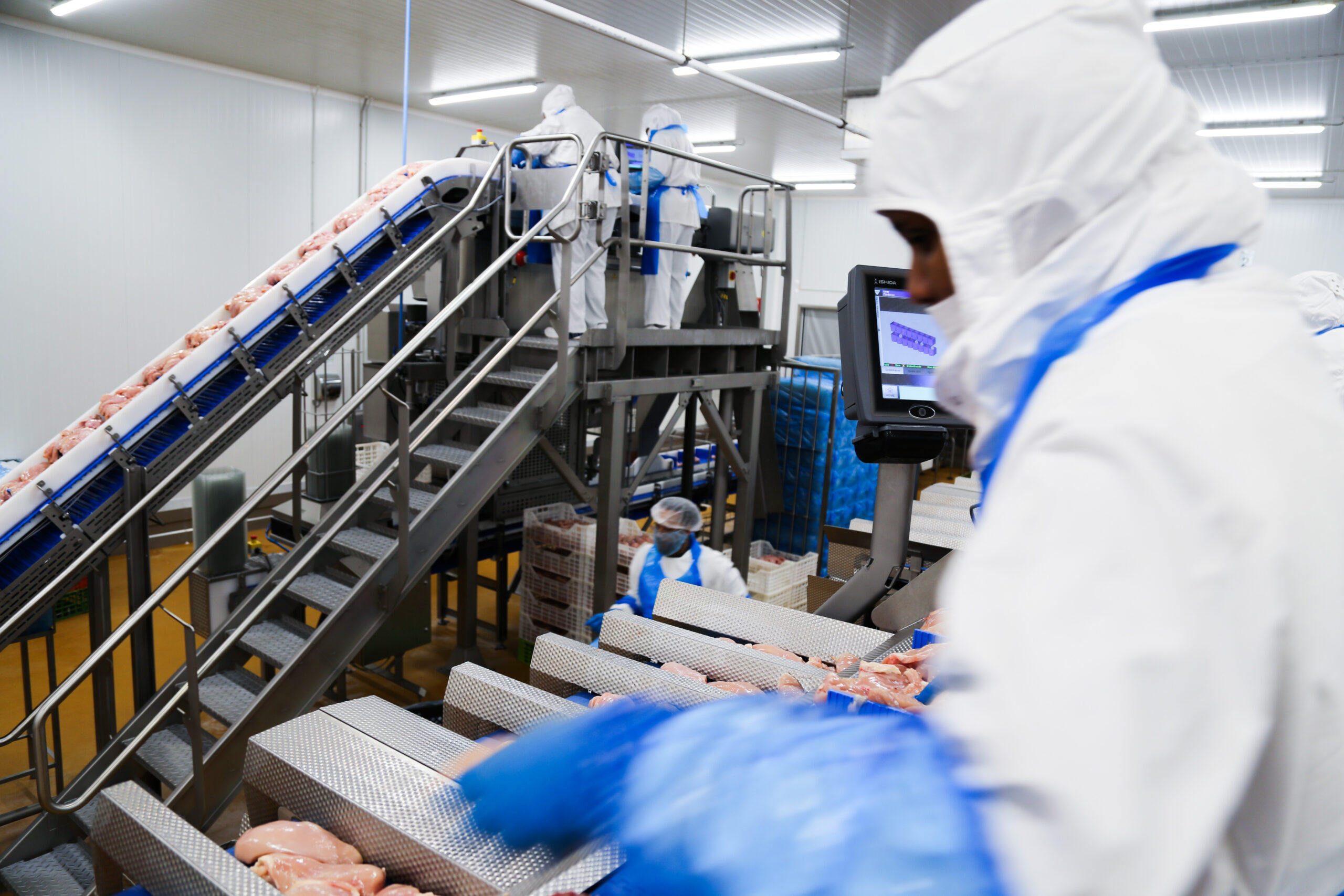
The new installation comprises three packing lines with four Fresh Food Weighers, three checkweighers, infeed elevators, conveyors, automatic tray denesters, and tray handling ahead of sealing. Three lines operate with a single weigher configuration, while one arrangement combines two weighers to support higher throughput.
KILOM reports capacities of up to 35 portions per minute on single-weigher lines and up to 50 portions per minute on the dual-weigher line. At those rates, downstream traysealing capacity becomes the principal speed constraint rather than the weighing equipment.
The application is complicated by the range of fresh poultry products passing through the packing area. Breast fillets, wings, thighs, livers, hearts, and gizzards are among the products handled, often in 700g packs but with different tray formats and presentations scheduled throughout the day.
KILOM typically carries out two or three product or tray changes daily. The weighing and handling equipment therefore has to accommodate frequent recipe and format changes without turning each switch into an extended line stoppage.
The installation can operate in two principal modes according to product behaviour. In pace-packing mode, weighed portions are presented to operators who place them into trays, retaining manual intervention where product presentation requires it. Products such as giblets can instead be discharged directly into trays without the same handling stage.
That arrangement leaves people in the process where judgement and presentation remain useful while automating the more repetitive weighing decision. The result is not a fully unmanned packing line, but labour requirements have fallen from nine to six operators per line.
KILOM also reports efficiency improvements of up to 33%. The equipment operates for around eight hours per day, with weight combinations produced automatically rather than through manual batching.
Pack-weight control is a significant cost variable in fixed-weight poultry production. Filling materially above the declared weight creates giveaway that is rarely recoverable through price, while operating too close to the legal or customer minimum without sufficient process control increases the risk of underweight packs.
Combination weighing narrows that operating margin by selecting product portions that more closely match the required target. Across high-volume fresh poultry production, even modest improvements in average giveaway can become commercially significant when repeated across thousands of trays.
The installation follows broader investment in automation across poultry processing, where labour availability, yield, quality control, and line consistency continue to influence machinery decisions. Previous IN Food coverage of poultry equipment investment has identified weighing, inspection, and automated handling among the technologies benefiting as processors seek to reduce repetitive manual work without sacrificing product control.
Hygiene places another constraint on the equipment selection. Fresh poultry lines require routine cleaning of surfaces and components exposed to raw product, and long sanitation procedures can erase part of the productivity gained during the production shift. KILOM says its daily cleaning procedure for the installed equipment typically takes around 30 minutes.
Product and tray changes are also designed to be completed without lengthy unscheduled downtime. Recipe storage and the ability to change operating configuration help KILOM accommodate different cuts without dedicating a separate packing system to every product family.
Mariana Santos, executive general manager (CEO) at KILOM, said: “The implementation of Ishida’s complete, integrated solution into our production process has transformed our tray packing operation. The main benefits include reduced manual handling, enhanced weighing accuracy, better pack weight consistency and higher production flexibility.”
KILOM was founded in 1968 and supplies poultry products into retail and foodservice markets. Its product range has widened beyond basic fresh cuts, increasing the importance of packing equipment that can deal with variation rather than delivering high output against a single fixed specification.
The project shifts the production bottleneck away from manual portioning towards the capacity of the complete packing line. Once weighing equipment can consistently feed the traysealers at their required rate, further gains depend increasingly on how the surrounding denesting, handling, sealing, inspection, changeover, and cleaning operations perform together.