IN Brief:
- Olvi recorded third-quarter beverage volumes of 285.8 million litres, up 5.4%, while organic volumes declined 4.6%.
- Nine-month investment reached €36.5 million, including manufacturing and logistics projects.
- Denmark remains a production utilisation challenge, with measures to increase throughput and improve profitability continuing.
Olvi Group reported 285.8 million litres of beverage sales in the third quarter of 2026, an increase of 5.4%, as acquisitions added volume to its operations across Europe. On a comparable organic basis, however, volumes declined 4.6%, while manufacturing utilisation in Denmark remained a constraint on profitability.
Third-quarter net sales rose 12.4% to €209.2 million, compared with €186.2 million a year earlier. The operating result increased more slowly, by 2.1% to €27.5 million, leaving the operating margin at 13.1% rather than 14.5%. Higher revenue therefore did not translate into a comparable improvement in earnings.
The figures distinguish the enlarged group from businesses already included in the corresponding 2025 period. Olvi’s organic sales volume was 258.6 million litres in the latest quarter, against reported group volume of 285.8 million litres. That gap reflects the inclusion of acquisitions rather than an improvement in demand across every established market.
Over the first nine months of 2026, reported volumes rose 4.4% to 791.7 million litres, while organic volumes declined 2.1%. Net sales grew 13.1% to €581.6 million and the operating result increased 6.5% to €70.0 million. These nine-month rates should not be confused with the sharper organic volume decline in the third quarter.
Olvi operates breweries, beverage production facilities and associated distribution operations in Finland and other European markets. Changes in its production footprint can affect where beverages are made and how they move through the network, but the interim results do not allocate the group’s additional acquired volume to individual factories or production lines.
The largest difference between headline and underlying growth appeared in the Rest of Europe segment. Reported quarterly volumes increased 19.8% to 117.5 million litres, but organic volumes declined 7.9% to 90.3 million litres. The segment consequently illustrates why acquisitions must be separated from operating performance when evaluating capacity demand at established facilities.
Denmark remains a particular difficulty. Olvi is seeking additional volumes and better utilisation of its production capacity, while taking measures to strengthen the local business. Management indicated that improvements have taken longer than anticipated. The report does not state the unused capacity at individual Danish lines or provide a firm date for a return to profitability.
Beverage manufacturing has substantial fixed requirements for production assets, utilities, technical staff and maintenance. A reduction in litres produced can increase the share of those costs borne by each saleable unit, although the effect depends on product mix, production scheduling and the ability to adjust operating arrangements. Recovering utilisation does not automatically guarantee improved margins if additional volume is sold on unfavourable terms.
In Finland, quarterly volumes fell 4.4% to 69.4 million litres. The company linked softer bottled water demand to unusually cool weather late in the summer, while beer, energy drinks and hard seltzers supported its broader nine-month portfolio. Different beverage categories have distinct seasonality, packaging requirements and demand patterns, which can complicate forecasting and the allocation of production time.
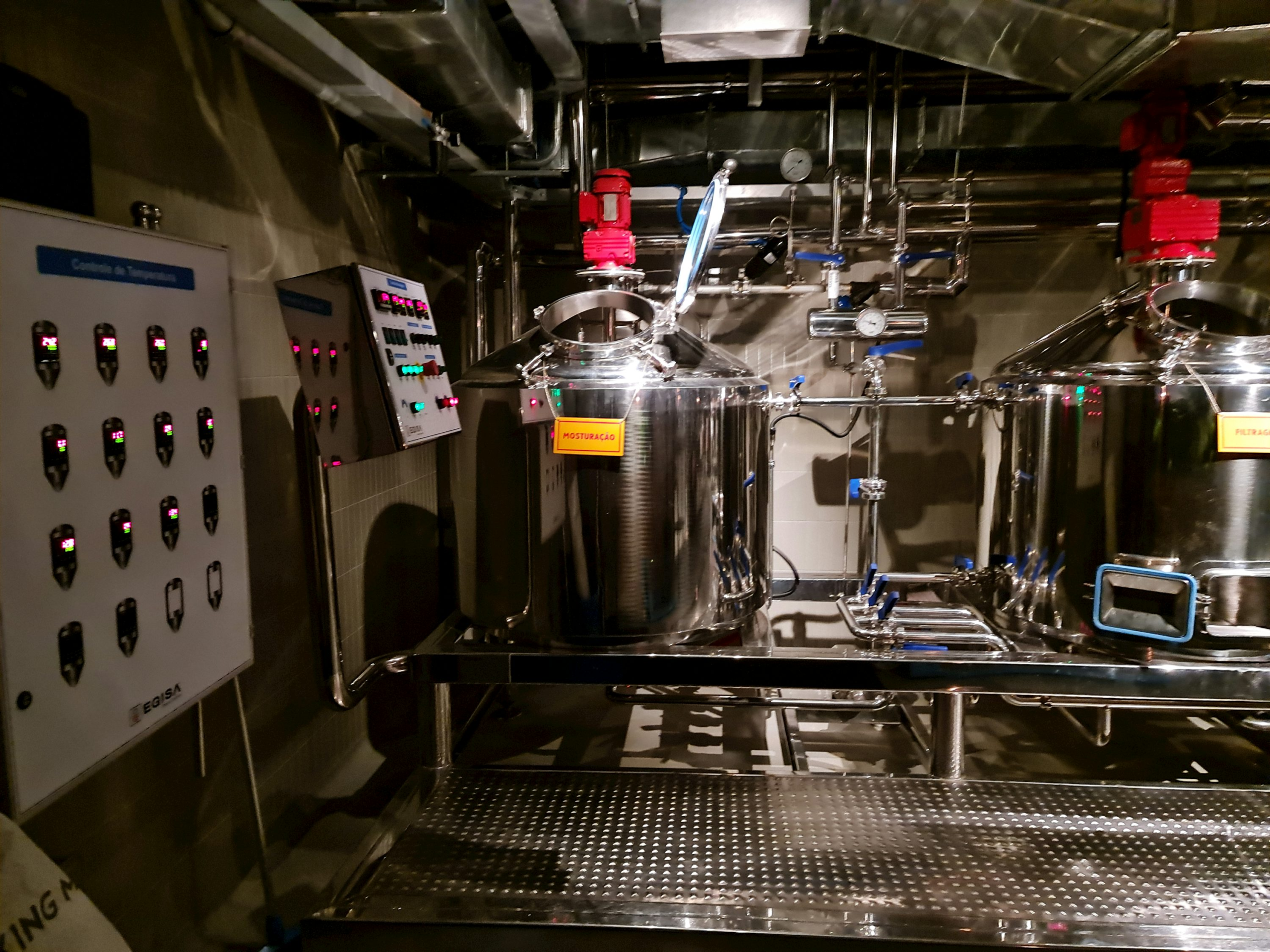
Olvi completed a brewhouse investment at Iisalmi in March and has continued improving warehouse and internal logistics arrangements. It reported better delivery accuracy during the summer, although it did not quantify the contribution from individual infrastructure measures. The brewhouse development is historical context for the October trading figures, not a newly completed third-quarter project.
Investment in production and logistics assets totalled €36.5 million during the first nine months, compared with €37.0 million in the equivalent 2025 period. The programme includes work across Finland and other European subsidiaries, with a major warehouse project continuing in Lithuania. The group has not supplied plant-level returns for these investments.
Warehouse capacity and internal movement are closely linked to packaging line performance. Finished beverages need space for consolidation before dispatch, while pallets and packaging materials must reach production equipment when required. Better material flow may reduce interruptions, but a direct saving cannot be inferred without operating records covering the specific facility.
Cost pressures continued to affect profitability. Packaging materials, transport and raw materials remained relevant exposures, while acquisitions altered the overall composition of the group’s sales. Third-quarter gross profit increased to €89.6 million, but the gross margin eased to 42.8% from 43.0%, another distinction between revenue growth and operating efficiency.
Olvi also reported improved operating profit in Belarus, where the subsidiary funds its operations through its own cash flow. Restrictions on transferring profits to the parent remain relevant to the group’s financial position. Those arrangements should be assessed separately from the operational results of factories in Finland and other European markets.
On 13 October the company lowered its full-year operating result outlook to €80–85 million, from €84–90 million, reflecting weaker performance in Rest of Europe and wider cost pressures. The revised range predates the 22 October interim report, which confirmed the underlying figures behind the change.
For the remaining months of 2026, Olvi’s industrial priorities include increasing output utilisation in Denmark, completing warehouse investment and integrating production activities added through acquisitions. The difference between organic and reported growth will remain important in assessing whether the established manufacturing network is recovering or overall volumes are continuing to rely on the enlarged group perimeter.