IN Brief:
- Tetra Pak says it has redesigned a familiar US protein shake carton to improve manufacturing efficiency and reduce costs, without disclosing quantified savings.
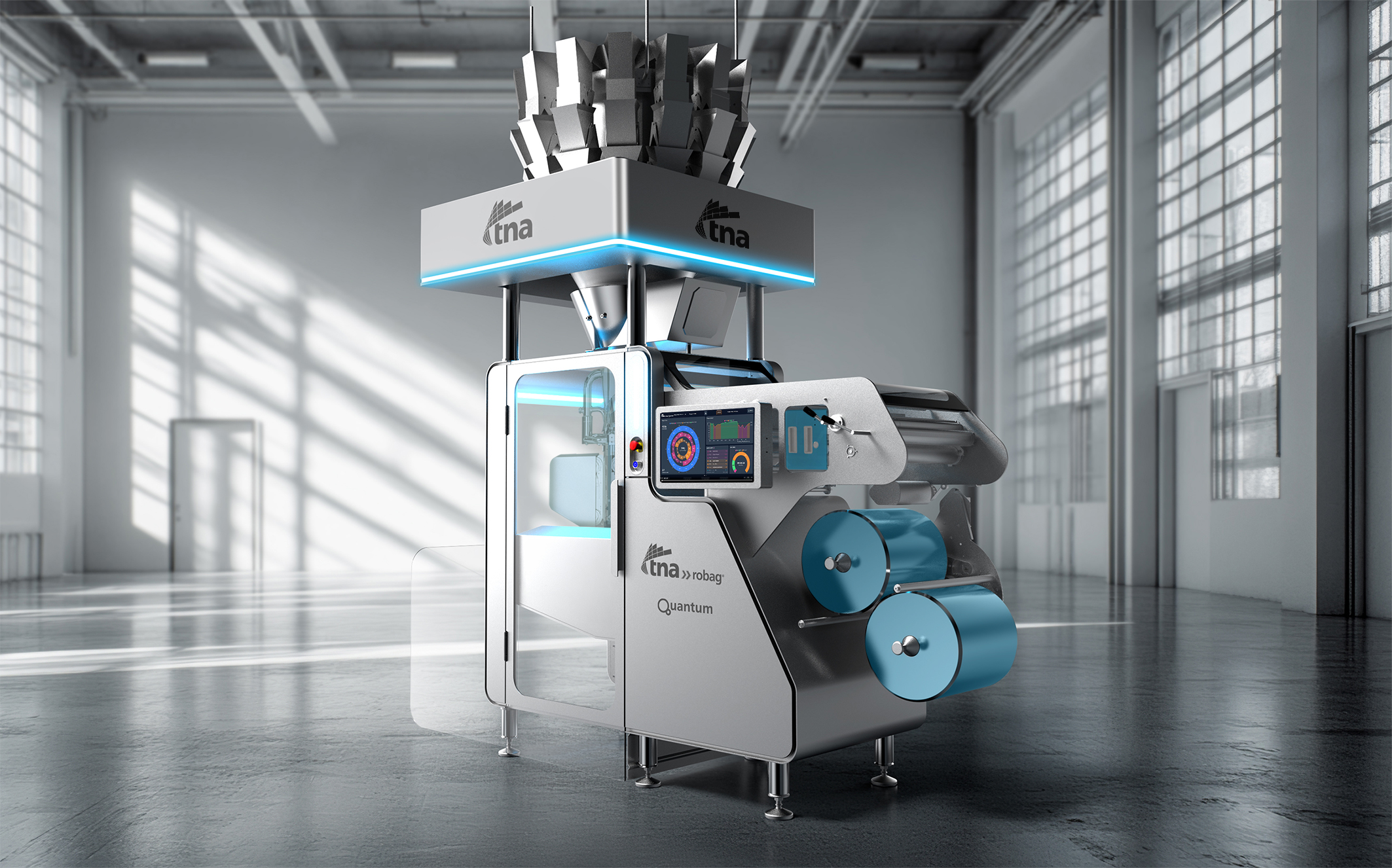
- TNA demonstrated its previously announced Robag Quantum system, designed for up to 300 bags per minute depending on the product, film and pack format.
- SIG described its continuing work on carton collection and recycling infrastructure, distinguishing packaging designed for recycling from packaging actually recovered.
Tetra Pak has detailed a redesign of its established square carton for protein shakes in the United States, saying the revised format improves production efficiency and reduces manufacturing costs while retaining a familiar appearance. The company discussed the development at PACK EXPO International in Chicago on 19 October, where TNA Solutions and SIG also addressed the production and recovery challenges associated with smaller food and drink packages.
Pedro Gonçalves, Tetra Pak’s vice-president of marketing for the United States and Canada, identified the existing square carton as a familiar format in the American protein shake market. He said the company had retained its appearance while changing the design to achieve efficiencies inside the factory. Neither the modifications to the carton nor the size of the claimed savings was disclosed in the exhibition interview.
The report is a current account of the redesign rather than an announcement of a new customer installation or filling line. Without published material specifications, cost comparisons or measured throughput, the efficiency claim remains attributable to Tetra Pak. It is not possible to determine how much of the improvement comes from the carton structure, its manufacture, or the interaction between packaging material and filling equipment.
Packaging changes can affect operations at several stages. Cartons must be formed accurately, filled with the specified volume and sealed in a way that maintains pack integrity. Even modest adjustments to material stiffness, fold geometry or sealing surfaces may change how packaging moves through equipment. A design change intended to reduce cost must therefore be assessed against wastage, line stability and the finished product’s performance, rather than unit material consumption alone.
Protein drinks add their own processing requirements. Dairy and plant-based formulations may vary in viscosity, protein concentration and stability, while their packaging must support the intended shelf life and storage conditions. The reported carton redesign does not establish any change to the shake formulation, the microbiological treatment employed by a customer or the barrier properties of a particular commercial pack.
Tetra Pak was also presenting Tetra Reva, a carton format aimed at spoonable refrigerated foods such as yoghurt and cottage cheese. Gonçalves said it was designed to provide portability, including resistance to spilling when carried in a bag. Its inclusion in the October exhibition programme was announced earlier in the month, so the on-site interview provides additional explanation rather than evidence of a product unveiled for the first time on 19 October.
A container for a spoonable product must reconcile opening and consumption with the integrity required during transport. Movement and changes in orientation can place loads on closures and seals, while viscosity and the presence of pieces or other inclusions may affect filling. The suitability of an individual design also depends on portion volume, temperature management and the means by which the package is distributed. Tetra Pak has not reported a universally applicable leak test result or production rate for Tetra Reva.
The relationship between smaller serving sizes and output was another theme at PACK EXPO. TNA Solutions discussed demand for individual snack portions as producers adapt products traditionally sold in larger sharing bags. Mukul Shukla, the company’s vice-president for North America, described a movement in the market from bags weighing about 20 ounces towards one-ounce portions. That observation concerns the direction of demand, not a measured share of the American snack market.
Smaller bags change the number of packaging cycles needed to handle a given mass of food. Holding the weight of product constant, filling one-ounce bags requires many more individual bags than filling 20-ounce packs. Each additional unit needs film to be formed, product to be dosed and seals to be completed, making packaging speed and reliable product feeding important factors in a line’s capacity.
TNA demonstrated its Robag Quantum vertical form-fill-seal platform in North America during the exhibition. The machine was introduced at interpack earlier in 2026 and previewed for the American show in August; it is therefore not a new platform launched in October. TNA’s published specification is for up to 300 bags per minute using a single forming tube, subject to bag dimensions, film and product type, with an official release planned for 2027.
The company is seeking greater throughput from one forming tube rather than relying only on additional bagmakers. During vertical form-fill-seal packaging, film passes through a forming assembly, receives measured portions and is sealed into individual packs. The speed that can be sustained depends on the handling of both the product and the film. A machine’s rated maximum does not establish its output with every snack or recyclable structure.
Changeovers introduce a further constraint. Different bag lengths, film structures and product portions can demand adjustments to film feed, dosing and sealing conditions. Automated setup may reduce some of this work, but an operator must still verify that the chosen settings produce consistent weights and adequate seals. The demonstration does not provide independent evidence of waste or changeover reductions across every proposed application.
Film selection is equally significant. The temperatures and pressures needed for reliable sealing vary with material composition and thickness. A film promoted as recyclable must still perform satisfactorily on the packaging machine, while the recycling claim must be assessed in relation to the complete structure and the recovery facilities available to consumers. Compatibility with a high speed bagmaker does not independently establish recyclability.
Smaller portions can support consumption patterns in which customers prefer not to open a large bag, but they also alter the amount of packaging used per unit of food. Producing more individual packs may increase the number of seals and the total surface area of packaging required. Any claim that portion control reduces overall food waste or environmental impact would need to consider actual consumption, discarded food and packaging material together.
SIG addressed the recovery side of the equation through its continuing work on collection and recycling infrastructure. Jami Leveen, head of sustainability and corporate relations for North America, described the need for convenient formats to be accompanied by systems capable of processing discarded packaging. SIG participates in the Carton Council of North America and has been supporting improvements in carton recycling infrastructure.
That work predates the Chicago exhibition and was not presented as a newly commissioned recycling facility. SIG says its cartons are designed for recycling where suitable infrastructure exists, and its published sustainability information describes investments and partnerships intended to increase collection and material recovery. Design characteristics and the existence of an applicable recycling route must be distinguished from the proportion of packages actually collected and recycled in a given market.
Carton recovery typically requires separation of usable paper fibres from the polymer and, where present, aluminium components. Facilities differ in which fractions they can process and the markets available for recovered materials. SIG also works on packaging constructions for pouches and bag-in-box products, although the collection and recycling arrangements for those structures are not interchangeable with beverage carton recovery systems.
The three suppliers’ current reporting highlights separate consequences of smaller, more portable packaging. Tetra Pak describes an efficiency change to an established protein shake carton; TNA is demonstrating a previously introduced system aimed at higher bagging output; and SIG is discussing the infrastructure needed to recover packaging materials. The companies have not announced a shared project, common production test or jointly measured environmental benefit.
For manufacturers, the requirements must be evaluated at the level of the finished product and operating line. Formulation, filling and sealing determine whether a format can be manufactured consistently, while portion size affects the number of packs produced and the materials consumed. Collection and recycling infrastructure then determines which of the discarded materials can be recovered in practice. The October interviews provide updated company positions and technical context, with quantified carton savings, commercial bagging performance and market-specific recycling outcomes still requiring separate evidence.