IN Brief:
- French authorities published temporary AOP specification changes for Abondance, Beaufort, and Comté on 26 August.
- The measures adjust defined production requirements where drought has constrained pasture and locally sourced forage without suspending the wider protected-origin system.
- More than 400 drought-related feed derogations had also been granted across roughly 4,000 French organic dairy farms by 25 August.
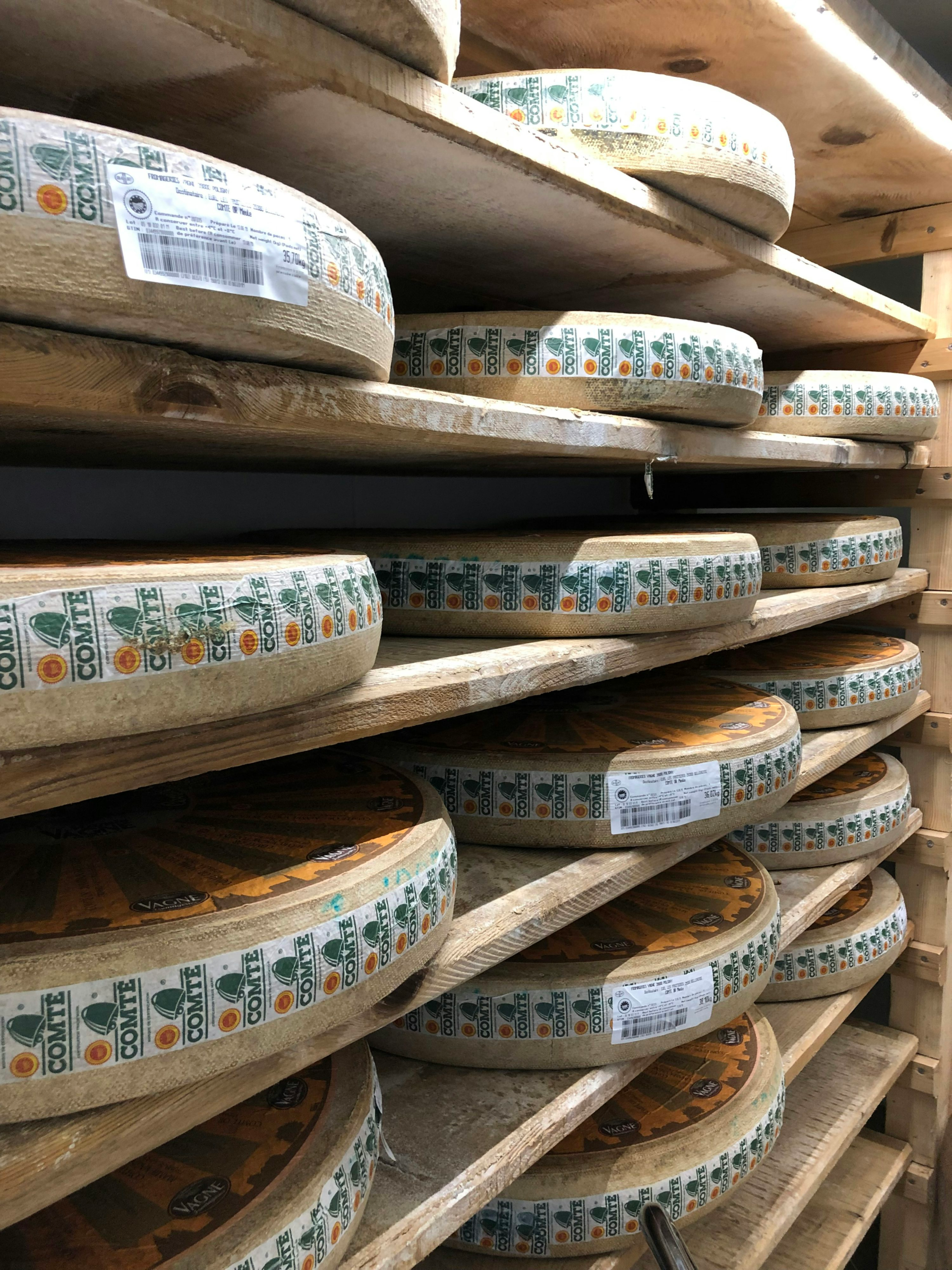
France’s National Institute of Origin and Quality is using temporary specification changes to keep protected food production operating through severe drought, with new ministerial orders covering the AOP cheeses Abondance, Beaufort, and Comté published in the French Official Journal on 26 August.
The measures do not suspend the appellations or remove their wider geographical and production requirements. Instead, they modify defined parts of individual specifications where producers cannot comply with normal feed, grazing, or agricultural conditions because of the drought.
All three orders were made on 21 August following consideration by INAO and were published together five days later. They sit within a wider series of temporary changes affecting protected dairy, food, wine, and cider products as dry weather reduces access to locally produced agricultural inputs.
Beaufort illustrates the practical problem. Its normal specification links milk production closely to the defined geographic area, including requirements around locally sourced hay and pasture. The temporary order adjusts those provisions for a limited period and permits additional feeding flexibility where drought has restricted normal forage availability.
Between 27 July and 31 October, Beaufort’s basic ration remains based on grazed grass and hay, while additional feed for lactating cows is capped at four kilograms per animal per day on average under specified grazing conditions. The order also allows dehydrated lucerne pellets within the permitted supplementation arrangements.
The detail is important because protected-origin rules derive much of their value from restrictions precisely like these. AOP status links the characteristics and reputation of a food to a defined geography and production method, leaving producers less freedom than conventional commodity manufacturers to replace local inputs when supply conditions deteriorate.
Temporary relief protects production continuity
INAO’s drought mechanism is designed to handle exceptional conditions without rewriting specifications permanently. Producer organisations can seek time-limited changes where compliance has become impracticable, with the institute examining requests against the need to maintain the identity, authenticity, and defining characteristics of each protected product.
The current list extends well beyond the three cheeses covered by the latest Official Journal entries. Dairy products affected by temporary modifications include Reblochon, Cantal, Fourme d’Ambert, Fourme de Montbrison, Bleu d’Auvergne, Bleu du Vercors-Sassenage, Rocamadour, and protected Charentes-Poitou butter, alongside several non-dairy appellations.
Feed pressure is also affecting organic livestock production. INAO reported that more than 400 derogations had been granted by 25 August across approximately 4,000 French organic dairy farms, allowing limited use of non-organic feed where drought-related production losses have undermined normal farm self-sufficiency.
Those organic derogations are assessed individually rather than operating as a general waiver. INAO says the permitted feed types and proportions remain restricted, reflecting the same attempt to balance immediate animal-feeding requirements against the standards attached to the production system.
The difficulty reaches dairy plants because milk supply and manufacturing specifications cannot be separated completely from conditions on farm. Reduced forage availability can affect milk volumes, composition, seasonality, and production costs, while AOP cheesemakers still have maturation schedules, labour, energy use, customer orders, and storage capacity to manage.
Buying feed from outside the usual area can ease an agricultural shortage, but doing so without a formal derogation could jeopardise compliance with the protected specification. That turns drought into both a raw-material problem and a regulatory one, particularly where processors depend on milk from a tightly defined network of farms.
Temporary amendments provide a controlled way of preventing an exceptional season from unnecessarily interrupting otherwise compliant production. The limits remain product-specific, however, and the underlying geographical rules return once the temporary provisions expire.
Repeated drought seasons would create a more difficult question. Emergency changes can accommodate an exceptional shortage, but appellations built around local forage and grazing cannot rely indefinitely on derogations without testing whether their existing specifications remain workable under changing agricultural conditions.
INAO has indicated that longer-term work with producer organisations can address management of forage, storage, husbandry practices, and production systems while retaining the identity of each appellation. That work is separate from the temporary orders now keeping individual supply chains operating through the 2026 drought.
The immediate test will be forage availability as the grazing season closes. The August orders give affected producers room to manage this year’s shortage, but winter feed stocks will determine whether the present flexibility proves sufficient or whether further requests reach INAO before normal specification requirements can be restored.