IN Brief:
- IDAK has sold KADI to Invision with effect from 1 September as it concentrates on baked goods.
- KADI's management remains in place and participates in the business alongside Invision's majority ownership.
- IDAK will focus investment on Bakery & Patisserie and Pizza & Pizza Snacks after expanding through the Onoré acquisition.
IDAK Food Group has sold Swiss potato and snack manufacturer KADI to Invision, separating the business that helped form the original IDAK platform as the group concentrates its manufacturing portfolio on bakery, patisserie, pizza, and pizza snacks.
The sale took effect on 1 September. Invision is acquiring a majority interest alongside KADI’s management, which will continue to participate in the business and remain responsible for day-to-day operations.
Yvonne Richard stays in place as chief executive, while Christof Lehmann, a former chief executive of KADI and IDAK Food Group, becomes chairman of KADI. The arrangement gives the manufacturer continuity in its executive team despite the change in ownership.
For KADI, Invision is also a familiar shareholder. The investment company held the business between 2018 and 2024 and used it as an important part of the platform that developed into today’s wider IDAK Food Group.
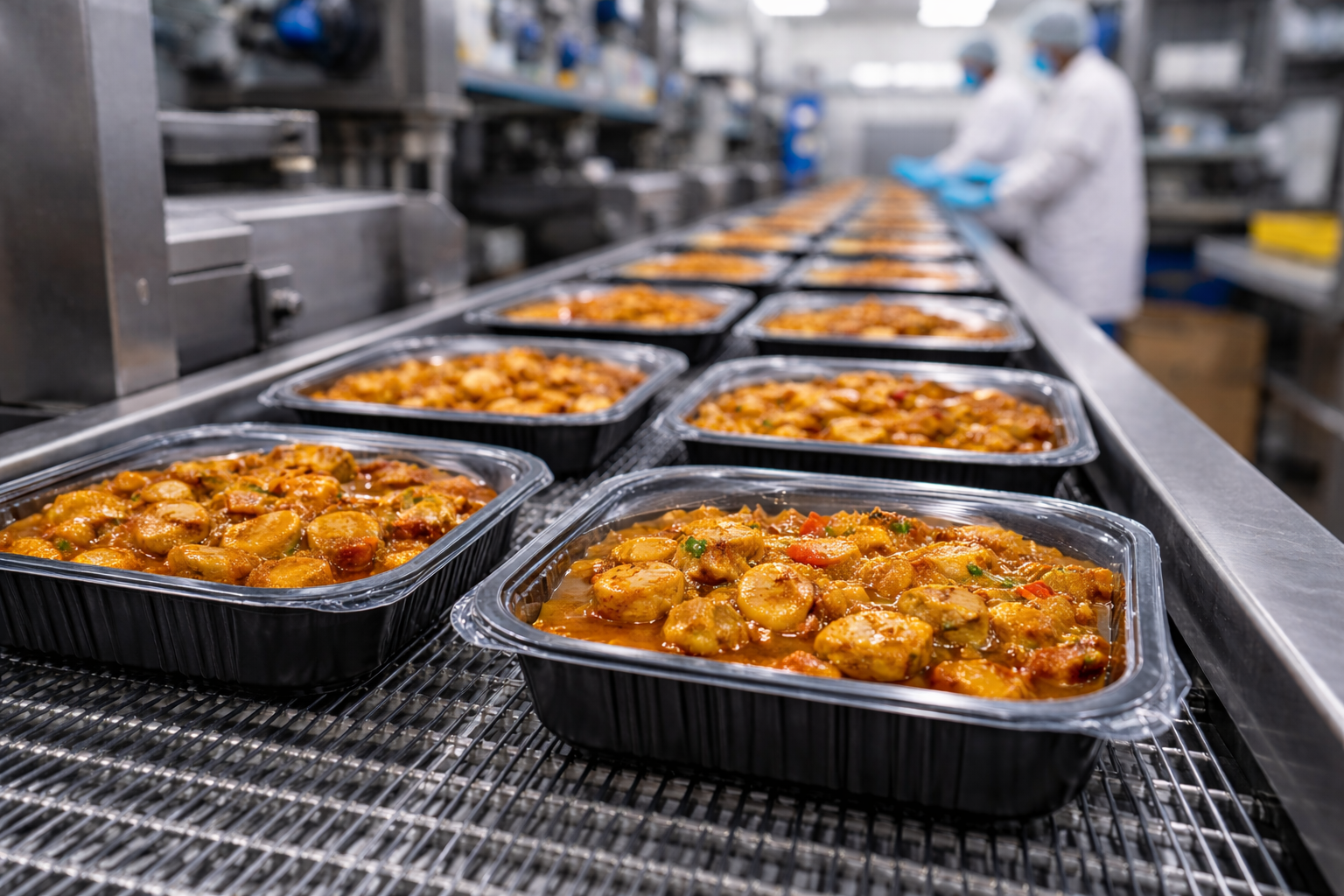
KADI specialises in chilled and frozen potato products and snacks, including French fries, potato specialities, and spring rolls. Its manufacturing base in Langenthal gives the company a distinct processing profile from the bakery and pizza operations on which IDAK now intends to concentrate.
The separation follows IDAK’s acquisition of France-based Onoré Group earlier in 2026. That transaction expanded the group’s Bakery & Patisserie operation and reinforced a portfolio already spanning frozen bakery, cakes, pastries, pizza, pizza snacks, and related products across several European markets.
IDAK has now defined its structure around two complementary categories: Bakery & Patisserie and Pizza & Pizza Snacks. The argument is industrial as much as commercial, because those businesses share more common production processes and investment requirements than a specialist potato manufacturer does with the rest of the portfolio.
Bakery and pizza factories differ by product, but capital is repeatedly directed towards dough handling, forming, proofing, baking, freezing, filling, topping, cooling, packaging, cold storage, and automated handling. A group with a narrower production base can concentrate engineering expertise and investment across a more closely related set of processes.
That does not automatically create better returns. Frozen bakery remains capital intensive, energy hungry, and highly dependent on line utilisation, while frequent product changes and retailer requirements can complicate scheduling. The advantage comes only if IDAK can use the more focused portfolio to deploy capital and operating knowledge more effectively across its plants.
KADI, meanwhile, returns to an owner that already understands the business. Invision says it is acquiring the company through Invision VII together with management, while Richard and the existing executive team will continue to lead the operation.
The ownership circle is unusual. Invision and fellow investor NORD Holding previously used KADI as a platform for the expansion of IDAK before selling their majority interest in the wider group to TowerBrook Capital Partners in 2024. Two years later, KADI is separating from that enlarged portfolio and returning to Invision as an independent business.
The transaction sits within a busier European deal market. Food, beverage, and agriculture M&A increased during the first half of 2026, with financial sponsors accounting for a larger share of transactions as buyers continued to pursue specialised manufacturing assets and portfolio reshaping.
Food-sector disposals can be as strategically important as acquisitions because production networks become harder to manage as portfolios widen. Different processes require different technical skills, maintenance strategies, supply arrangements, factory investments, and sales channels, while management time is spread across categories that may have little operational overlap.
IDAK’s decision removes the Potatoes & Snacks activity from its manufacturing structure and leaves it with a clearer frozen-bakery identity. The group has described the move as a way to direct investment more selectively towards complementary production processes and accelerate international growth.
KADI gains a different form of focus. Rather than competing for capital within a wider bakery-led group, it will operate independently in its established potato and snack categories under an investor and management team already familiar with the business.
No purchase price has been disclosed, leaving the manufacturing strategy more informative than the transaction value. IDAK is reducing category breadth shortly after expanding in bakery, while Invision is buying back into the specialist processor around which the wider group was originally assembled.
The next evidence will come from capital allocation on both sides. IDAK now has fewer process families across which to spread investment, while KADI has an ownership structure dedicated to its own frozen-potato and snack operation. For two businesses that spent several years under the same umbrella, the strategy is now to find growth by separating them.