IN Brief:
- Hilton Foods' new Canadian multi-protein facility is due to launch in January 2027, with beef, pork, and fish ramping through H1.
- Its Saudi Arabian joint-venture facility is expected to become operational in Q4 2026.
- Central European fresh prepared-food volumes rose 26%, with Hilton assessing a potentially larger expansion at its Polish site.
Hilton Foods is moving two new international processing facilities towards start-up while assessing a further capacity expansion in Poland, putting physical manufacturing delivery at the centre of its investment programme for the next 12 months.
The group’s new Canadian multi-protein facility is scheduled to begin operating in January 2027, while its Saudi Arabian joint-venture plant is expected to start during the fourth quarter of 2026. In Central Europe, 26% growth in fresh prepared-food volumes has prompted Hilton Foods to examine a larger expansion of its existing Polish operation.
The projects sit at different points in the capital-investment cycle. Canada is approaching commissioning, Saudi Arabia is close to operational start, while the Polish programme is still being scoped before significant capital is committed.
Hilton Foods spent £45.3m on capital expenditure during the first half of 2026, including continued spending on the Canada and Saudi Arabia developments. It still expects total capital expenditure of around £100m for the full year, with the Canadian project accounting for the final year of substantial build spending.
In Canada, fit-out of the purpose-built plant is nearing completion. The factory will provide multi-protein processing for Walmart under a long-term commercial partnership, with beef, pork and fish production scheduled to ramp through the first half of 2027.
Bacon production has also been added to the planned scope and is expected to begin later in 2027. That widens the site’s process mix beyond the initial launch configuration and adds another product flow that will have to be integrated once core operations have stabilised.
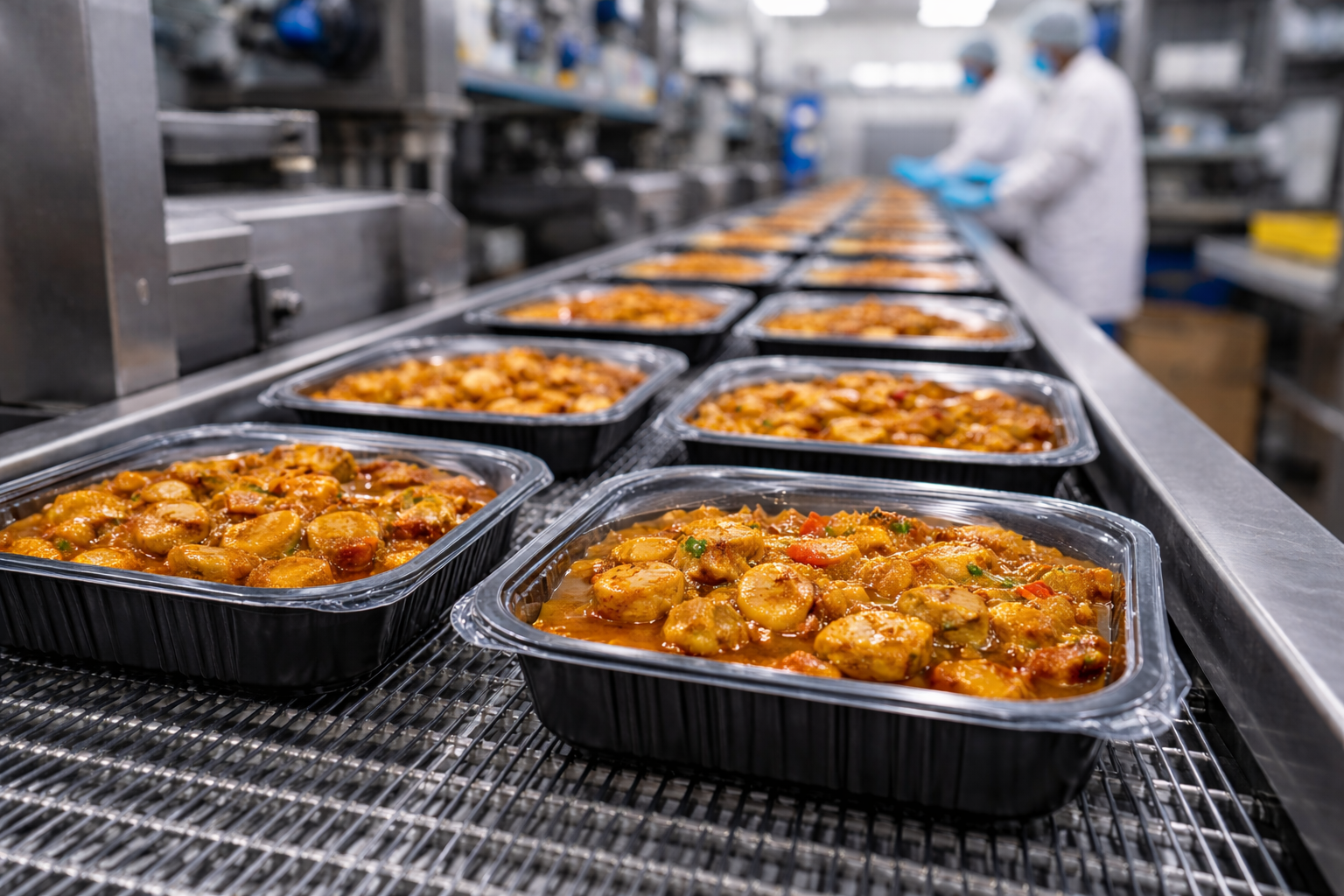
The factory has been designed with a high degree of automation, making commissioning more complicated than simply starting individual pieces of equipment. Product handling, line controls, inspection, packing and supporting systems have to operate together at the required speed before the site can move from start-up to reliable commercial throughput.
For a large customer-specific facility, ramp-up is as important as nominal installed capacity. A highly automated plant may have substantial theoretical output, but that capacity only becomes commercially useful when product quality, yield, labour requirements and equipment reliability remain stable across normal production schedules.
Hilton Foods’ second start-up is in Saudi Arabia through its joint venture with the National Agricultural Development Company, or NADEC. The facility is expected to become operational during Q4 2026 under an initial partnership period of ten years.
The venture combines Hilton Foods’ meat-processing and packaging experience with NADEC’s local cattle operations. That creates a more integrated domestic chain between primary agricultural supply and downstream processing while supporting Saudi Arabia’s wider food-security objectives.
Both the Canadian and Saudi projects are expected to contribute to Hilton Foods’ earnings from 2027. Before that happens, each has to move through the less predictable early operating period in which labour, line balance, yields and customer specifications are proven under commercial conditions.
Poland presents a different manufacturing problem. Fresh prepared-food volumes across Hilton Foods’ Central European business increased 26% during the first half, and the company has already implemented capital-light measures to meet nearer-term demand.
Those measures are intended to bridge the period before a larger investment decision. Hilton Foods is developing plans to materially increase capacity and upgrade its Polish facilities, with full project scoping expected around the end of 2026.
Customer demand now indicates that the expansion may be larger than originally envisaged. Material capital expenditure on the project is not expected until 2027, which means Hilton Foods still has scope to adjust its final capacity plan before committing to new lines or infrastructure.
That staged approach can reduce investment risk. Incremental changes help factories absorb immediate growth, while a more substantial project can be sized against a clearer view of sustained demand rather than responding to a short-term peak with permanent capacity.
Prepared-food manufacturing also places different demands on a factory from basic primary meat processing. Product complexity, ingredients, cooking or assembly stages, changeovers and shorter production runs can make additional volume harder to absorb simply by increasing line speed.
A major Polish expansion could therefore involve more than another processing line. Depending on the final scope, additional demand may require changes to raw-material handling, high-care areas, preparation, packing, cold storage and internal logistics alongside the main production equipment.
Hilton Foods has not yet disclosed that final engineering configuration, so the Polish project remains a capacity plan rather than a committed plant specification. The group’s own timetable places completion of scoping around year-end before material spending begins in 2027.
The three developments give the interim results a stronger industrial narrative than the headline financial figures alone. Canada and Saudi Arabia are moving out of construction and towards production, while Poland is moving from near-term capacity management into decisions over the next permanent manufacturing step.
Execution now becomes the relevant measure. By the middle of 2027, Hilton Foods should have operating evidence from the Canadian and Saudi facilities and a clearer capital plan for Poland, allowing its expansion strategy to be assessed against throughput, utilisation and customer volume rather than announced capacity.