IN Brief:
- Chiltern Capital has acquired a controlling stake in Fylde Fresh & Fabulous alongside members of the processor's existing management team.
- The business handles around 1,000 tonnes of prepared potatoes and vegetables each week across Preston and Leeds.
- Future investment could extend processing, automation, energy, and supply-chain capacity across an already integrated operation.
Fylde Fresh & Fabulous has secured new investment through a management buyout backed by Chiltern Capital, giving the Lancashire prepared-produce processor additional financial support while retaining members of its existing leadership team as shareholders.
Chiltern has taken a controlling interest for an undisclosed sum, with chief executive Simon Leaver, head of finance Mark Claridge, and commercial lead Emma Hesketh investing alongside the private-equity business. Fylde Fresh & Fabulous, commonly shortened to FFF, will continue operating from its processing sites in Preston and Leeds.
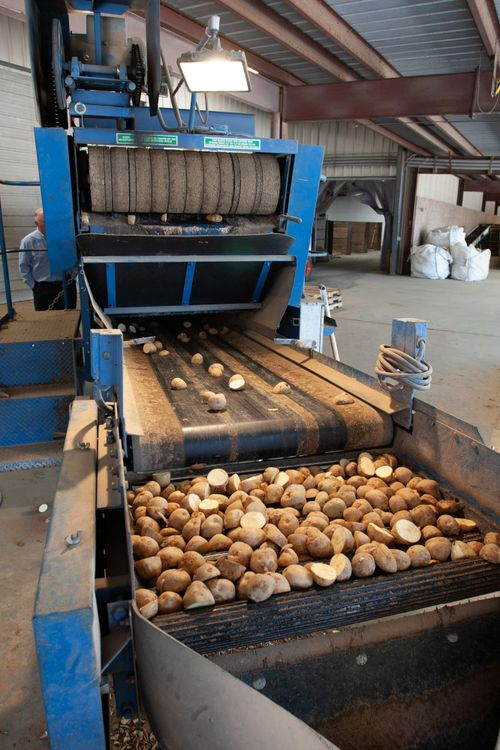
The company handles around 1,000 tonnes of prepared potatoes and vegetables each week for food manufacturers and foodservice customers. Its products include peeled and cut potatoes, chips, wedges, onions, carrots, and other prepared vegetables supplied to manufacturers producing ready meals, pies, pasties, snacks, and related products.
The transaction places FFF within Chiltern’s fresh-produce portfolio alongside Burgess Farms, linking an established processing operation with a business focused more heavily on crop production and supply. The potential industrial value lies in closer control of the chain between growing, raw-material specification, processing, and finished ingredient delivery.
Prepared vegetables are highly sensitive to crop variability despite their apparently straightforward specification. Potato variety, dry matter, sugar levels, maturity, storage conditions, fry colour, texture, and seasonal changes can all affect factory performance, while vegetable dimensions and physical condition influence cutting yield, cooking behaviour, and waste.
FFF has built much of its model around managing those variables before product reaches a customer’s production line. The company says its supply base includes more than 1,000 acres of potato production through a combination of its own growing activity and dedicated growers, supported by field, storage, and pre-production quality checks.
Its processing network also includes chilled distribution and field-to-fork traceability, giving the business control over more stages than a processor purchasing entirely through the open market. That integration becomes more valuable when manufacturers are trying to maintain recipe consistency despite difficult growing seasons or changing crop availability.
The Leeds operation broadened FFF’s capacity after the company acquired former Troy Foods assets in 2022. Its own company history records a weekly production high of 947 tonnes across the enlarged operation in December 2023, close to the approximately 1,000-tonne weekly scale now associated with the business.
No specific machinery programme or factory extension has been announced alongside Chiltern’s investment, so the next industrial step remains open. Additional capital could support processing equipment, automation, storage, energy systems, product development, or acquisitions, but those decisions have yet to be disclosed.
Energy and waste recovery are already part of the Preston operation. FFF has run anaerobic digestion at the site since 2014, using potato peelings and other vegetable residues from processing to produce biogas for heat and electricity.
The company says more than 20,000 tonnes of vegetable waste are recycled through the system annually. Electricity is used within the manufacturing operation, surplus power can be exported to the grid, and digestate is returned to agricultural land as fertiliser.
That arrangement links higher processing throughput directly with waste and utility management. More raw material passing through the plant increases finished-product capacity but also raises the volume of peelings, trimmings, wash water, refrigeration demand, and material movements that have to be handled economically.
FFF has previously discussed further anaerobic-digestion capacity at Preston, although the current ownership announcement does not provide an update on that project. Future investment will show whether growth is concentrated on processing volume alone or paired with energy, waste, storage, and automation projects.
The ownership change arrives as UK food manufacturers continue to scrutinise domestic supply resilience. Vegetable processors sit between agricultural volatility and highly controlled factory schedules, absorbing changes in crop quality, storage, weather, transport, labour availability, and input costs before prepared ingredients reach the customer’s line.
Chiltern’s combination of FFF and Burgess Farms gives it a broader position across that chain, but vertical alignment does not remove the need for independent technical performance. Manufacturing customers will continue to judge suppliers on specification compliance, yield, hygiene, service, traceability, and continuity rather than ownership structure.
Keeping the existing FFF leadership invested in the business should reduce immediate operational disruption. The more useful measure will be what follows the transaction: additional equipment, higher capacity, improved crop control, further energy investment, or expansion into new prepared-produce categories.
At around 1,000 tonnes of throughput a week, relatively small improvements in yield, automation, storage, or process efficiency can have a material effect on both the processor and the manufacturers it supplies. Chiltern’s investment creates the financial platform; the next capital decisions will determine how much of that opportunity is converted into additional production capability.