IN Brief:
- deltaH Innovations is pairing its Cool>Can system with Brains Brewery for a branded commercial application.
- The developer claims activation can reduce beverage temperature by around 10–15°C using a contained water-and-salt reaction.
- Manufacturing cost, filling-line compatibility, reliability, material recovery, and production rate remain the main tests for scale.
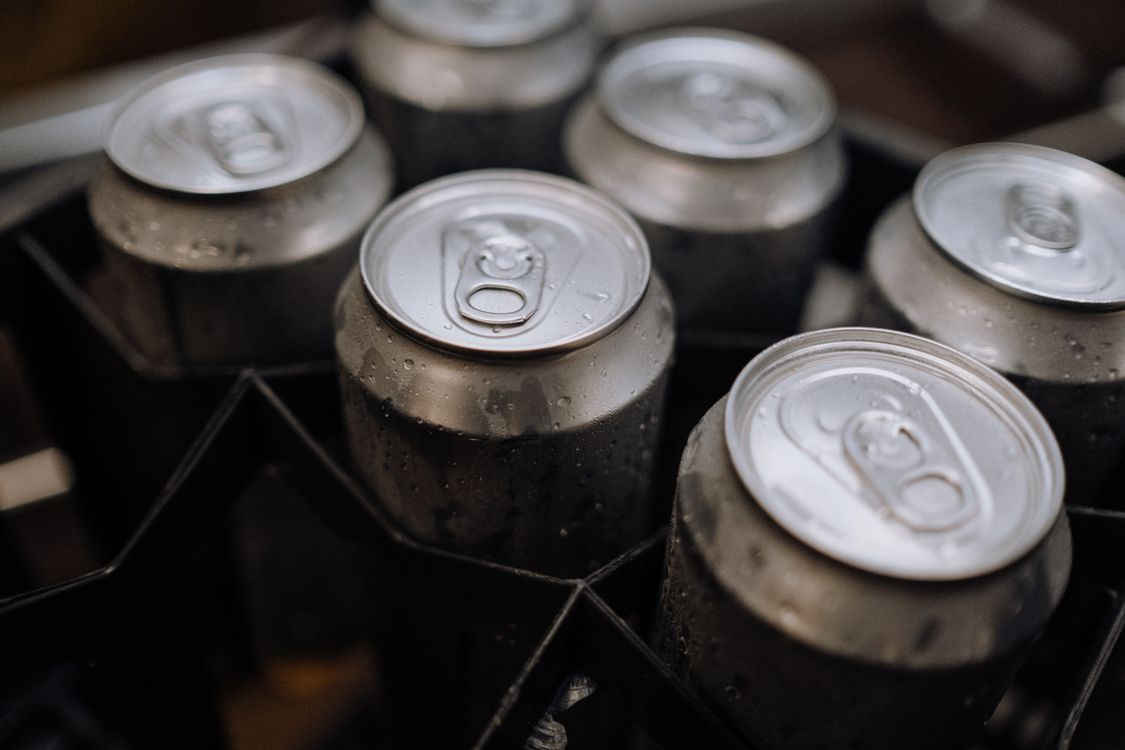
deltaH Innovations is moving its self-cooling beverage package towards commercial production through a partnership with Brains Brewery, which will use the Cool>Can format for its Bayside Welsh Lager.
The Welsh developer says the package can reduce the temperature of a room-temperature drink by around 10–15°C after activation without requiring a refrigerator, ice, or external electrical supply. A control in the base initiates a contained endothermic reaction between water and a salt-based cooling component.
The Brains format gives the system a branded beverage application after approximately two years of development. Previous prototypes demonstrated the cooling principle, but a commercial pack has to satisfy a wider set of requirements including filling, handling, storage, transport, branding, consumer activation, and end-of-life recovery.
Self-cooling containers are not a new ambition for the beverage industry. Previous concepts have frequently faced difficulties around added material, manufacturing complexity, cooling performance, weight, shelf stability, and unit cost, leaving the commercial challenge substantially harder than proving that a chemical reaction can absorb heat.
deltaH describes its package as recyclable and says the cooling mechanism remains isolated from the beverage. Its product information states that activation brings water into contact with a salt-based component inside the cooling assembly, drawing heat away from the drink.
The company claims the system can bring a beverage to around 6–7°C under stated conditions and maintain cooling for up to 45 minutes. Those figures remain developer specifications rather than independently verified performance data, and actual results will vary with initial drink temperature, ambient conditions, fill volume, and the thermal characteristics of the complete package.
Brains Brewery provides a more meaningful test than water inside a prototype because the system now has to work with an identifiable commercial beverage, printed branding, distribution requirements, and expected consumer handling.
The attraction is straightforward in situations where reliable refrigeration is unavailable or expensive. Events, transport locations, outdoor venues, travel, festivals, and temporary retail environments can all create demand for cold drinks without permanent chilled infrastructure.
Removing conventional refrigeration from part of the route to consumption could reduce electrical demand, but the full environmental comparison requires more than measuring refrigerator energy. Additional aluminium, reaction material, component manufacture, transport weight, and recovery all contribute to the package’s footprint.
deltaH estimates that its approach could reduce supply-chain carbon emissions per can by between 20% and 40%. The figure is a company estimate and will depend heavily on the baseline against which it is measured.
A drink otherwise stored continuously in a refrigerated cabinet provides one comparison; a conventional can already transported and stored at ambient temperature before short-term chilling provides another. Any lifecycle assessment therefore has to define the distribution and retail scenario rather than treating refrigeration as a single fixed burden.
Manufacturing speed may prove an equally important constraint. Conventional beverage cans are successful partly because their manufacture and filling have been standardised for extremely high throughput. Introducing a cooling assembly adds more components, quality checks, and failure modes.
The mechanism has to remain sealed and inactive throughout manufacture, filling, logistics, warehousing, and normal handling, while activating reliably when deliberately triggered by the consumer. Component tolerances therefore become critical at volumes where even a small failure rate would generate substantial waste or complaints.
Filling-line compatibility will also determine how readily drinks manufacturers can adopt the system. Any requirement for slower line speeds, additional inspection, new conveyors, specialised handling, or separate packing equipment adds capital and operating cost to the cooling benefit.
Food-contact and chemical containment remain separate but related considerations. Even where the cooling material never contacts the drink, the package still has to remain safe through impact, compression, temperature variation, and disposal.
End-of-life handling is another issue that will need clear evidence as volumes increase. deltaH says the package remains recyclable, but real recovery performance will depend on whether existing collection and sorting systems can process the complete activated format without requiring consumer disassembly or specialist handling.
The commercial equation eventually comes down to value per use. Consumers may pay more for reliable instant cooling in locations where conventional refrigeration is inconvenient, while mainstream retail applications have to compete against inexpensive standard cans and established cold cabinets.
The Brains application moves Cool>Can closer to answering those questions. Once filled, distributed, activated, and recovered as a commercial pack, production rate, reliability, line efficiency, material use, cost, and consumer behaviour can be measured against the claims made during development.
A branded launch does not establish mass-market viability, but it moves the technology beyond a laboratory proposition. The next stage will show whether self-cooling can be manufactured with the speed, consistency, and economics expected of beverage packaging rather than merely demonstrated successfully one can at a time.