IN Brief:
- Pickstock Telford has started construction of a £24 million beef-processing facility at Ecclefechan in Dumfries and Galloway.
- The plant will incorporate anaerobic digestion, combined heat and power, and solar generation alongside modern processing infrastructure.
- Completion is targeted for early 2029, with 90 permanent jobs and 25 apprenticeship opportunities planned.
Pickstock Telford has started construction of a £24 million beef-processing facility at Ecclefechan in Dumfries and Galloway, adding new production infrastructure in one of Scotland’s principal livestock-producing regions.
R H Irving Construction is leading the build, with South of Scotland Enterprise providing £4.7 million of support. Around 250 jobs are expected during construction, while the completed plant is projected to create 90 permanent positions and 25 apprenticeship opportunities.
A groundbreaking ceremony was held on 16 September and the facility is expected to be fully operational in early 2029. The project combines conventional meat-processing infrastructure with anaerobic digestion, combined heat and power, and solar generation, placing energy and waste management within the original plant design rather than adding them after production begins.
Steam, hot water, refrigeration, cleaning, ventilation and compressed air create substantial utility demand in meat processing. Organic side streams also provide a potential feedstock for anaerobic digestion, giving integrated energy systems a route to reduce waste-disposal requirements while generating useful energy on site.
The economics still depend on how closely those systems match factory demand. Anaerobic digestion and CHP deliver the greatest benefit when feedstock volumes, gas production and heat requirements remain sufficiently predictable, while solar generation has to sit alongside the continuous electricity demand associated with refrigeration and processing equipment.
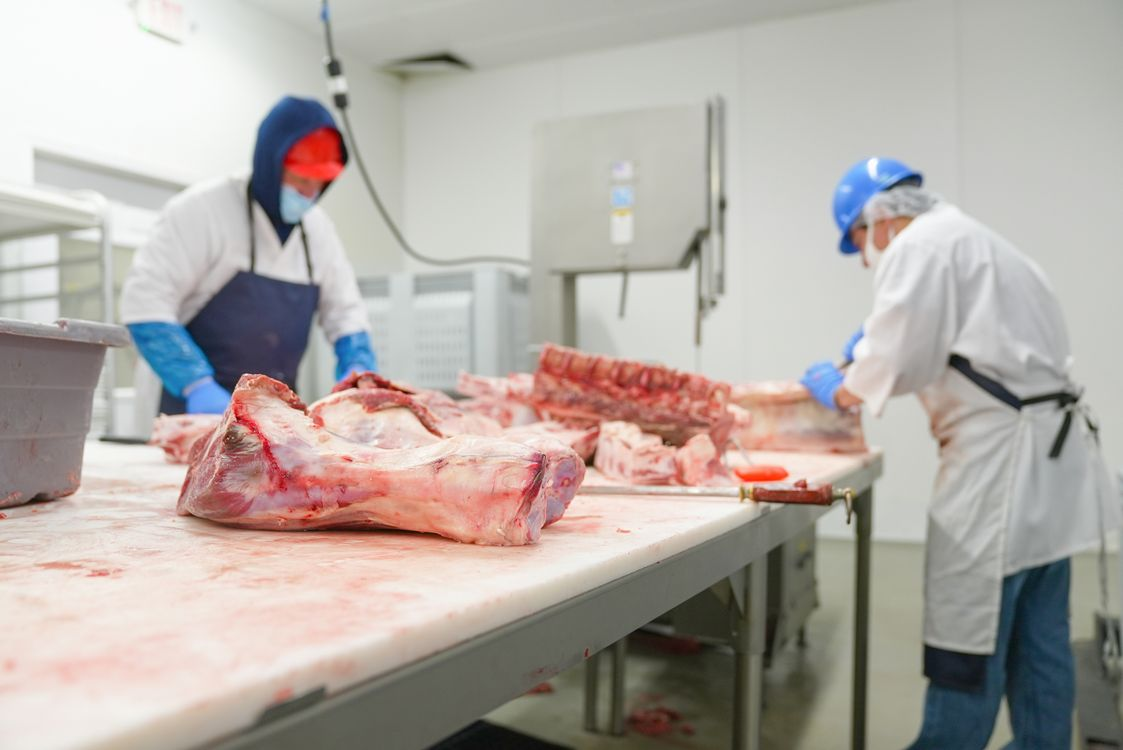
Ecclefechan is being developed as a modern beef-processing operation rather than a distribution facility. The investment will add slaughtering and processing capacity closer to Scotland’s cattle-producing regions, with Pickstock positioning the site around stronger links with Scottish farmers and retention of more processing value within the rural economy.
Greg Pickstock said at the start of construction that the company wanted the project to combine food production, animal welfare, commercial resilience and measurable carbon reduction while creating technical and production careers locally.
Processing location has a direct effect on livestock movements and plant utilisation. A factory closer to its cattle supply can reduce some pre-processing transport, but the commercial case also depends on maintaining sufficient throughput to support the fixed cost of buildings, refrigeration, utilities, labour and specialist production equipment.
That makes farmer relationships part of the industrial design rather than a separate procurement issue. Meat-processing lines need predictable animal numbers and specifications, while producers require confidence that capacity will be available when cattle reach the required condition and weight.
The factory itself will require extensive infrastructure beyond its principal production machinery. Hygienic drainage, chilled storage, potable and process water, cleaning systems, waste handling, traceability and temperature monitoring all have to be integrated with the building and utilities before commissioning.
Those systems are particularly important in a greenfield development because their layout determines how easily raw and finished-product flows can be segregated. Poor routing can add handling, cleaning and labour throughout the operating life of a plant, while a well-planned layout can reduce unnecessary movement and simplify hygiene controls.
Energy design will also influence long-term operating costs. Refrigeration loads can remain high throughout the day even when individual production lines stop, while hot-water demand rises sharply during cleaning periods. Coordinating CHP output, anaerobic digestion and solar generation with those changing loads will determine how much purchased energy the site can displace.
South of Scotland Enterprise describes the development as one of its largest investments to date. Its support is intended to combine rural employment with additional food-manufacturing capacity, while the Scottish Government has highlighted the opportunity to process a greater proportion of domestically produced red meat within Scotland.
The employment profile will extend beyond production operatives. Modern meat factories require maintenance engineers, refrigeration specialists, quality and technical teams, veterinary and animal-welfare controls, utilities management and increasingly data-based production supervision. The planned apprenticeships provide a route to establish some of those skills before the plant reaches full output.
Several years remain between the start of construction and commercial production. During that period, equipment specification, utility installation, commissioning, hygiene validation and workforce recruitment have to advance alongside the physical build.
That sequencing is particularly important where renewable and lower-carbon systems are integrated with production. Digesters, CHP equipment and solar generation cannot be treated as isolated sustainability projects if the intention is for them to support the everyday energy balance of the factory.
By early 2029, the £24 million development is intended to have converted a rural construction site into a functioning beef-processing operation with its own energy infrastructure and a permanent technical workforce. Construction has now moved the project beyond planning; the next three years will determine whether the capacity, utilities and supply relationships can be commissioned as one coherent production system.