IN Brief:
- The West Allis expansion increases fermentation capacity by approximately 66% and packaging capacity by 17%.
- The 360-person site supplies dairy cultures across North America and is Novonesis' regional centre of excellence for food cultures.
- Automation, robotics, water reuse, energy-efficient equipment, and waste heat recovery form part of the expanded operation.
Novonesis has completed a major expansion of its West Allis production facility in Wisconsin, increasing fermentation capacity by approximately 66% and packaging capacity by 17% for dairy cultures supplied across North America.
The project establishes West Allis as one of the company’s largest lactobacillus production facilities and increases output of cultures used by dairy manufacturers. The site employs around 360 people and serves as Novonesis’ North American centre of excellence for food cultures.
West Allis has been part of Wisconsin’s dairy manufacturing base since 1929. The latest expansion adds production capability and new jobs while retaining enough space and infrastructure for further growth. Novonesis has not disclosed the capital value of the project, leaving the capacity increases as the clearest public measure of its scale.
Fermentation represents the larger increase at approximately two-thirds above the previous capacity. Packaging rises by 17%, giving the downstream operation additional capability to handle the higher output generated upstream.
The balance between those two stages matters in biological manufacturing. Fermentation capacity has limited commercial value if culture recovery, preparation, packaging, storage, or dispatch becomes the next constraint. The completed project therefore has to be assessed as a production system rather than by fermenter volume alone.
Novonesis produces cultures used in dairy applications including cheese and yoghurt. Those cultures can influence acidification, flavour development, texture, consistency, and other product characteristics, meaning a comparatively small ingredient input can affect much larger volumes of finished dairy production.
That places a premium on manufacturing consistency. Dairy processors need cultures to perform predictably from batch to batch, while the supplier has to maintain controlled biological production as output increases. Expanding the plant therefore means adding volume without compromising the process discipline surrounding fermentation, hygiene, quality control, and downstream handling.
The West Allis project incorporates automation and robotics, according to Novonesis, alongside energy-efficient equipment, water reuse, and waste heat recovery. The company has not published site-level savings from those systems, but their inclusion shows that increased output is being accompanied by changes to utilities and material handling rather than relying solely on additional production equipment.
Water and heat are significant parts of fermentation operations. Cleaning, sanitation, cooling, heating, and other process requirements can increase alongside production unless recovery and efficiency measures offset some of the demand. The ultimate effect will depend on operating rates and the way the expanded plant performs once the new capacity is used routinely.
The project also sits within a wider investment programme. Novonesis has committed €600 million to a major enzyme production expansion at Patalganga in India, while the company lists investments in Thailand, North Carolina, China, Brazil, and West Allis as part of its wider manufacturing strategy.
The Wisconsin project is at a different stage from the Indian development because the expansion is complete and has moved into operation. The relevant question is therefore no longer whether the capacity will be built, but how effectively the additional fermentation and packaging capability can be converted into stable commercial supply.
The 17% packaging increase will be part of that ramp-up. Fermentation campaigns can create uneven downstream workloads, and larger production volumes need sufficient packaging, handling, storage, and dispatch capability to prevent work in progress accumulating between stages.
Automation and robotics can support repeatability and reduce some manual handling, but they also make integration between production, packaging, maintenance, and site infrastructure more important. Additional automation is useful only if the resulting system keeps product moving rather than moving the bottleneck from one part of the factory to another.
The site’s ability to use existing infrastructure for later growth gives Novonesis an option to expand again without developing an entirely new location. The company has not announced the scale or timing of another West Allis phase, however, so the current project should be judged on the 66% fermentation and 17% packaging increases now completed rather than on capacity that has not yet been approved.
For North American dairy manufacturers, the immediate change is additional regional culture capacity from an established production site. That can strengthen supply flexibility while keeping production closer to the market the plant serves, although customer benefit still depends on reliable output, qualification, inventory, and logistics rather than installed capacity alone.
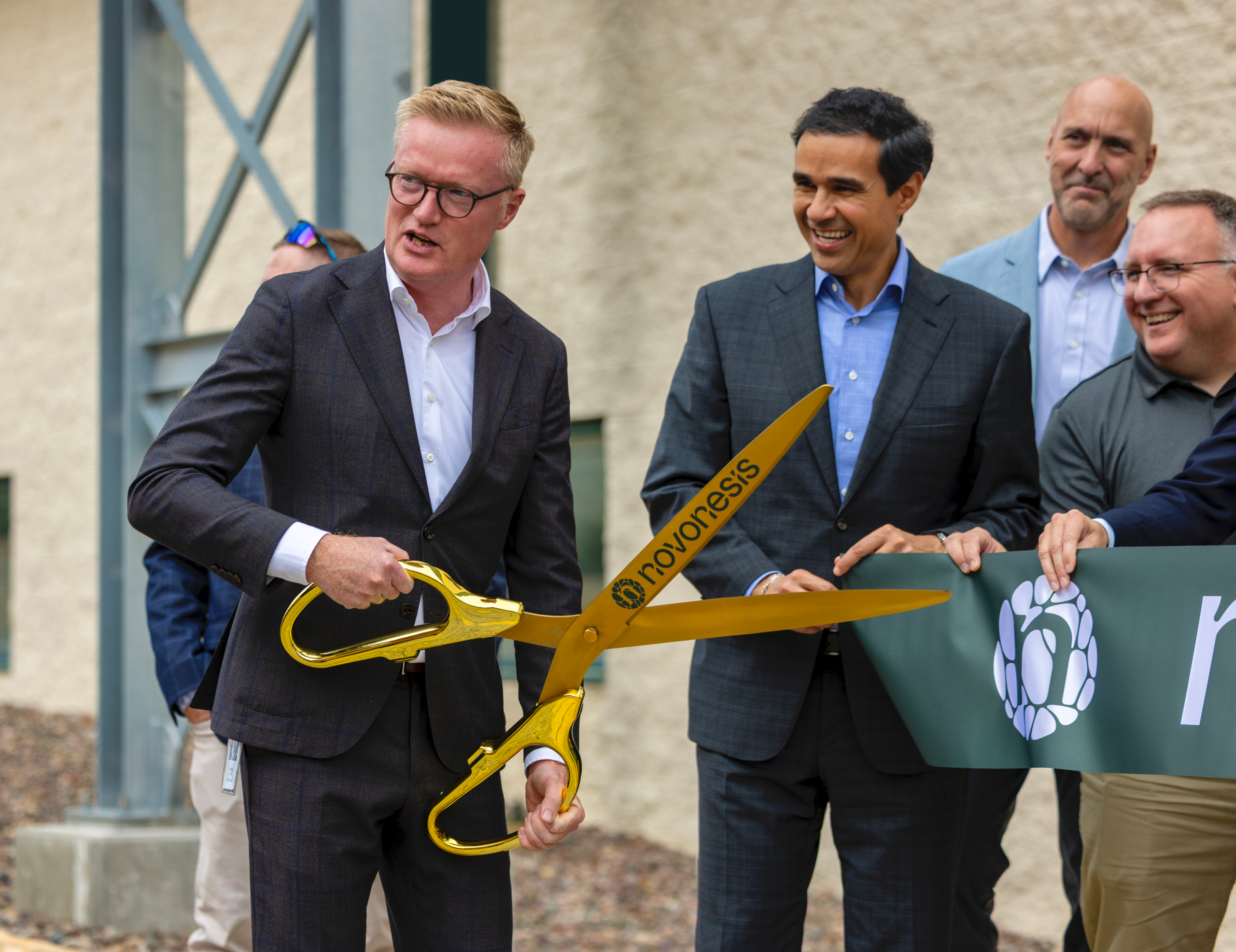
The ribbon cutting marks the end of the construction and expansion phase, but the operating test now begins. West Allis has more fermentation capacity, more packaging capability, and additional automation; the useful measure will be whether those systems work together to turn the headline expansion into consistent cultures delivered at the rate dairy manufacturers require.