IN Brief:
- Senior UK food manufacturing and retail executives have urged investors to challenge short-term board priorities around resilience.
- The letter points to climate change, biodiversity loss, and soil degradation as existing pressures on yields, quality, and sourcing.
- Lumina Intelligence separately found that only 6% of 250 surveyed businesses had fully embedded climate resilience into corporate strategy.
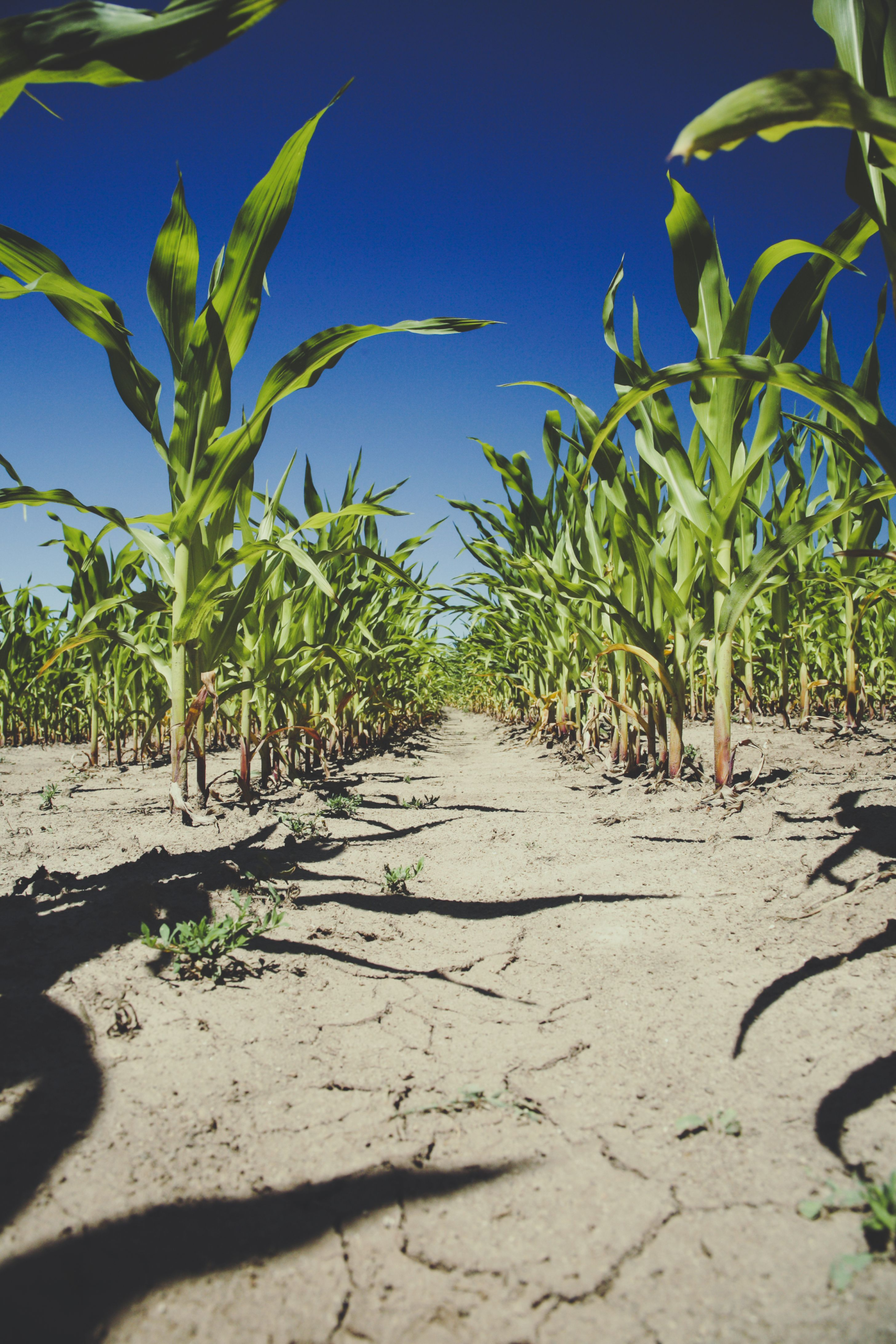
A group of senior UK food manufacturing and retail executives has urged investors to challenge board decisions that favour short-term returns over longer-term food system resilience, warning that climate change, biodiversity loss, and soil degradation are already affecting yields, ingredient quality, and availability. The intervention was set out in a letter shared by non-profit Insight Track, with contributors arguing that repeated crisis management is absorbing attention that would otherwise be directed towards structural changes in sourcing, production, and supply.
Reduced yields and inconsistent raw material quality eventually reach factories through availability, specification, and price rather than remaining an agricultural issue outside the plant gate. A crop that becomes less reliable can force purchasing teams to qualify additional origins, product developers to accommodate wider ingredient variation, and operations teams to manage different storage or handling characteristics, while a shortage arriving at short notice can leave considerably fewer options than the same risk identified several seasons earlier.
The executives describe a sector in which suppliers are already carrying layered pressures and internal functions remain too fragmented to convert long-range environmental risk into coordinated investment. Their criticism is directed particularly at board structures, where they argue that limited climate expertise, insufficient use of independent advice, and performance incentives tied to near-term financial targets can weaken the case for projects whose return is measured through avoided disruption rather than an immediate increase in sales.
Capital approval becomes difficult under those conditions because resilience projects frequently compete with investments carrying simpler payback calculations. Additional water storage, alternative sourcing, refrigeration redundancy, supplier development, reformulation capability, or greater inventory capacity can all protect production when conditions deteriorate, although the value often appears as an outage avoided or a shortage absorbed rather than a new revenue stream visible in the next set of accounts.
Lumina Intelligence’s separate Climate-Smart Resilience research provides a broader measure of that gap between stated concern and formal strategy. Its survey of 250 senior leaders and operational decision-makers across food, beverage, ingredient, and FMCG manufacturing found that 54% regarded climate resilience as important or very important, while only 6% had fully embedded it into corporate strategy, with the research covering businesses across North America, Europe, and Asia.
Responsibility also appears unevenly distributed within organisations, as the Lumina work found supply chain and procurement teams carrying greater influence over resilience decisions than several other functions. That pattern can leave climate exposure managed as a series of purchasing interventions rather than through a single operating plan connecting agricultural supply, manufacturing assets, utilities, logistics, product formulation, and capital expenditure.
Food production is unusually exposed to that fragmentation because raw materials are biological, seasonal, and geographically concentrated while factories are built around relatively fixed equipment and product specifications. A line designed around a narrow range of ingredient characteristics can struggle when moisture, solids content, size, protein level, or another variable begins moving outside its normal window, turning upstream environmental pressure into lower yield, more rework, slower throughput, or a requirement to reformulate.
Longer supply contracts and diversified sourcing can reduce some concentration risk while increasing other costs, including supplier qualification, auditing, inventory, and working capital. The same trade-off appears in physical resilience measures, where spare refrigeration capacity, additional water infrastructure, or greater warehouse space may look inefficient during normal operation even though their value rises sharply when a primary system or supply route becomes unavailable.
The investor letter argues that executive incentives can reinforce that preference for visible near-term returns, particularly when environmental or sourcing targets carry less weight than growth and margin objectives. Such claims come from the contributors themselves rather than an independently measured assessment of UK board behaviour, but they align with Lumina’s finding that widespread recognition of climate risk has not translated into equally widespread strategic integration.
Water and food waste have emerged as two areas where established interventions can address resilience without waiting for a new production technology, because both influence the amount of usable output derived from constrained resources. Reduced food waste preserves the ingredients, labour, energy, packaging, and capacity already consumed in making a product, while more secure water access protects both agricultural supply and processing operations whose hygiene and production systems cannot function without dependable availability.
Factories cannot remove climate or biodiversity risk from agricultural systems, but they can identify where exposure is concentrated and build operational choices before a shortage becomes an emergency. Supplier diversity, product flexibility, alternative specifications, utility redundancy, buffer capacity, and better raw-material data all carry a cost, leaving boards and investors to decide how much resilience they are prepared to fund before disruption converts an uncertain future loss into an immediate production problem.