IN Brief:
- The Karlville Swiss machine entered full operation at Masterpress's Białystok facility in September 2026.
- The line supports paper materials containing more than 90% paper and single-layer polyethylene pouches.
- Eight independently controlled servo motors manage feeding, sealing, cooling and cutting during pouch production.
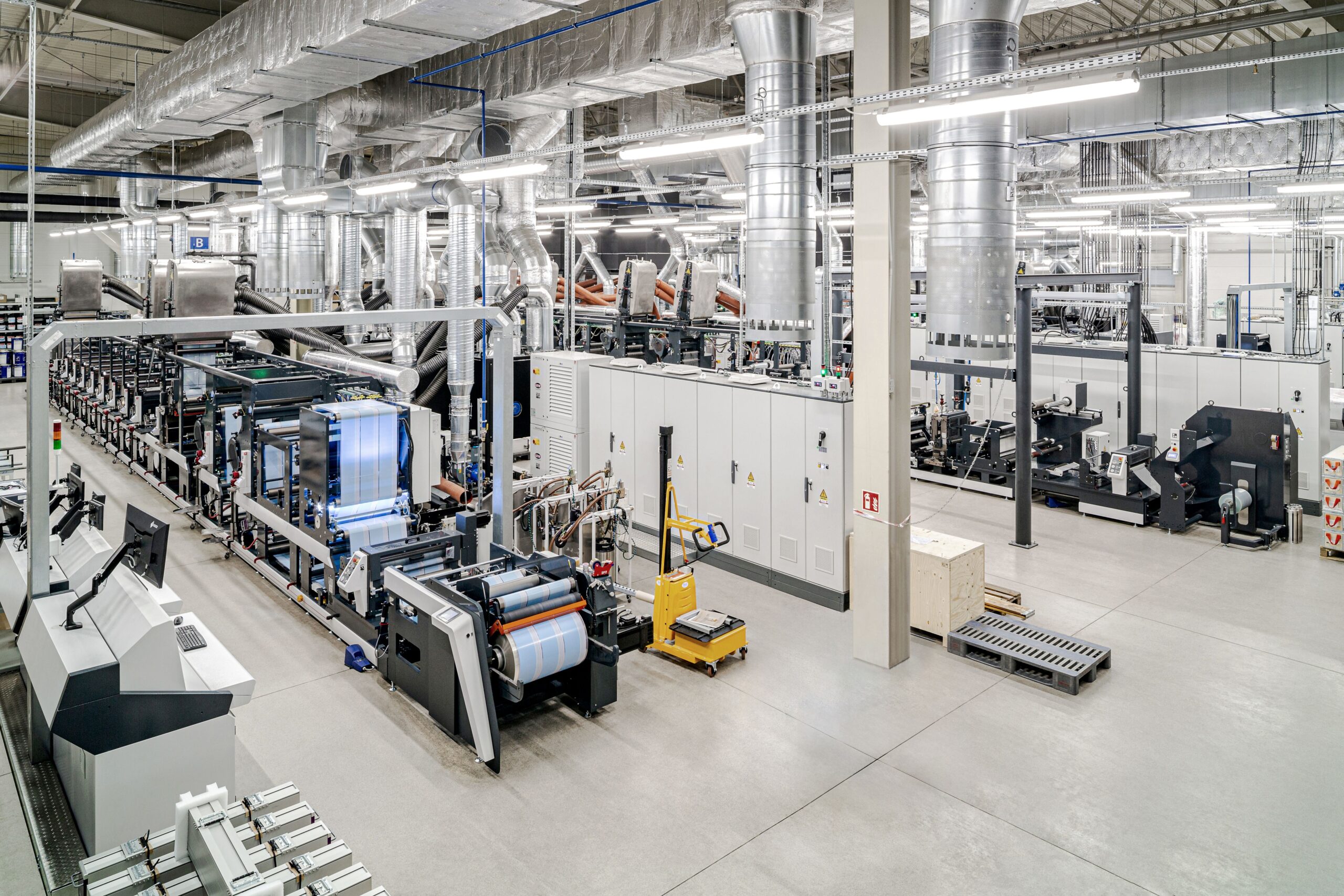
Masterpress has commissioned a Karlville Swiss pouch-making line at its Białystok factory in Poland, adding in-house conversion of flexible packaging to its existing digital and flexographic printing operations. Installed during August and brought into full operation in September 2026, the equipment can form pouches from paper-rich barrier materials and single-layer polyethylene structures. The company is positioning the investment around packaging designs intended for recycling, while still requiring individual finished pack configurations to undergo their own performance assessments.
By moving pouch conversion alongside printing in Białystok, Masterpress can pass eligible printed webs directly to forming and sealing operations instead of sending the material to another converter. Previously, surface-printed rolls could require a separate converter before becoming finished pouches. With the new line, printed webs can proceed to the forming, sealing and cutting operations on site. Masterpress says the arrangement can eliminate an intervening lamination and curing stage for appropriate structures, although products that rely on conventional laminates may still require different production steps.
Among the structures now handled on the line is a barrier paper containing more than 90% paper and more than 95% material of biological origin, according to Masterpress. Masterpress says that material is free from PFAS and polyvinylidene chloride, with potential applications including spices, nutritional supplements and pet food. Material composition alone does not establish suitability for every food product. The completed pouch must retain an adequate barrier against oxygen or moisture, an effective seal and the required performance in storage, transport and filling operations.
For this paper material, oxygen and water vapour transmission figures describe barrier behaviour under specified conditions, while the completed pouch must also retain its protection at seals and closures. Such figures can help identify potential applications, but the performance of a finished pack also depends on its seals, closures, printing and handling. A flat substrate tested in controlled laboratory conditions is not necessarily representative of a pouch after repeated bending or mechanical loading. Conversion trials are therefore required to establish whether barrier properties and seal integrity can be maintained for a particular package design.
Recycling assessments place a further qualification on the paper structure: Masterpress cites evaluations under the Confederation of European Paper Industries methodology and Aticelca 501 for the material, rather than for every completed pouch. The completed printed pouch will require its own evaluation. Inks, coatings, zippers, seals and other components can influence the behaviour of a complete pack in recycling systems. The company states that additional assessment of printed and converted structures is part of its development programme, and this does not establish certification of every finished pouch.
Where customers instead require plastic film, the same Karlville line can handle single-layer polyethylene and other compatible materials, allowing material selection to reflect the pack’s barrier and sealing specification. Mono-material structures may be designed to reduce the difficulty of separating incompatible layers at the recycling stage, provided their barriers and mechanical properties remain suitable for the intended application. A single polymer identity does not guarantee collection or recycling in every market. The pack still has to fit the available sorting and processing systems, while the use of closures or other components may affect the finished structure’s recyclability.
Material choice affects machine settings as well as recyclability, and the line’s available pouch formats include two or three side seals and stand-up versions with optional zippers. Each format creates different demands for web alignment, heat sealing, cooling and cutting. Masterpress describes a machine with eight separately controlled servo motors managing principal movements. Separate control can help adapt settings when the substrate changes, because a paper-rich web and a flexible plastic film may respond differently to temperature, tension or pressure during conversion.
As the factory changes between pouch specifications, retaining repeatable setup settings can reduce unnecessary readjustment while the web thickness and sealing conditions still have to be checked. A change in web thickness or sealing material may require different temperatures and dwell times, while a change of pouch width changes the registration and cutting arrangement. Masterpress has described stored machine settings and changeover features on the new line. No measured reduction in scrap, operating throughput at this installation or payback period has been published.
This combination of new conversion capacity and material choice arrives as food packaging suppliers assess the EU Packaging and Packaging Waste Regulation while retaining the protection required by each product. Food contact, barrier and recycling requirements must be assessed for each complete construction. By adding in-house conversion, Masterpress can manufacture and test a wider range of structures at Białystok, with further application-specific trials needed before each combination of film, ink and closure can be judged suitable for a commercial product.