IN Brief:
- Nfinite has demonstrated continuous AP-SALD coating at 100 metres per minute on its Waterloo pilot system.
- The trial coated more than 100 metres of paper on a web 24 inches wide while depositing nanometre ceramic barrier layers.
- The company is working towards continuous runs measured in thousands of metres before commercial production.
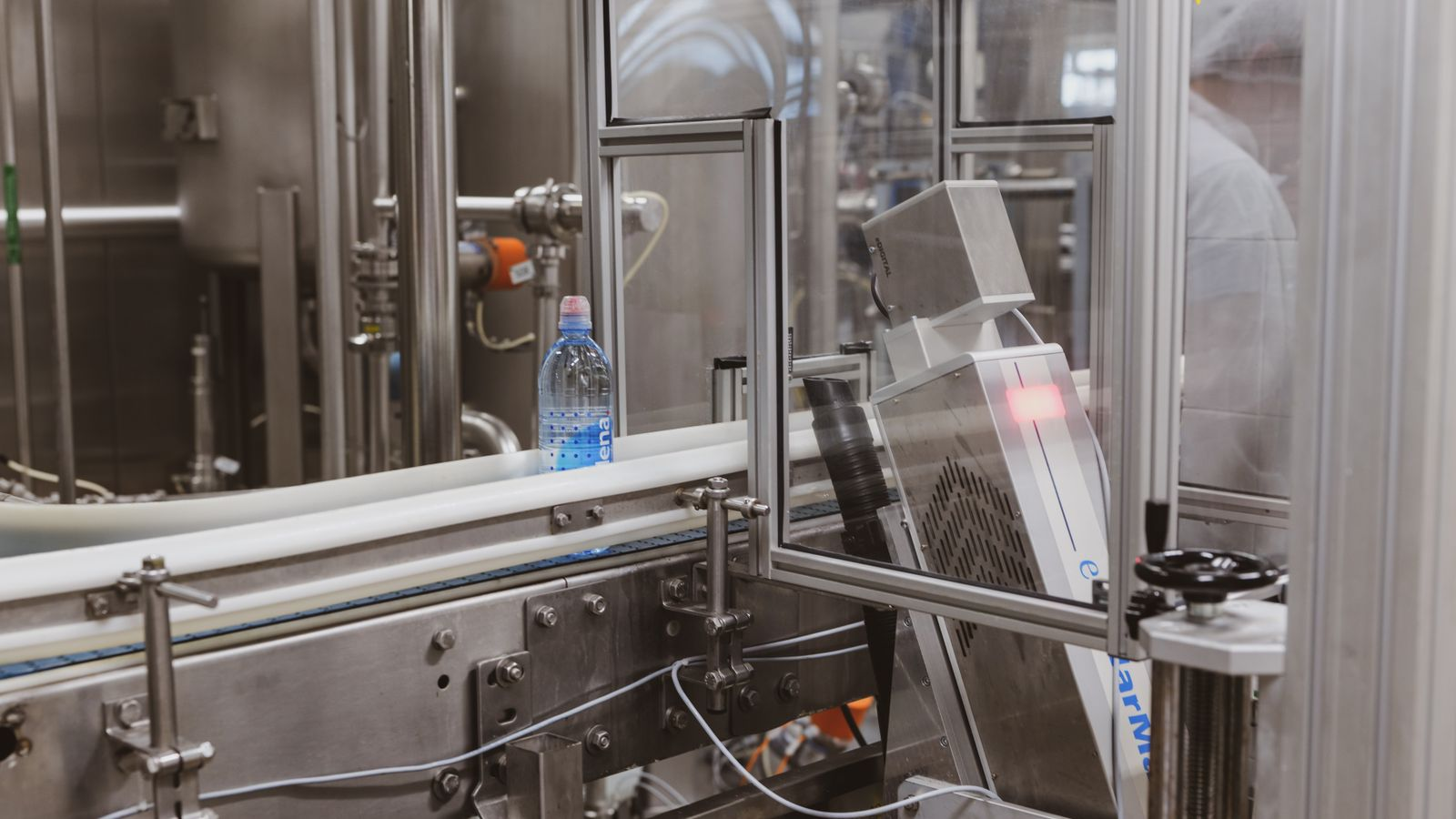
Nfinite has demonstrated continuous production of its paper barrier coating at 100 metres per minute, moving atmospheric pressure spatial atomic layer deposition closer to the operating speeds required for industrial flexible packaging. The company coated more than 100 metres of paper on a web 24 inches wide at its pilot manufacturing facility in Waterloo, Ontario.
The development addresses a persistent weakness in paper based flexible packaging. Fibre can move through established paper recycling systems, but untreated paper does not provide the oxygen and moisture resistance required by many foods. Conventional structures often solve that problem with plastic films, aluminium or complex laminates, yet combining several materials can make the finished pack harder to recover through a conventional paper recycling process.
Nfinite instead applies an extremely thin inorganic barrier using atmospheric pressure spatial atomic layer deposition, abbreviated AP-SALD. The process builds mineral layers through controlled surface reactions at nanometre scale, allowing the company to create barrier performance without adding a conventional thick film. Its spatial configuration separates the reactive gases physically so the paper can move continuously beneath different zones while the chemistry occurs in sequence.
That continuous movement is central to the manufacturing proposition because flexible packaging is produced as web material. A process that relied on individual sheets or slow vacuum cycles would struggle to keep pace with commercial printing, laminating and converting equipment, whereas AP-SALD is intended to operate inline with a moving substrate.
Speed alone is not enough, however, because barrier performance depends on avoiding defects across the entire coated area. A layer can work on a laboratory sample yet fail when small variations accumulate over hundreds or thousands of metres. As web speed rises, gas delivery, coating conditions, substrate movement and tension control all have to remain stable enough that the deposited layer stays continuous rather than developing microscopic routes for oxygen or water vapour.
The 100 metre per minute trial therefore demonstrates more than the underlying chemistry. It shows that the deposition stage can operate continuously at an industrially relevant rate on a paper web, although the next step is to sustain that performance over much longer runs. Nfinite is working towards continuous production measured in thousands of metres before commercial manufacture.
Width creates a second scale challenge. A web 24 inches wide is sufficient to demonstrate continuous operation, but commercial flexible packaging machinery can use substantially wider material. Increasing width means keeping coating conditions uniform from one edge to the other while maintaining the same stability along the machine direction, so gas distribution and web handling become more demanding as equipment expands.
The ceramic barrier is also only one part of the finished structure. Nfinite uses water based dispersion coatings to prime and protect the paper and provide sealing functionality, which means the material has to survive printing, folding, forming and sealing as a complete pack rather than perform only in an isolated barrier test. A coating measured on flat paper can lose performance if creasing or forming creates microscopic fractures.
This is particularly important for flow wrapping, pouches and other flexible formats because rollers, forming shoulders and sealing jaws mechanically stress the material. Nfinite says its paper is designed for horizontal and vertical form fill seal equipment and can be supplied with heat seal or cold seal functionality, but commercial qualification still has to reflect the individual product, shelf life and machine settings.
Fibre packaging development increasingly depends on this complete system performance because a material with strong recycling credentials offers little manufacturing value if it cannot protect the food or forces a substantial reduction in line speed. Dry powders, snacks, confectionery and moisture sensitive ingredients also impose different oxygen, water vapour and grease requirements, so no single barrier level can be assumed to suit every application.
Once the coating itself is stable, upstream and downstream web handling becomes equally important. Roll changes, tension control, inspection and defect management all have to operate without creating stops that erase the productivity gained from a fast deposition stage. The process therefore has to scale as an integrated line rather than as a coating head operating in isolation.
The Waterloo run removes one important manufacturing uncertainty by showing AP-SALD can coat paper continuously at 100 metres per minute. The remaining work is about consistency: sustaining the barrier over longer runs, wider material and subsequent converting while preventing the defects that would undermine the protection the coating is intended to provide.