IN Brief:
- BoMill reported Q3 net sales of SEK 5.754 million, compared with SEK 127,000 a year earlier.
- Installations at Camgrain, VIVESCIA and AB InBev entered full operation in Q3 after earlier commissioning.
- A future near-infrared detector measuring at least 100 wavelengths is provisionally planned for mid-2028.
Swedish grain sorting manufacturer BoMill reported third-quarter net sales of SEK 5.754 million, up from SEK 127,000 a year earlier, as equipment installations entered full operation in several markets. Its latest report also details higher capacity sorting configurations and development of a more advanced near-infrared detector, while warning that customers continue to delay investment decisions.
For the first nine months of 2026, net sales reached SEK 20.449 million, compared with SEK 6.268 million in the previous year. The company recorded a third-quarter loss after financial items of SEK 2.644 million, narrower than the SEK 6.321 million loss a year earlier. Cash and cash equivalents stood at SEK 4.440 million at the end of September.
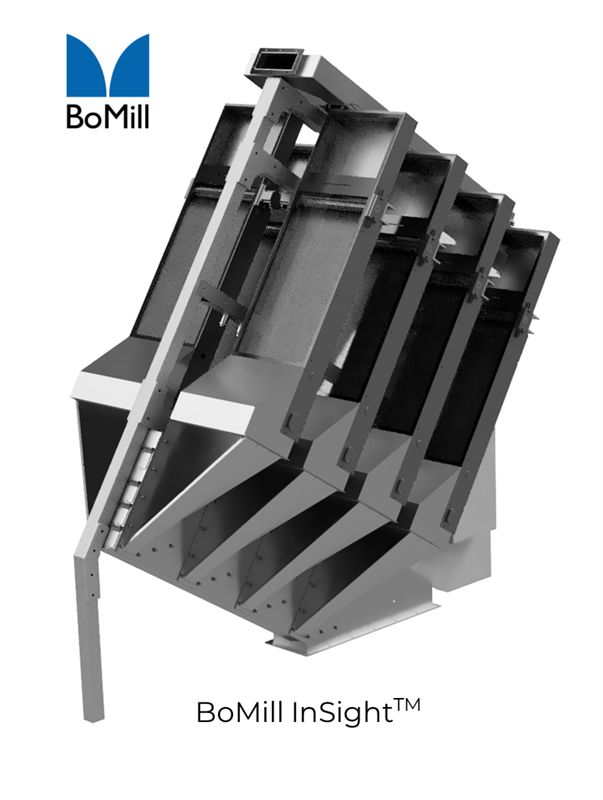
BoMill supplies equipment that analyses and sorts individual grain kernels according to measured internal characteristics. Rather than classifying only the average quality of a shipment, its InSight platform seeks to identify differences between kernels and separate selected fractions. Grain handlers, flour mills and maltsters can use the resulting fractions to meet more consistent input specifications.
During the third quarter, systems at Camgrain in Britain, VIVESCIA in France and AB InBev in Mexico entered full operation after commissioning during the second quarter. The company said the installations were processing grain from the current harvest. A separate US installation was commissioned in September and was reported to be in full operation; installation work also took place in Saudi Arabia.
The distinction between commissioning and routine operation is material for industrial machinery. Installation and acceptance establish that equipment has reached particular project milestones, but ongoing performance depends on the condition and variability of incoming grain, integration with plant handling systems and the sorting criteria selected by the operator. BoMill has not published detailed throughput or quality recovery data for these individual customer sites.
The company introduced a higher capacity configuration of its existing InSight platform in July. It raised the specified maximum sorting capacity from 15 to 30 metric tonnes per hour while retaining the same installation footprint. An unchanged footprint can help with integration where available space is limited, although the actual rate achievable at a given site depends on material and process arrangements.
In September, BoMill launched InSight HiFlex for larger grain terminals and high-volume handling operations. Its initial turnkey configuration is specified to process 200 metric tonnes per hour and can be adapted to customer requirements. The product is commercially available, but the company describes prospective projects under evaluation rather than a disclosed completed customer installation operating at that capacity.
Sorting on kernel characteristics can be used to create fractions selected for different downstream uses. Flour milling and malting require materials with specified quality properties, and the ability to separate a heterogeneous batch may help operators allocate grain more deliberately. The economic result depends on the distribution of characteristics within the incoming batch and the value of the separated fractions.
BoMill’s technology is based on near-infrared measurements. Light interacting with a kernel provides information that analytical models can associate with material characteristics. The measured signal is not itself a direct laboratory determination of every quality parameter; a reliable sorting decision depends on calibration, representative reference measurements and suitable operating conditions.
The company’s current DR4 detector measures four wavelengths. A successor under development is intended to measure at least 100, creating a broader dataset from each kernel. BoMill has provisionally targeted a commercial launch in mid-2028, and the detector remains a research and product development programme rather than a capability available on every installed commercial machine.
Research objectives include assessments of gluten protein characteristics, starch composition, hardness, fungal contamination, mycotoxins, germination capacity and seed viability. The company intends to investigate whether additional spectral information can support these applications. None of those objectives establishes that the detector already provides validated testing or sorting for each property.
The proposed platform would also organise and store measurement records in a format intended to support subsequent analysis and potential AI-based services. Such records may allow recurring patterns to be examined across grain batches, but their usefulness will depend on data consistency, material diversity and the accuracy of the models applied to them.
Commercial development includes engineering and distribution relationships. On 6 October BoMill announced an agreement with T H WHITE Installation to expand its presence in the UK grain market. That agreement has already been covered separately by IN Food and is not the new announcement in the present report; the fresh developments are Q3 performance, operating deployments and the updated technology programme.
Since the commercial introduction of InSight in 2023, BoMill says it has sold 13 machines for approximately SEK 65 million, including repeat orders and capacity upgrades. The company describes a substantial sales pipeline but acknowledges slower purchasing decisions in difficult market conditions. Equipment order timing can materially affect quarterly reported revenue in a business with a limited number of large projects.
After the quarter ended, BoMill arranged SEK 5 million in credit facilities with two shareholders, available to support financing if required. Its next milestones include converting customer evaluations into orders and establishing the operating case for higher capacity products, while the proposed 100-wavelength detector remains on a longer development timetable.