IN Brief:
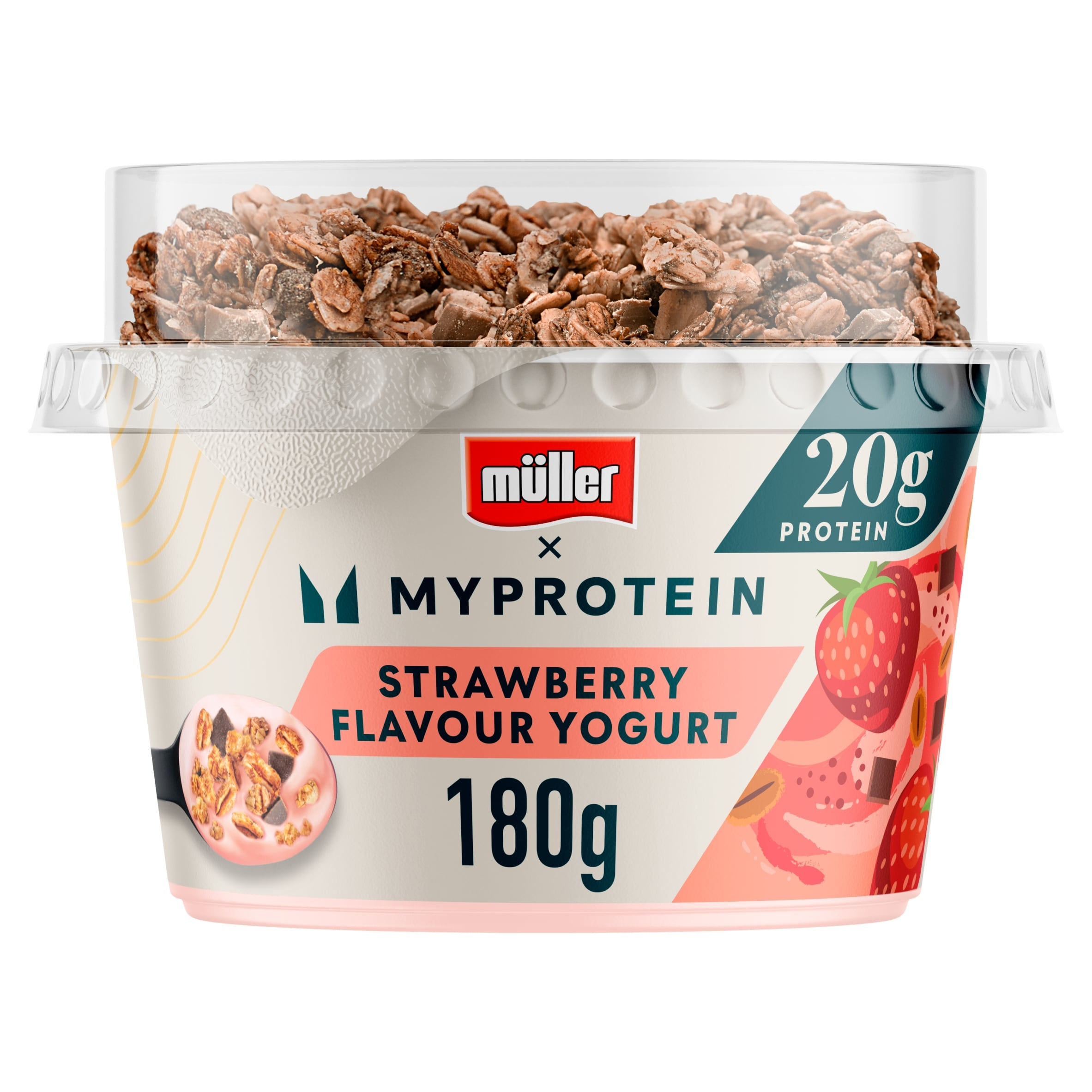
- Müller and Myprotein have introduced single-serve yoghurts in vanilla, strawberry and blueberry flavours.
- Each 210g pot contains a stated 20g of protein and has a recommended retail price of £1.50.
- The launch expands an existing partnership; no new factory, production line or equipment investment was disclosed.
Müller UK & Ireland has extended its collaboration with Myprotein by introducing a range of single-serve high-protein yoghurts in three flavours, adding another branded format to the UK’s expanding protein-rich chilled dairy market. Each 210g pot is formulated to provide 20g of protein, with vanilla, strawberry and blueberry products available through major retailers.
The 22 October launch combines Müller’s dairy manufacturing and product development capabilities with the performance nutrition positioning of the Myprotein brand. The companies describe it as an extension of an existing commercial relationship rather than the opening of a new factory or the announcement of an additional processing line.
The three products have a recommended retail price of £1.50 per pot. Their specified protein content works out at approximately 9.5g per 100g of finished product, a useful comparison when evaluating formulation claims across differently sized packs. That calculation follows from the declared 20g in a 210g pot; it is not a separate laboratory result or a claim about the protein composition of the milk entering the production process.
Müller said the products were developed to provide a smooth and creamy texture while offering a convenient source of protein. The company has not disclosed a full ingredient list, processing sequence, particular protein fortification ingredient or manufacturing location for the new range in its announcement. Consequently, it would be unsupported to identify a specific concentrate, filtration process or factory as responsible for producing the yoghurts.
Achieving a stated nutritional specification in a chilled dairy product generally requires attention to recipe balance, portion control and consistency between batches. Protein content is only one parameter among those relevant to a finished yoghurt: texture, flavour, shelf life, packaging integrity and microbiological controls also influence whether a product can be supplied through retail distribution. These are standard considerations for the category, not evidence of a particular technical solution adopted by Müller for this launch.
The choice of a 210g individual pot gives retailers a defined unit format and gives consumers a declared portion size. It also means that the headline 20g protein figure refers to the complete pot, not an unrestricted serving or an amount per 100g. Packaging format matters when shoppers compare product claims, particularly between cultured dairy, ready-to-drink protein beverages and products sold in multiple serving sizes.
Müller linked the extension to rising demand for higher-protein food and drink. Citing Circana Unify figures for the period ending 5 September 2026, it said protein products within the chilled yoghurt and potted dessert category were growing at 2.5 times the rate of the overall category year on year. The company did not provide the underlying sales values or a separate market-share figure for this particular launch.
The measure describes relative growth rates within the research category, rather than saying protein yoghurt sales have grown by 250% or that every manufacturer is experiencing the same demand pattern. It also predates the October launch and cannot be used as evidence of sales already achieved by these three new products.
Richard Williams, chief executive of Müller Yogurt & Desserts, said shoppers increasingly want everyday foods that combine nutritional value with taste and convenience. The company considers its partnership with Myprotein a way of addressing that demand using established dairy experience and a brand associated with performance nutrition.
For processors, the wider development illustrates how branded partnerships can be used to test adjacent categories without necessarily committing to a public programme of new manufacturing capacity. A change in recipe, pack size or brand presentation can alter the mix of products offered to a retailer, but it does not establish that a manufacturer has changed its factory footprint or installed equipment. Müller’s notice contained no such investment claim.
The company has indicated that products are already available through major retail channels. It did not specify which stores carry each flavour or the relative share allocated to individual retailers. The launch can therefore be described as a current commercial rollout, not as a promise of nationwide distribution to every outlet.
The three-flavour range expands Müller’s presence in the high-protein yoghurt segment while giving Myprotein a further chilled dairy format beyond its core sports nutrition position. Subsequent trading results, rather than the stated category growth alone, will establish whether the products achieve sustained retail demand and prompt additional formulation or packaging development.