IN Brief:
- Envases Europe is making Tata Steel Nederland's Carbon Lite packaging steel offering available to customers.
- DNV verifies emissions reductions from Tata Steel's operations before these are allocated through mass-balance accounting.
- The arrangement concerns traceable allocated reductions rather than an inherently different steel grade or guaranteed package lifecycle saving.
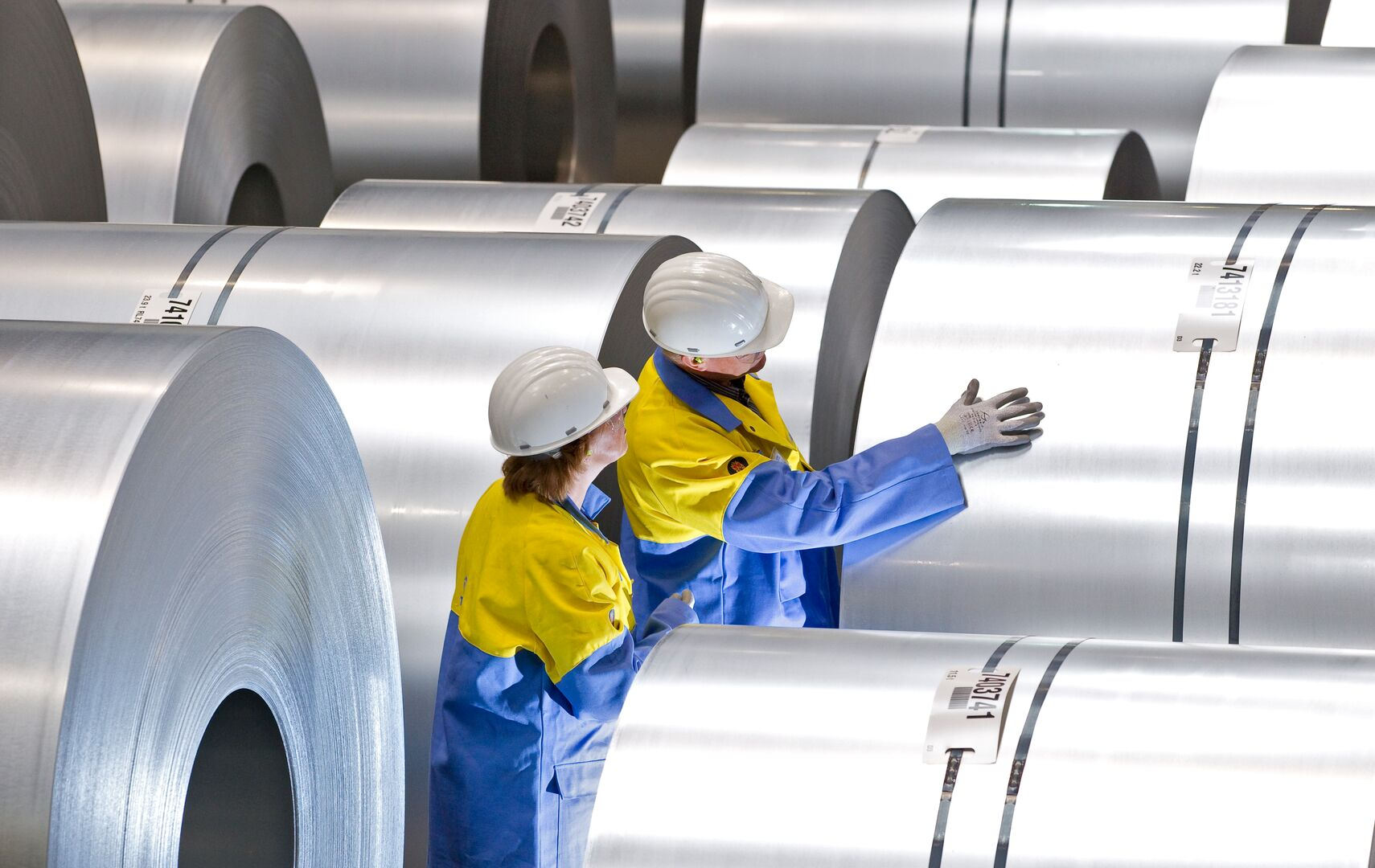
Packaging manufacturer Envases Europe has agreed with Tata Steel Nederland to make its Carbon Lite steel offering available to customers, providing a method for allocating verified emissions reductions from steelmaking operations to specified quantities of packaging material. The arrangement is intended to support the carbon accounting of food, beverage and other brands using steel containers.
The collaboration, announced on 22 October, uses a mass-balance system associated with operational decarbonisation work at Tata Steel Nederland’s IJmuiden steelworks. The reductions are independently verified by DNV and then allocated to qualifying steel volumes through a certified accounting framework. Envases says it will pass the relevant declarations to customers so that the attributed reductions can be assessed within their Scope 3 reporting.
The distinction between an accounting allocation and the physical characteristics of a steel product is central to the arrangement. Mass balance does not necessarily mean that an individual delivered coil was made through a separately segregated production route with a uniformly lower measured emissions intensity. Instead, eligible reductions arising from specified industrial activities are tracked and assigned to defined product volumes under rules intended to prevent double counting.
Tata Steel said the underlying emissions reductions were associated with recent decarbonisation projects in its steel production processes. The company has not described the Envases agreement as proof that its wider transformation programme at IJmuiden is complete. Its longer-term plans involve lower-emission production technologies and increased use of scrap as part of a pathway towards net-zero steel production in 2045.
For canmakers and other packaging converters, an allocated emissions reduction declaration can add another dimension to material procurement. Customers still need materials that meet established requirements for forming, coating, sealing, food contact and mechanical performance. Envases and Tata Steel said the Carbon Lite arrangement preserves existing expectations for quality, safety and performance while giving buyers supporting information for their sustainability programmes.
The use of third-party verification is intended to provide assurance that reported reductions originate from eligible activities and are not claimed more than once. It does not automatically establish that a finished food can has reduced emissions by the same percentage as the upstream steelmaking allocation. A full packaging footprint can also depend on processing, transport, coatings, filling operations, recovery and recycling. No universal lifecycle reduction percentage has been established for Envases’ complete packaging range.
Scope 3 emissions generally concern indirect emissions in a company’s value chain, including purchased materials. For food and beverage manufacturers, packaging can be a material part of that calculation, but actual reporting treatment depends on accounting methodology, reporting boundary and the quality of supplier data. Tata Steel and Envases present their verified declarations as an input to corporate accounting rather than a substitute for an individual customer’s complete greenhouse gas inventory.
Rikke Helstrup, head of sustainability at Envases Europe, said the partnership was designed to provide customers with assured information that could be incorporated into their reporting. Dennis de Koe, Tata Steel Nederland’s director of sales for packaging, said value-chain collaboration could support further investment in industrial emissions reduction measures.
The agreement also highlights a practical issue for industrial buyers: emissions data need to remain linked to purchasing records as material passes through several stages of production and conversion. Traceability and the prevention of duplicate claims are therefore operational requirements of the accounting system, not merely optional marketing considerations.
The partners are making a verified mass-balance offering available to packaging customers. It does not provide customer adoption volumes, product-specific emissions calculations or independently measured savings at a completed food packaging facility. Those data would be necessary to assess how extensively the programme is used and its eventual contribution to customers’ reported emissions inventories.
The methodology also needs to be understood when procurement teams compare materials from different suppliers. A physically identical steel grade may be accompanied by different emissions declarations depending on the scheme and the eligible reductions allocated. Clear documentation of the boundary, verification period and claim ownership is therefore essential if purchasers are to avoid treating unlike accounting results as directly interchangeable product properties.
Neither partner has identified a particular food or beverage brand that has completed a production trial using the Carbon Lite arrangement. There is consequently no reported factory-level case study on can forming, pack performance or finished-product carbon accounting. Those questions remain separate from the availability of verified upstream declarations, which is the change established by this collaboration.