IN Brief:
- Hormel Black Label Portion Pack Bacon divides a 12-slice pack into three perforated sections of four slices each.
- The 12oz product is being introduced at selected US Walmart, Meijer and Albertsons stores.
- Hormel has not disclosed new packaging machinery, comparative shelf-life results or independently measured waste savings.
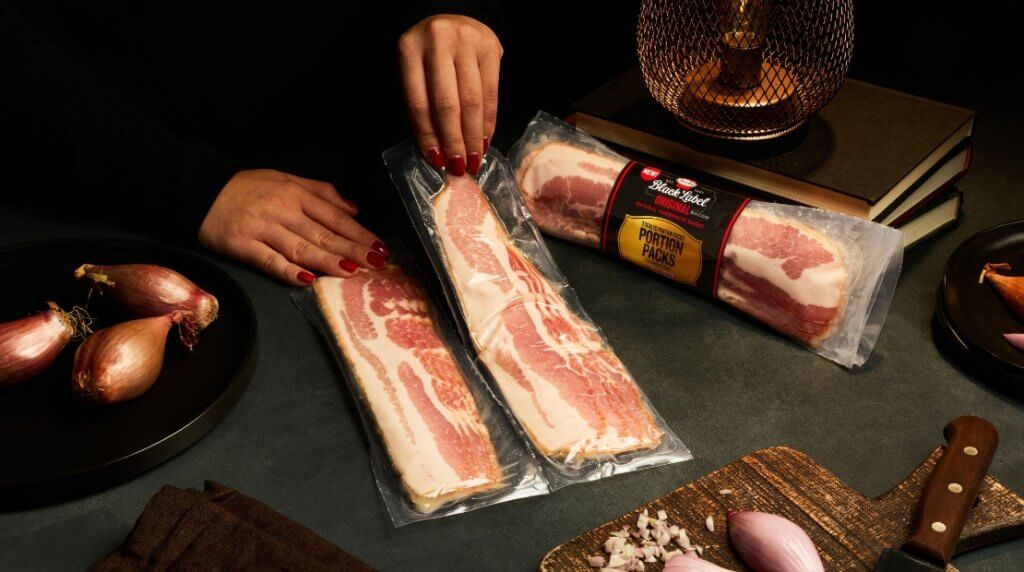
Hormel has introduced a new portioned format for its Black Label bacon, separating a 12-slice pack into three perforated, separable sections containing four slices each. The product is designed to let consumers open part of the pack while leaving the remaining portions unopened for another occasion, giving the US meat producer a packaging-led addition to its established bacon range.
The company introduced Black Label Portion Pack Bacon on 22 October, describing it as a way to make its existing original bacon more suitable for smaller households and occasions when a full pack is not required. It is a new format for an established product, rather than the announcement of a new bacon recipe, a processing factory or a factory expansion.
Each 12oz pack is divided into three portions. The company says the perforations allow sections to be separated before opening, with each section containing four slices of bacon. That mechanical distinction is important: the format is intended to give shoppers discrete quantities of product without first opening and repacking the entire retail unit.
Hormel says the remaining, unopened portions can be kept fresh for later use. It did not publish a shelf-life comparison, specify the materials used in the individual sections or provide results from independent food waste trials. The commercial proposition can therefore be described as portion control and convenience, but any precise reduction in household waste or improvement in storage life remains unverified.
The format illustrates a design choice faced by meat processors supplying chilled retail products. Consumers purchasing bacon may prepare only a few slices at a time, leaving the rest of the pack to be stored. A smaller unopened portion can make this more straightforward, provided it continues to meet the manufacturer’s storage and use instructions. The company has not disclosed the seal structure or packaging technology used to achieve the separation.
Four-slice units create a clear portion size for cooking, but they do not change the quantity of bacon purchased in the 12-slice retail pack. A shopper still buys the full pack; the difference is how the contents are divided and accessed. That distinction matters for claims about food waste and portion management, since the packaging alone does not prove that less product will be discarded in practice.
Hormel is marketing the product to people preparing meals for one, smaller households and consumers who want flexibility to use bacon as a recipe ingredient. Aly Sill, senior brand manager for Black Label Bacon, said the format responded to changing ways that consumers use the product, including smaller meals and individually planned occasions.
The retail introduction covers selected Walmart, Meijer and Albertsons locations in the United States, with a suggested selling price of US$5.97 to US$6.97. That is the manufacturer’s indicated price range, rather than evidence that the product is offered at an identical price in every participating shop. Hormel did not disclose initial shipment volumes, sales expectations or the number of stores carrying the pack.
A portioned design can affect several stages of the packaging process, including the way product is assembled, sealed, labelled and inspected. It can also introduce questions about the amount and type of material needed per unit of bacon sold. Hormel’s announcement provides no evidence about the equipment used, so it would be inappropriate to describe new packers, additional sealing systems or higher line speeds as part of the launch.
The company has likewise made no quantified environmental claim for the package. Individual sections might influence how consumers store unused bacon, but the net effect on packaging material, transport or total food waste would require a defined comparison and supporting data. No lifecycle analysis or independently measured waste reduction was supplied with the product information.
From a product development perspective, the launch demonstrates that established meat products can be differentiated by how shoppers access them rather than by altering their formulation. Retailer shelf space, package visibility, manufacturing consistency and consumer acceptance will determine whether the format gains ground. The announcement offers the technical distinction of the perforated three-part pack but no results from market testing or post-launch performance.
Hormel’s Black Label Portion Pack Bacon is already being introduced into selected US supermarkets, with a specified 12oz retail unit and three groups of four slices. Its longer-term significance for meat packaging will depend on demand and any measurable operational or consumer benefits that the company subsequently reports. For now, the verified development is the launch of a portioned packaging format, not a confirmed investment in manufacturing capacity or a demonstrated reduction in food waste.